
I truly believe that a great deal of modern gaming journalists know very little about the gaming world. This lack of knowledge leads to some awful articles and terrible points of view. You don’t believe me? Please allow me to offer exhibit A for your perusal. Very recently, Rolling Stone published their list of “The 50 Greatest Video Games Of All Time” and that article is right here. The main issue with lists like these is that they are all subjective – what may be great to the publication/writer may not be great to you, and that’s fine. Differing opinions are what keep discussions interesting. However, the use of words is very important, and Rolling Stone has not compiled a list of 50 great games, they are claiming that these 50 are (and I quote) “The 50 Greatest Video Games Of All Time”… “Of All Time”. The article also states (and I quote) that “these are the titles that have defined the culture”. After reading the list, I can only assume that the people behind it have no idea about gaming history or the culture… or what simple words mean. I think it’s time for some proper gaming history and culture.

Before I get into the meat of this, I guess I had better list “The 50 Greatest Video Games Of All Time” that Rolling Stone complied for their article…
50: Animal Crossing: New Horizons. 49: Hades. 48: Castlevania: Symphony of the Night. 47: The Legend of Zelda: A Link to the Past. 46: League of Legends. 45: Fortnite. 44: Elden Ring. 43: Celeste. 42: Batman: Arkham City. 41: Metroid Prime. 40: Chrono Trigger. 39: God of War. 38: Shadow of the Colossus. 37: Pokémon Gold and Silver. 36: Super Smash Bros. Ultimate. 35: Sonic the Hedgehog 2. 34: Hollow Knight. 33: NBA 2K11. 32: Ms. Pac-Man. 31: Counter-Strike. 30: Wii Sports. 29: Uncharted 2: Among Thieves. 28: Minecraft. 27: Resident Evil 4. 26: Mass Effect 2. 25: Stardew Valley. 24: The Sims. 23: Tony Hawk’s Pro Skater. 22: Call of Duty 4: Modern Warfare. 21: Fallout 3. 20: Mario Kart 64. 19: Baldur’s Gate 3. 18: Madden NFL 2004. 17: Diablo II. 16: Red Dead Redemption 2. 15: The Witcher 3: Wild Hunt. 14: Street Fighter II. 13: Doom. 12: World of Warcraft. 11: Halo: Combat Evolved. 10: Super Metroid. 9: The Elder Scrolls V: Skyrim. 8: Final Fantasy VII. 7: Metal Gear Solid. 6: Half-Life 2. 5: The Last of Us. 4: Super Mario World. 3: Grand Theft Auto V. 2: Tetris. 1: The Legend of Zelda: Breath of the Wild.
Are there any great games on that list? Yes. But are they truly “The 50 Greatest Video Games Of All Time”? Not even close. I’ll just skip to the end here, The Legend of Zelda: Breath of the Wild is the greatest videogame of all time? Just take that in for a second, The Legend of Zelda: Breath of the Wild is the greatest game since gaming began. It’s not even the greatest Zelda game. The main problem with this list is that it is trying to do two things, and it does both of them badly. It is trying to present a list of “The 50 Greatest Video Games Of All Time” while also listing “titles that have defined the culture”, and those two things are not always the same. As an example, how can a list of “titles that have defined the culture” contain the likes of NBA 2K11 or Madden NFL 2004, but no Pong, Space Invaders or Donkey Kong? Exactly what did NBA 2K11 or Madden NFL 2004 define within gaming culture that literal defining gaming culture games didn’t?

Without Donkey Kong, there would be no Mario or Nintendo at all for that matter (see the King Kong vs Donkey Kong lawsuit). In this instance, one of the world’s most popular gaming companies would not exist. Without NBA 2K11 or Madden NFL 2004 nothing in the gaming world would change – except we would have two fewer, lazy yearly updates of sports games. Which of those two scenarios would you consider to be the greatest loss to videogame culture? Yes, Rolling Stone, if it hadn’t been for Donkey Kong, you couldn’t have The Legend of Zelda: Breath of the Wild as your number 1 pick… which automatically makes Donkey Kong a far greater title and significantly more culture-defining than the game that you consider to be the greatest.
Please note that this Rolling Stone list of “The 50 Greatest Video Games Of All Time” only contains two games from the 1980s, one of the most defining and greatest decades of gaming. A decade when long-lasting gaming mascots were born, and a time when bitter console wars were fought. You know, actual gaming culture. Please also note that most of the games are from the last 15 years or so. I think the writer(s) of this article needs to learn that gaming culture goes back a tad further than 2010. There are some great and defining games on this list. Tetris? Yes. Doom? Certainly. Street Fighter II? Indeed. Uncharted 2: Among Thieves? Fuck off. The Last of Us? Suck my sweaty nards. Elden Ring? Are you on drugs? Are they good games or even great games, possibly. Are they “titles that have defined the culture”? No. Not even close. How the fuck is (according to Rolling Stone) The Legend of Zelda: Breath of the Wild the greatest videogame of all time? No, I’m not letting that one slide.

As I mentioned earlier, the use of words is paramount. A list of 50 great games, yeah go for it. A list of “The 50 Greatest Video Games Of All Time” needs a much more educated mind behind it, which this list clearly did not have. Compiling a list of “The 50 Greatest Video Games Of All Time” is very different to penning a book called 66 Of The Most Important Video Games Ever! (According To Me), as an example. You see, it is that use of words. With the (According To Me) bit of this book’s title, the author is rather skillfully highlighting that what is contained within the covers is his opinion, and opinion is not fact. Making the bold statement of “The 50 Greatest Video Games Of All Time” comes across more as fact, and badly written fact too. Then there is the 66 Of The Most Important Video Games Ever! of the book’s title. Important does not mean greatest. You can have an important game that is terrible, just as you can have a great game that is not really all that important and nor did it “define the culture”, like Hollow Knight.

Some of the games on that list were made by devs who were not even sperm in the nutsack of their fathers, at the time when other great games were already defining the culture decades before. Hades? WTF! Now, I like Hades, it’s a good game and I love a good roguelike. But Hades? You have Rogue, the game that created the entire subgenre and where the term roguelike/lite comes from. The original Rogue has been remade, updated and improved on over the years… but Rolling Stone went with Hades instead? Rogue, quite literally defined gaming culture, while Hades jumped on the bandwagon of the popular roguelike/lite fad. Hades is neither one of the “Greatest Video Games Of All Time” nor has it “defined the culture”. It’s just a good roguelike in a sea of other good roguelikes.

As I said, a list of great games will be subjective and at times, personal. But when you are claiming “The 50 Greatest Video Games Of All Time”, that’s a much more specific subject. Anyone who makes a list of the greatest games of all time, or claims that the list contains “titles that have defined the culture” and does not have Pong in the top slot will always be wrong. Why? Because while Pong may not have been the first-ever videogame (no “may” about it, it definitely wasn’t), it was the single game that launched gaming culture as we know it. It was Pong’s popularity and success that birthed the arcade scene, it was Pong’s popularity and success that led to the creation of home consoles, because everyone wanted to play it and it had its very own dedicated home console. Pong IS gaming culture and regardless of whether you like the game or not, nobody can deny its cultural impact. Without Pong’s success, would we even have a gaming industry and culture today? Pong is the greatest video game ever made and most certainly far greater in its impact and influence than The Legend of Zelda: Breath of the Wild.
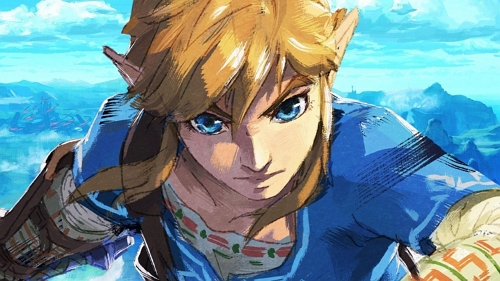
I have a handful of conclusions to make about Rolling Stone’s “50 Greatest Video Games Of All Time” and “titles that have defined the culture” list. First, Rolling Stone writers don’t seem to understand basic English or how to use simple words. This isn’t a list of “The 50 Greatest Video Games Of All Time”, it’s a list of somewhat popular and mostly modern games that some of the staff at Rolling Stone have played a bit of. Their article really should be titled “Here Are The Names Of Games That Some Of Us Have Played From The Last 15 Years And A Couple Of Older Titles That We Looked Up On The Internet Just To Make It Seem Like We Know What We Are Writing About – But We Really Don’t”.
Second, either this list was compiled by somebody at Rolling Stone who knows less about gaming than they do about music. Or it was created solely for the overused and despicable reason that a lot of modern journalism exists, clickbait. It’s not just lacking in common knowledge gaming journalists that do this, all journalists do clickbait articles. It’s not about scribing worthy and interesting content any more, it’s about getting as much traffic to the site as possible by enraging people so that they click on the article. And trust me, the rage coming from the gaming community over this list is pretty big. A gamer looks at this list, notices that it is terrible and shares it on social media with a little rant. Soon enough, lots of gamers are raging about it and various gaming news sites, YouTubers and Twitch streamers are sharing it too. That’s how I found it, someone I follow on Twitter shared it in a rage (and I then shared it myself in a rage, and even wrote an article about it). Then, we all click on it and Rolling Stone get their traffic.
This, dear reader, is Why Gaming Journalism Is Now Shit And How Rolling Stone Helped Prove So…
 Little Bits of Gaming & Movies
Please leave a reply/comment.