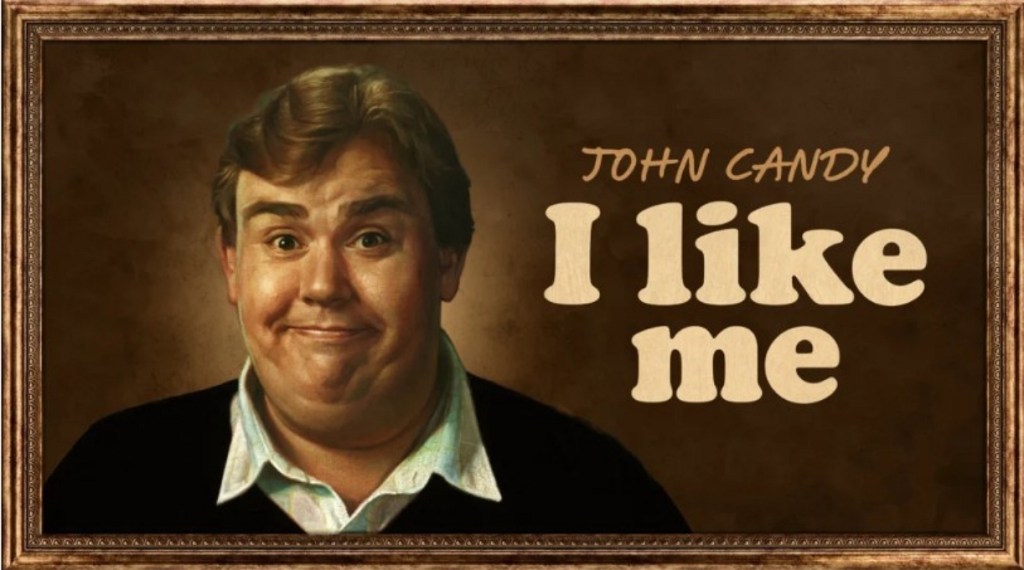
Whenever I kickstart my festive film viewing over Christmas, I always start with Planes, Trains and Automobiles. Yeah, yeah, I know… it’s a Thanksgiving movie not a Christmas one. I live in the U.K. and we don’t celebrate Thanksgiving here, so it’s an early Christmas flick to me. Planes, Trains and Automobiles is a timeless classic. Funny, damn funny, but with a massive injection of pathos that punches you in the face. From Neal Page (Steve Martin) and Del Griffith (John Candy) in bed together and the “two pillows” scene, Neal’s amazing fuck-filled rant at the car rental agent, to their car being destroyed, thanks to Del’s love for Mess Around by Ray Charles, this film is packed with hilarious antics. Then you get to the end when Neal is finally on his way home, to his wife and kids, and he thinks back on everything he and Del have been though… then he realises. He rushes back to the train station and there is Del, sitting there alone and he says “I don’t have a home”, and how his wife died years ago.

A short speech that was massively cut down from Del explaining his life and what happened to him in much more detail. A longer speech that had Steve Martin in tears as they filmed. As short as that edited speech is, thanks to cutting most of it out, it’s effective and it gives Planes, Trains and Automobiles a massive grounding after all of the crazy shit that had gone before it. I think it was re-watching that scene, as an adult, that made me realise just how deep of an actor John Candy was. He was so much more than the “fat funny guy” that so many saw him as.
Del Griffith: “You wanna hurt me? Go right ahead if it makes you feel any better. I’m an easy target. Yeah, you’re right, I talk too much. I also listen too much. I could be a cold-hearted cynic like you… but I don’t like to hurt people’s feelings. Well, you think what you want about me, I’m not changing. I like… I like me. My wife likes me. My customers like me. ‘Cos I’m the real article. What you see is what you get.”

“I like me”, a simple three words that, in retrospect, hid a lot of who John really was underneath it all. When John Candy passed away on the 4th of March, 1994, I remember exactly where I was. It was a Friday and I was staying at my brother’s house over the weekend. We were both big F1 fans and while the season wasn’t going to start for a couple more weeks, we were getting in the mood and watching come classic F1 races on VHS. While John died on the Friday, the news didn’t really hit us in the U.K. until the Saturday (time difference, no crappy Internet sites posting such news, etc) and when I heard that John was gone, it was like losing a favourite uncle. After re-watching Planes, Trains and Automobiles to kickstart my festive viewing this year, I decided to watch the recently released film about John Candy’s life.
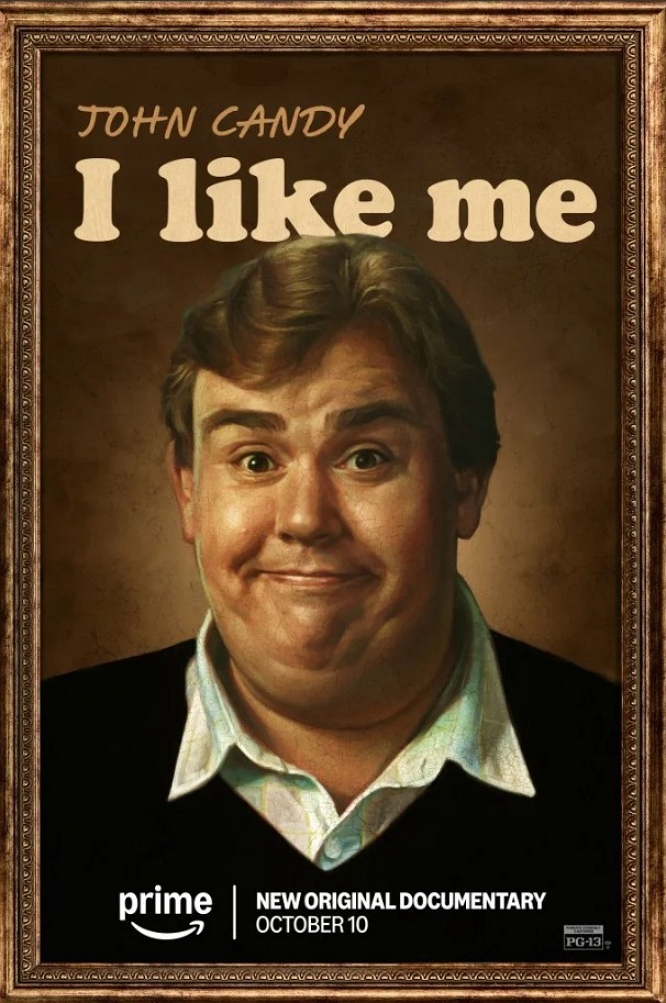
John Candy: I Like Me is a documentary exploring the life of Canadian actor, John Candy. Produced by fellow Canadian actor, Ryan Reynolds and Colin Hanks (yes, Tom’s son), and directed by Colin too. The film starts with Bill Murray reminiscing about John, their early friendship, and working together, how they drifted apart as they grew more and more famous. Bill then starts to say how nobody has anything negative to say about John because he was such a great guy… except for one instance. But, before we can here this one bad thing that John did, the film cuts away from Bill’s reminiscing and begins to tell the story of John’s life.
John Candy: I Like Me takes you on a journey from John’s childhood and how he lived with the trauma of his father dying on his 5th birthday, of a heart attack, through to John’s death in 1994… of a heart attack. It’s an interesting framing narrative, as we learn that John always had the fear that he would meet the same fate as his father. He confessed to friends that he doubted he would live past his 40s and this would often trigger anxiety and panic attacks. We get to learn a lot of what John Candy was really like when the cameras were not on him. When he wasn’t playing the funny guy that everyone loved. The film is intercut with personal home-movies of John and and his family, and even footage of his funeral. I’d usually find this kind of thing a little bit “tacky” and disrespectful, do we really need to see something personal like someone’s funeral? However, it is handled really well here and features an amazing speech by close friend and fellow Canadian, Dan Aykroyd, as well as another speech from co-star, friend and another Canadian, Catherine O’Hara.
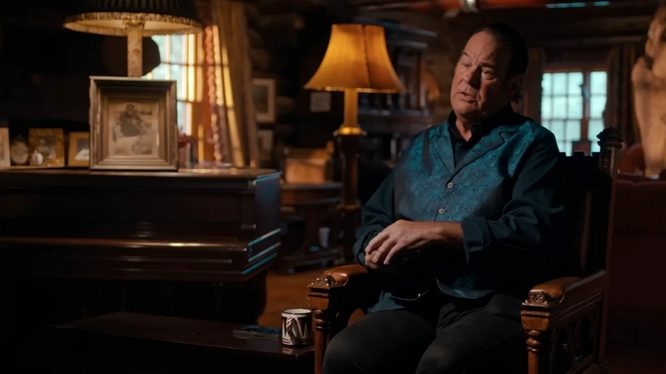
I Like Me has several moments like this, friends and family speaking fondly of the man and how there was never a bad word to say about him… except for that Bill Murray story of the one bad thing John did that we have still yet to learn about. We get to see John in TV shows and movies, including rare behind-the-scenes stuff and photos. There’s some interview footage too and a look at how often people brought up is weight, in not very nice terms. It’s quite strange looking back at these interviews from a 2025 perspective. At the time, that was “just how it was” and interviewers would think nothing of belittling an actor over their appearance on TV. Nowadays, that interviewer would be reprimanded and (probably) fired.
We learn that John was very self-conscious about his weight and never felt comfortable with it. At one point, he did lose a lot of weight, but was told by Hollywood producers that people want “fat” John Candy, so he put it back on fearing that he wouldn’t get job offers and such. All through the film, John is painted as this tragic and flawless person. Even when we do finally hear the Bill Murray story of that one bad thing John did, it’s really nothing. The short version is that, while working on a project together, John milked a scene for comedy. Bill found this funny, but it slightly annoyed the director. That’s it, that’s the one bad thing that John Candy did, he slightly annoyed a director.

There are some amazing memories and stories being shared throughout the film. Macaulay Culkin talks about working with John on Uncle Buck, and it is a wonderful and well-told anecdote that shows, even at the young age that Macaulay was at the time (only 8), how much he cared for and respected John. Even more so when he talks about who much of a shitty father his real dad was (they had a massive falling out because his father was a massive cunt) and how John became the father figure that Macaulay never really had.
Macaulay Culkin: “I remember John caring, when not a lot of people did.”

As much as I really enjoyed I Like Me, it does it’s very best to paint John Candy as this flawless person. The perfect father, perfect co-star, perfect friend… and that’s just not realistic. When you look at some of the other producers on the film, you can see why this came about. Jennifer Candy-Sullivan as a co-executive producer, Chris Candy as a co-executive producer, and Rose Candy as a co-executive producer. John’s family, his two kids, his wife. It would’ve been nice to have seen some the times when John did mess up, when he got things wrong.
I Like Me doesn’t present any lies, but it does leave out some major truths. For instance, there no mention, not even a hint, of John’s drug issues. He did have a cocaine habit that may have contributed to his death, but this film does not even suggest anything about it. What you get is a sanitised and idealistic look at who John Candy was, with zero blemishes. When I die (hopefully a couple of years away yet) I want my friends and family to remember me, the real me, flaws and all. I want them to talk about the times I was wrong, the times I fucked up, the times I was far from being “perfect”. Because that’s who I am, my flaws are what makes me, me.

There’s also a lack of John’s work outside of his comedy. In the last couple of three years of his life, John was pushing to be seen as more than the overweight comedy stereotype that he was often portraying. Cool Runnings is a good example of this. The film has its comedy moments, but it also has a less silly tone and John’s character wasn’t as comical as some of his others. What about Only the Lonely, another role where John got to show off his more serious acting chops. His memorable role in JFK gets a very quick, blink and you’ll miss it, look at, and that’s about it. Let me just go back to that scene and speech from Planes, Trains and Automobiles, after Neal lays into Del and Del hits back with the “I like me” speech… the very speech that this documentary is named after. That proved how great a serious actor John Candy could be. But this less comedic side and John’s strive to be taken more seriously as an actor is not really explored in this film at all.
John Candy made copious notes about projects he worked on, he made up backstories for characters, he kept his scripts that he was given in pristine condition, he kept all of his fan letters and respected anyone who took the time to write to him. He strived to do more than comedy and was a great actor who took his work very seriously. But this documentary doesn’t really address any of it. You just get the impression here that John was a comedy actor who did nothing more than joke about a bit. There is so much missing of his life that the film comes across as just a bit too “sickly”. It is the last few years of his life when John really grew as and actor, when he began to peruse more meaningful work, but this part is pretty much non-existent in the documentary, or it is lightly glossed over with the odd brief mention. This latter part of his life was when John Candy was at his most interesting, and this film does not cover it.

John Candy: I Like Me is a nice film to watch, but it is shallow and doesn’t really delve that deeply into the man behind the image that we all already know. You just get the carefully edited, surface-level John Candy that his family wanted you to see and nothing more. Even so, this is still worth a watch and might end up with a tear in your eye as the credits roll.
John Candy: “I think I may have become an actor to hide from myself. You can escape into a character.”
 Little Bits of Gaming & Movies
Please leave a reply/comment.