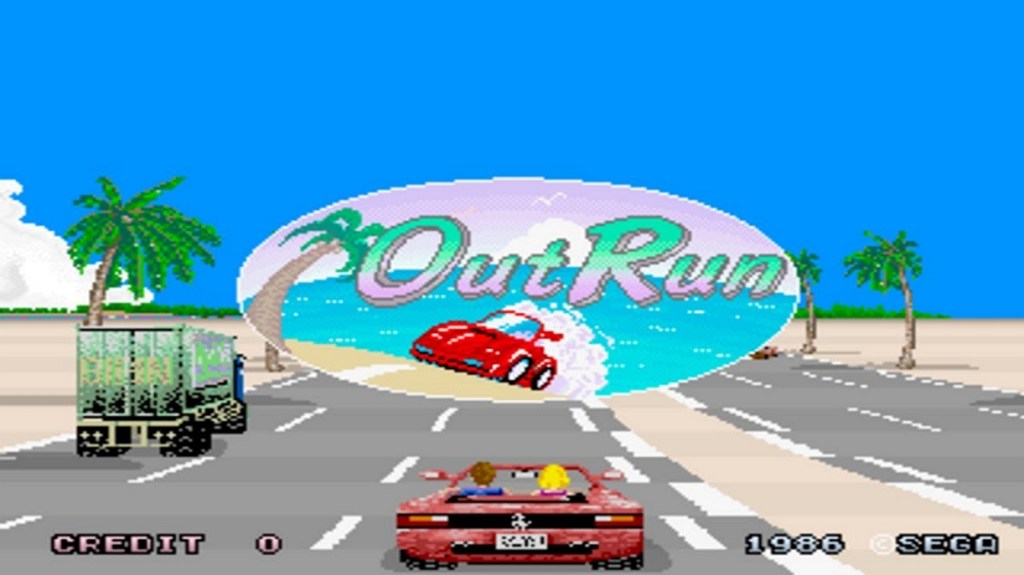
Well, I’ve made it to 2026. Another year done and another year of reviews, opinions, editorials and more ahead of me. As it is now 2026, I get to remember one of my favourite, and one of the greatest games ever made, Out Run. Originally released in September of 1986, I am a few months early to mark the exact 40th anniversary, but I am planning on doing multiple articles throughout the year to look back at Out Run, its influence, legacy and more as I make my way through 2026. I’m going to start off with this article that looks at how it all began.
Back in the 1980s, the Nintendo vs Sega rivalry was simmering away, not quite at the boiling point that it would reach in the ’90s, but things were already heating up. Both companies had made their mark on the home market by then too, and both were producing some top titles thanks to two certain game designers, Nintendo had Shigeru Miyamoto and Sega had Yu Suzuki. Whereas Nintendo were focusing on home gaming, Sega tried to balance between both the home and arcade markets. I have fond memories of walking around an arcade back in the mid ’80s and hearing the many, many sounds of the machines, you could hear certain games before you even saw them. In Out Run’s case, you don’t even have to be in an arcade. Any Out Run fan should have composer, Hiroshi Kawaguchi’s Magical Sound Shower running through their head about now as they read this article.
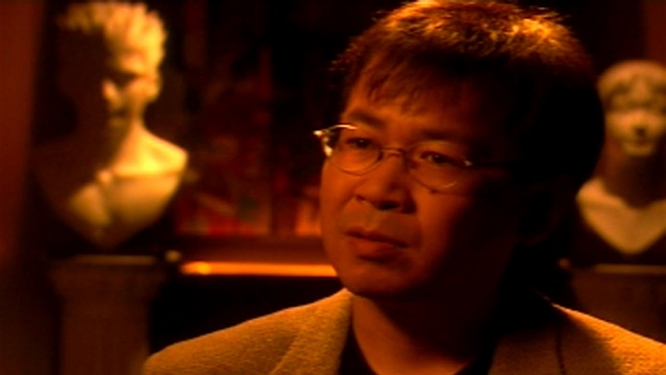
Yu Suzuki had already created some of the best and most popular Sega titles with Space Harrier, Hang-On and Enduro Racer, to name just a few of his hits, the last two both being bike racers. Yu wanted to make a new racer inspired by one of his favourite films, 1981’s The Cannonball Run. He wanted to capture the excitement and scenery of the film and America in general. Yu Suzuki then had a realisation, America is just too big of a place, one that features a lot of wonderfully scenic and very open, but ultimately boring roads and samey. So, he then set his sights on Europe as inspiration for Out Run’s setting instead and went on a two-week tour. As Yu himself recalled in an interview he did with Retro Gamer.
Yu Suzuki: “I felt that I should first actually follow such a course myself, collecting information with a video camera, a still camera, and other equipment. I started out from Frankfurt, where I hired a rent-a-car, and I installed a video camera on the car. I drove around Monaco and Monte Carlo, along the mountain roads of Switzerland, stopping in hotels in Milan, Venice and Rome, collecting data for a fortnight.”
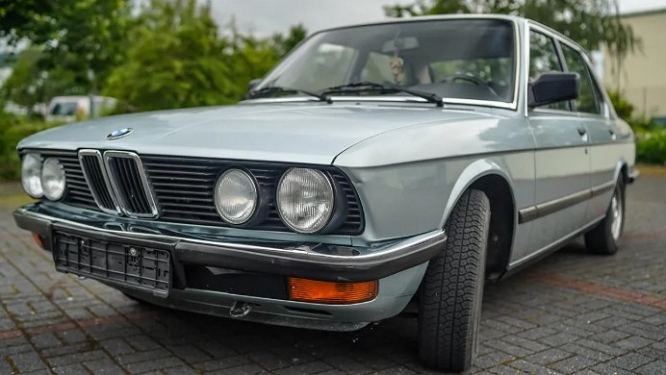
Driving around Europe in a BMW 520, Yu Suzuki began to take videos, photos and copious notes of many of the places he visited. It was while he was in Monaco that Yu found the star for his new game, a Ferrari Testarossa, which had only been in production less than two years at the time. Suzuki fell in love with the Testarossa from that point on and kept envisioning the sexy red sprots car on the road as he continued his tour of Europe. Upon returning to Japan and Sega’s headquarters, Yu began work designing Out Run. He asked Sega to find a Ferrari Testarossa to use as the model for reference, a task that was harder than you realise as there was only a tiny amount of them in the whole of Japan at the time, and those small few were not easy to track down. It took several weeks to find down a Testarossa in Japan, and even then, all Yu Suzuki and his team could do was take photos and record the sounds of the car as the owner was understandably reluctant to let anyone drive his rather expensive new car.
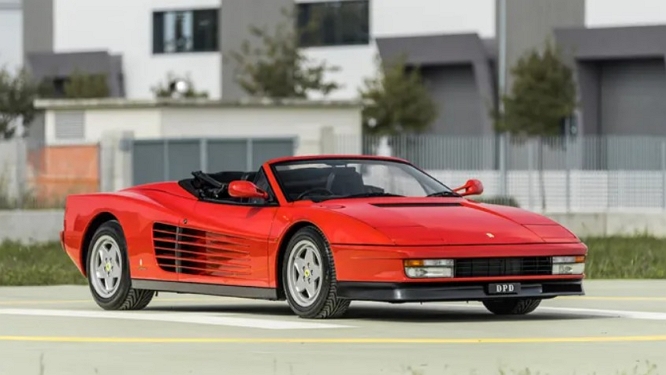
Armed with only a small bit of Ferrari research under his belt, Yu Suzuki did ask Sega to buy a brand-new Ferrari Testarossa for him to use as a “reference”, but they refused… nice try though. Still, coupled with all of the research from his European trip, Yu had the basis for his new game. He didn’t want to make a racing game like others, titles that would focus on gaining positions and fighting to finish first, as so many other arcade games were doing at the time. Instead, Yu wanted to make a game that focused on the “pleasure of driving” over the thrill racing. The big and open roads, the eye-catching scenery, the sun shining overhead in Out Run were all very conscious decisions made for the game to make it as appealing to the eyes as possible. You don’t fight for positions in Out Run, there’s no strive to finish ahead of the pack, You do have to try o beat a timer, but other than that, Out Run was all about the enjoyment of driving. However, we didn’t get everything that he originally intended to be in the game as Yu’s concept began to grow too big for the game itself and several of his ideas never made the final cut.
Yu Suzuki: “I was only able to put around half of the things I wanted to do into Out Run. Because of budget and development time limitations, some of the content I’d planned had to be squeezed or cut. I’d made preparations for eight individual characters and I wanted to include various events at each checkpoint, which would have made the player experience a story, something like The Cannonball Run film. I also wanted to give players a choice of supercars to drive, so that they could enjoy differences in car performance.”
It’s a damn shame Yu Suzuki’s original concepts didn’t make it into the final game, multiple characters and cars, a story, etc. Still, what we got was rather amazing regardless, besides, some of those ideas would make their way into several of the sequels… which I will get to in another article.
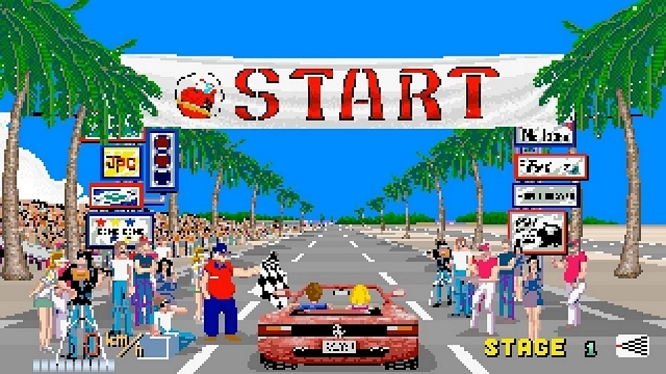
Playing Out Run back then was like nothing else. We may have had driving games before it, but Out Run just felt so different and original. Yu Suzuki’s idea of making a game that celebrated the joy of driving over racing thrills really hit the spot. Just seeing Out Run being played with its sun-kissed environments, buttery-smooth (for the time) gameplay and those unbelievable scaling sprites (super-scaler technology as it is known) really had an effect on me as a young gamer. But to actually play the game was a whole other level. The sense of speed was insane, the freedom of the open road was exhilarating and the awesome music just topped off an already amazing gaming experience.
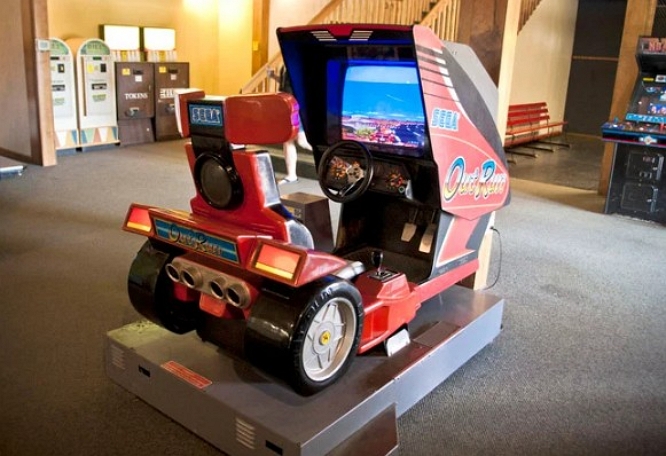
If you were lucky enough to find one of the deluxe, sit-down arcade cabinets, then you were in for a real treat. It featured force feedback on the steering wheel, but best of all, it also had hydraulics. The sit-down cabinet featured a (stripped-down) car model that you could sit in and it would react in time to the action on screen, not just move and tit when turning, but also dip when the car went over bumps and hills (did you know that Out Run was the first car-based videogame to feature undulating roads?), plus the steering column would shake if you crashed. This particular arcade cabinet really was a thing of beauty and is the very best way to play this masterpiece of a game. If anyone wants to donate one to me…
Out Run has itself quite a legacy too with plenty of sequels over the years, as well as the original making special appearances in other Sega games like Shenmue and the Yakuza franchises. For me, Out Run really is something special, even today. It’s just timeless, still just as playable now as it was 40 years ago. That red Ferrari, those blistering graphics and Hiroshi Kawaguchi’s heart-thumping, toe-tapping music. Out Run is just a beautiful blending of elements that have been perfectly mixed. Yu Suzuki created one of the most important video games ever and opened the door for many more arcade races to come. Even today, when people play an arcade racer, it’s often compared or likened to Out Run, I’m guilty of doing exactly this in some of my reviews. Dude wearing sunglasses, blonde girl by his side and a blood-red Ferrari, Out Run was the eighties defined in videogame form and it kickstarted my lifelong love of Ferraris. While playing, the sense of power, adrenaline and exhilaration was unmatched and no arcade could ever truly be complete without an Out Run cabinet, it’s just one of those classics that needed to be there.
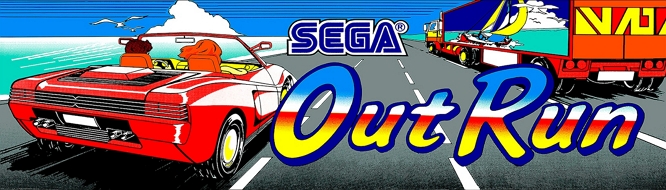
Is there such thing as the perfect arcade game? I’m not sure, but Out Run is pretty damn close to it. Just to finish, did you know that, despite starring the beautiful Ferrari Testarossa, that Out Run was never officially licensed or endorsed by Ferrari? This was way before companies had worked out that they could make money by licencing out their IPs and products. Really, aside from TV and movie games, things like cars were pretty much fair game to recreate in videogames without permission back then.
This article has been edited from my book 66 Of The Most Important Video Games Ever! (According To Me), available to buy from Amazon.
Stay tuned for more Out Run articles throughout the year.
 Little Bits of Gaming & Movies
Please leave a reply/comment.