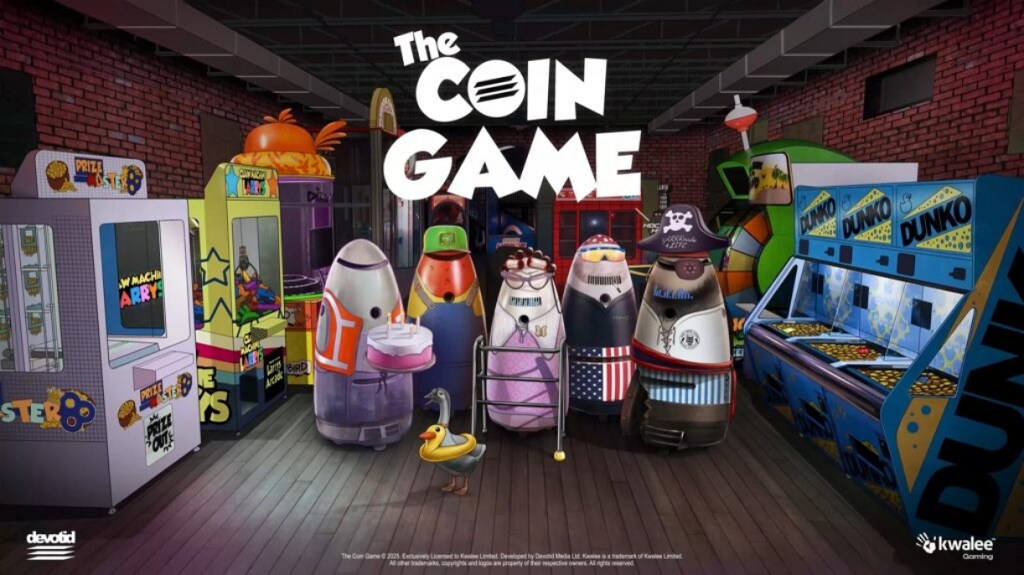
One of my favourite indie games of the last few years was Arcade Paradise, where you turned a laundrette into an arcade with loads of playable games…within the game. The Coin Game from devotid and Kwalee is a somewhat similar premise, but different enough to have its own flavour.
“A collection of ticket redemption arcades with realistic physics, a carnival, goofy robots, open world design, a global ranking system and silly prizes. Featuring 50+ modern inspired arcade machines and a pawn shop to keep money in your pocket. “
The Coin Game is the work of a solo developer, and I genuinely admire that. Whenever I learn a single person built an entire game, I instinctively want to root for them. And to be fair, the scope here is impressive. There’s a lot of game, three modes, a sprawling map, tons of arcade machines, side jobs, distractions, systems layered on systems. On paper, it’s ambitious in a way that only a passionate solo dev would dare attempt.
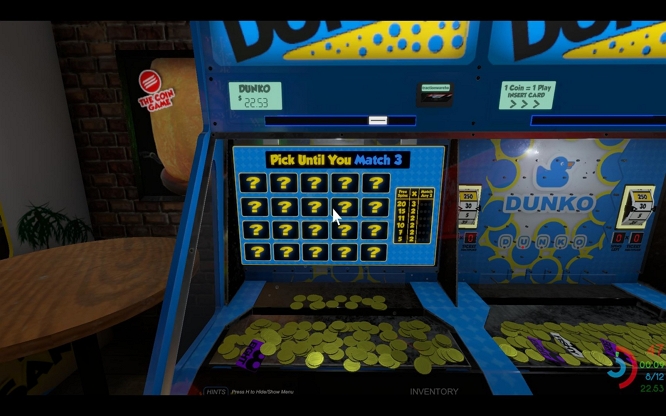
Freeplay mode is a great example of that ambition working in the game’s favour. It lets you experiment with the arcade machines without worrying about money, and it’s genuinely useful for learning the physics quirks and mastering the minigames. Birthday Mode is similarly generous: the whole map is unlocked, all businesses are open, you get pockets full of cash, and no real pressure. It’s the perfect sightseeing tour of everything that The Coin Game has to offer.
But then there’s Survival Mode, the “main course”, and this is where the entire structure starts to buckle under its own weight. The ambition that felt charming in Birthday Mode becomes unwieldy, and the cracks in the game’s fundamentals stop being cute and start being structural. I said earlier that I admire solo devs, and I meant it. But the best solo devs know their limits. They design within their constraints, or they find elegant ways to sidestep them. What devotid has done instead is throw every idea, system, and half‑formed mechanic into the pot, stir vigorously, and hope it resembles a cohesive game. It’s the classic “kitchen sink” problem, except here, the sink is installed upside down, and the plumbing isn’t connected properly.
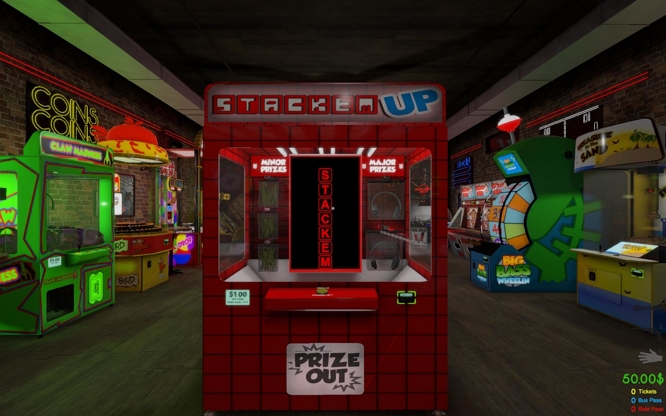
I can forgive the dated visuals that look like they wandered in from the late 90s. I can forgive the janky physics in the open world. I can even forgive the obvious pop‑in, the short draw distance, dated textures, and the murky colour palette that sometimes makes the world look like it’s been dipped in dishwater. What I can’t forgive is the lack of understanding of basic game design principles. Not advanced systems. Not cutting‑edge tech. Just the fundamentals, the stuff that makes a game readable, intuitive, and playable.
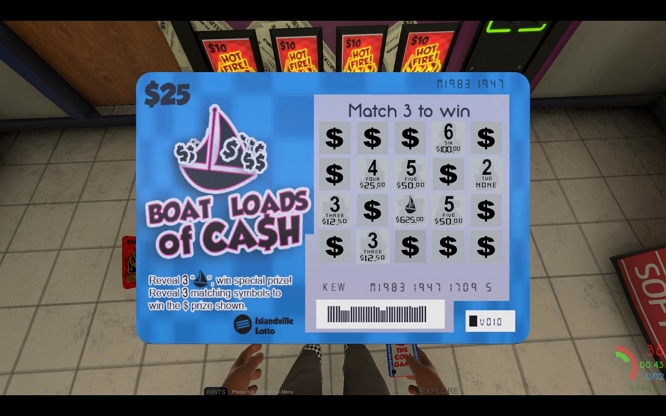
Survival Mode is the clearest example of this. Like any survival game, you’re juggling hunger, sleep, health, and time. Fair enough. But then you’re confronted with a HUD element, a multicoloured circle in the bottom right, that looks like a rejected UI mock‑up from a long‑lost Dreamcast title. At first, I had no idea what it was telling me. Eventually, I realised it was colour‑coding the same information displayed numerically right next to it. In other words: it’s redundant. Pure visual noise. A HUD element that actively obscures clarity instead of providing it. This becomes a recurring theme: the game constantly creates friction where none should exist.
Money is the lifeblood of Survival Mode. Without it, you can’t play arcade games, can’t buy food, can’t take buses, can’t unlock businesses. It’s the single most important resource in the entire experience. So naturally, your first instinct is to take on odd jobs, newspaper and pizza delivery, lawn mowing, babysitting, and more. Sensible enough. For my example, I want to take a look at the newspaper delivery; the whole system collapses into farce. You click on a stack of newspapers expecting to pick it up. Instead, the stack explodes into four individual papers that scatter across the floor like startled pigeons. You then have to pick up each one individually. Every time… for every stack. It’s busywork masquerading as gameplay, and it’s baffling.
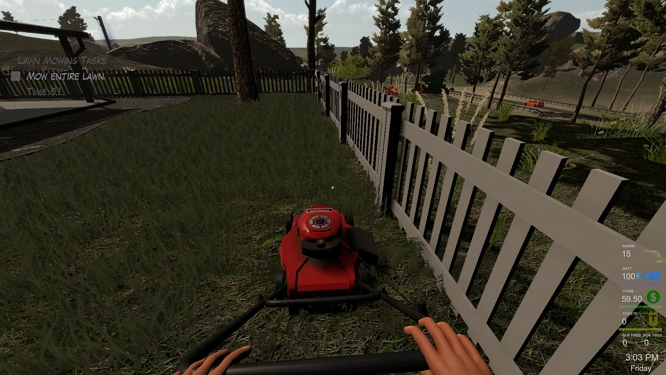
But the real kicker is the delivery process itself. In any sane game, you’d walk up to a mailbox, press a button, and deliver the paper. Done. Intuitive. Logical. The Coin Game, however, opts for a ritualistic sequence that feels like you’re performing a summoning spell: Open your smartwatch, navigate to your inventory, select a newspaper, drop it on the floor, exit the smartwatch, grab the paper (but not to put into your inventory, because that’s where it just came from), physically shove the paper into the mailbox, wrestling with the physics engine like you’re trying to post a live, drunk ferret up a drainpipe.
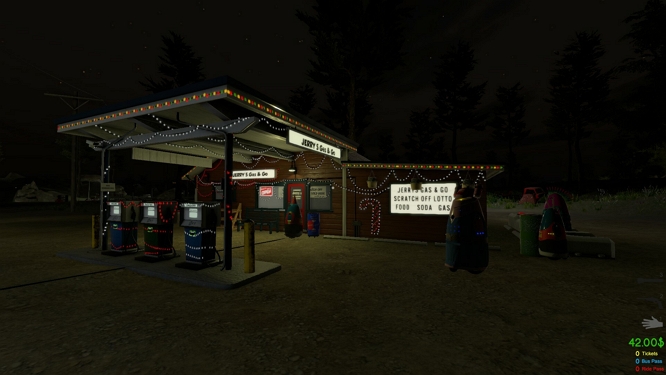
It’s astonishing. Paperboy solved the newspaper delivery problem in 1984. Four decades later, The Coin Game somehow regresses and turns something that should be simple and intuitive, into pure annoyance. Eating food, another basic survival action, is just as clumsy. You can’t simply select and consume an item from your inventory. You must drop it on the floor, close the menu, look at the item, and then eat it. It’s survival mechanics by way of slapstick comedy. This is the heart of The Coin Game’s problems: the fundamentals are broken. And when the basics don’t work, the jank becomes impossible to ignore. The things I was willing to forgive become magnified because the core experience is constantly undermined by awkward, unintuitive design.
Even the tutorial is barely a tutorial. It’s a few lines of text hidden in your smartwatch. Playing on Xbox only makes things worse. I spent a good chunk of time tapping buttons just to figure out what anything did. The control layout screen didn’t help much either. When the button labelled “flashlight” instead brings up the world rankings, you start to wonder whether the console port was tested at all. Maybe it plays better on PC, but on console it feels like the game is actively fighting against every instinct you’ve developed from years of playing games.
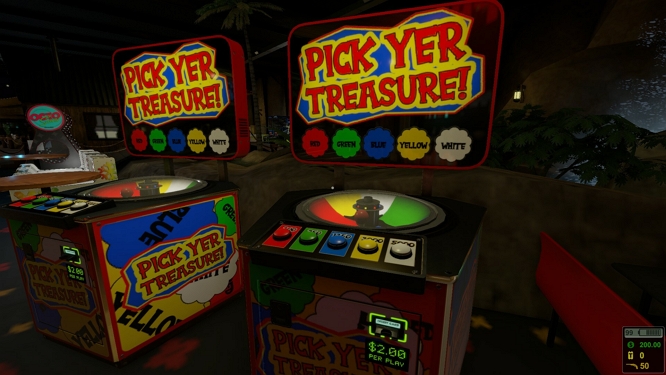
Many of these issues aren’t matters of taste or ambition, they’re basic usability problems that should have been caught long before release. The Coin Game has been in early access for years, and nobody seems to have noticed these issues. Either that or the awful/awkward mechanics are meant to be some kind of in-joke. Was the dev trying to go for a Goat Simulator-style “It’s supposed to be bad, that’s what makes it good” thing? Because it doesn’t need it, The Coin Game is a brilliant concept, packed with so much to do that the crap physics and annoying mechanics overshadow that brilliance. It really does not need the “bad physics and awful controls are part of the experience” quirk because The Coin Game has more than enough quirks to stand out on its own without trying to mimic other titles.
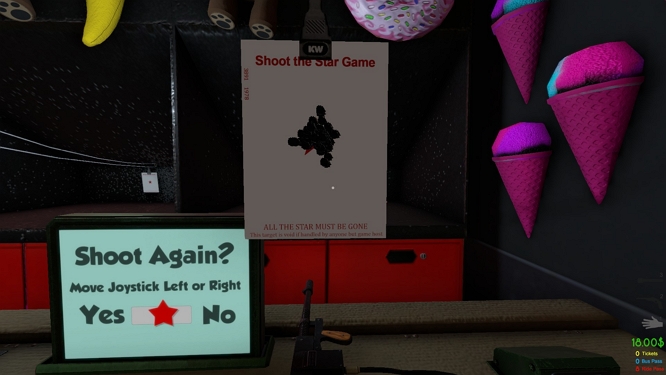
Let me just go back to the tutorial, when I eventually unearthed it, it’s surprising how little it actually teaches you. It offers a vague list of things you can do (“deliver newspapers,” “pawn items,” etc.), but never explains how to do any of them. I’m not asking for a hand‑holding, step‑by‑step guided tour. I’m asking for the bare minimum: enough information to understand the game’s own systems, especially when those systems are already fighting you every step of the way. Take the pawn shop. In theory, it’s a brilliant money‑maker. You can pawn anything: arcade prizes, dumpster finds, random junk. It should be a satisfying little gameplay loop, play games, earn tickets, trade for prizes, pawn the prizes, repeat. But the execution is the same clumsy ritual you endure with newspapers. You can’t simply walk up to the machine and press a button to pawn your items. No. You must: Open your inventory, drop each item onto the floor individually, close the inventory, grab each item individually, wrestle the items into the pawn machine, one by one, while the physics engine tries to fling it into orbit.
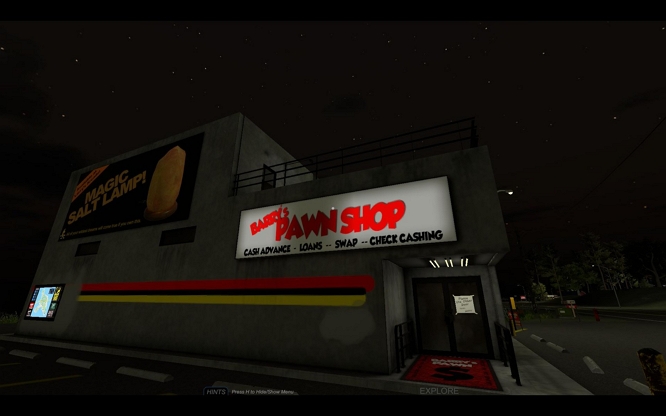
It’s the same pattern of unnecessary friction: a simple action stretched into a multi‑step ordeal that feels like a parody of game design. The map on your smartwatch is another example of bad design. If I tell you a game has a map, you already know how you expect to navigate it. Left stick to pan, right stick or triggers to zoom. This isn’t just convention, it’s muscle memory built from decades of gaming. But The Coin Game ignores all of that. Instead, you’re presented with on‑screen arrow buttons you must manually move your cursor to and click in order to slowly nudge the map around. Zooming works the same way. It’s slow, clunky, and bizarrely archaic. It feels like navigating a map in a mid‑90s educational CD‑ROM, not a 2026 video game.
This is a recurring frustration: so many of the game’s design choices feel like they were made in a vacuum, without any awareness of how games have evolved over the last three decades. Even buying an item from a shop, a task that should take seconds, becomes an unnecessarily convoluted chore. Which is such a shame, because buried under all this friction is a genuinely fantastic concept. A survival game built around arcades, tickets, prizes, and odd jobs? That’s a brilliant idea. There’s a spark of something really special here, something I want to love. The problem is that the execution feels half‑finished, like a prototype that escaped into the wild before the fundamentals were locked down.
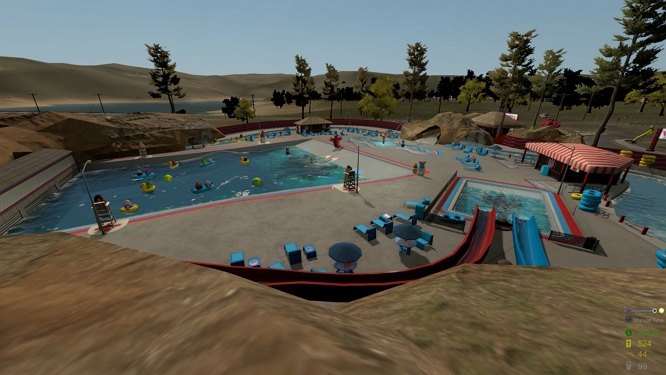
The sheer amount of content on offer is amazingly impressive. The arcade machines are fun, but there’s a lot more. There’s bowling, go‑karts, crazy golf, bingo, laser tag… there’s a water park with slides. There’s a fun fair with rides and stalls. There’s a shopping mall packed with things to do. There are more activities here than many AAA games manage. Birthday Mode, with its unlimited money and full access, is a pleasant sandbox to poke around in. But without any challenge, it quickly loses momentum. Survival Mode is where the game should shine, where the concept should come together. Instead, it exposes every rough edge, every awkward system, every missing quality‑of‑life feature.
The Coin Game is available now on PC, PlayStation, and Xbox. And I genuinely want to tell people to buy it to support the developer, because the idea is so strong that I want it to do well. But I also can’t ignore the reality: the game’s issues aren’t minor quirks, they’re foundational problems that make the experience frustrating in ways it doesn’t need to be. The rough edges need sanding. The core mechanics need tightening. The controls need a complete rethink, especially on console. The tutorial needs to exist in a meaningful and insightful way. This is the work of a solo dev, and as much as I applaud that, it’s clear that this dev could do with some help and guidance.
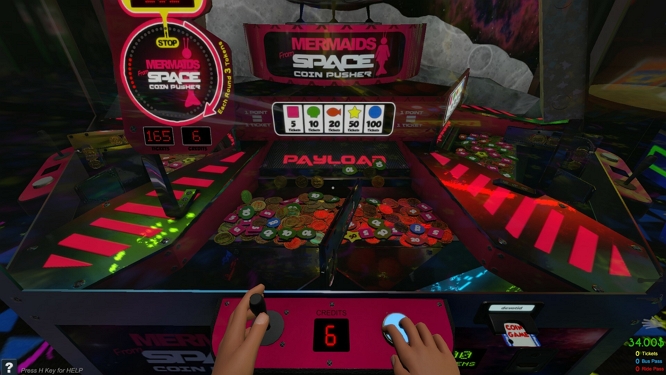
Honestly, The Coin Game could be something truly special, but it needs more time, more polish, and more attention to the basics. It’s close, much closer than its flaws might suggest, but it’s not quite there yet. I think it came out of early access a bit too early. With a few more months of focused work, it could easily become the surprise indie gem of 2026… and I really do want it to be exactly that.
 Little Bits of Gaming & Movies
Please leave a reply/comment.