I’ve written before about the infamous 1983 videogame crash, the one everyone blames on E.T., stories of landfills, and executives who apparently thought quality control was optional. And as I’ve said, the ’83 crash wasn’t actually the apocalyptic industry‑killer it’s often made out to be. A wobble? Yes. A cleansing fire? Not really. Recently, industry veterans John and Brenda Romero have both said that the industry right now feels… “crashy”. And honestly, I agree. Modern gaming feels stagnant, bloated, and weirdly unsafe. Studios are laying off staff even after releasing big hits. AAA budgets are ballooning like they’re trying to escape Earth’s atmosphere. Something has to give and a hard reset wouldn’t be the worst thing to happen.
But that’s not today’s topic. Today, I’m going back to the other crash, the one before 1983. The one hardly anyone talks about. The one with barely any surviving documentation. The one that, if it had gone just a little differently, might have meant we never got games like Doom, or the iconic characters Mario, Sonic, or even the humble “Press Start” screen. I’m talking about the 1977 videogame crash.
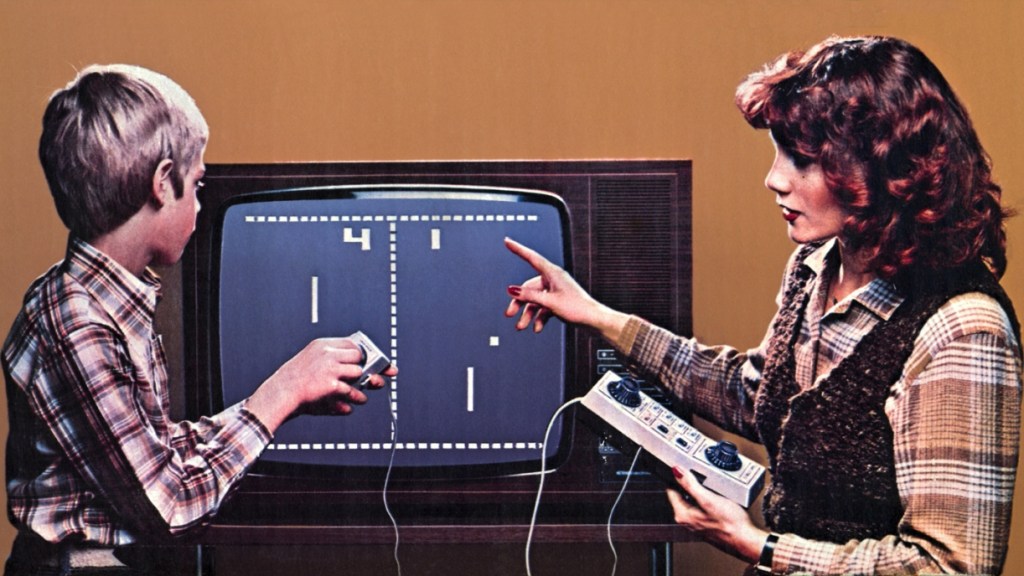
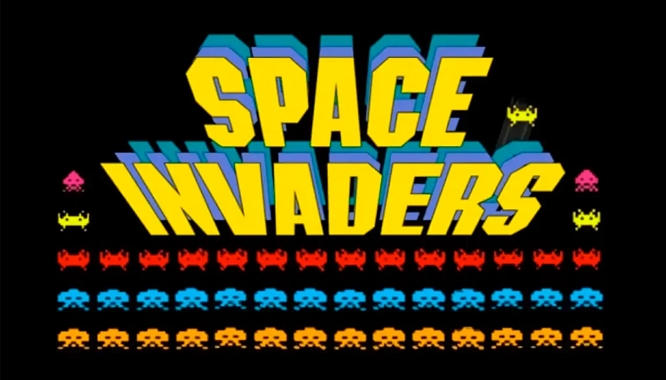
Everything starts with Pong. Not the first videogame ever made, but it was the one that really mattered. Pong was the industry’s Big Bang, the moment the universe of gaming expanded from “some clever engineers messing about with oscilloscopes” to “a thing actual humans queue up to pay to play” Pong’s influence is so pervasive that you could play Six Degrees of Kevin Bacon with it. Take the previously mentioned John Romero: co-founder of id Software, co‑creator of Doom, one of the most influential and important videogames ever made. Romero has gone on record as saying that Space Invaders got him into making games. Space Invaders was created by Tomohiro Nishikado, who was inspired by Atari’s Breakout. Breakout was created as a response to the tidal wave of cheap Pong clones flooding the market. And that tidal wave? That’s where the 1977 crash begins.
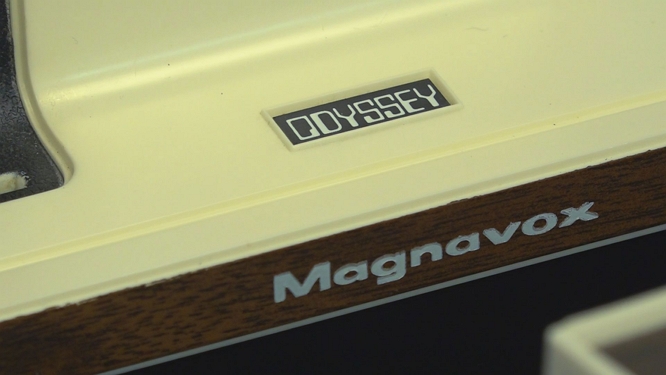
The early ’70s were a strange time. Videogames weren’t “an industry” yet, they were a novelty. A fad. Something naysayers assumed would vanish as quickly as pet rocks. The first home console, the Magnavox Odyssey (1972), barely had graphics. You slapped plastic overlays onto your TV to simulate the visuals. Dice and counters came in the box, and you had to keep your own scores. Really, the Magnavox Odyssey was a board game that you had to use your TV for, more than a gaming console. One of the most popular games on the console was Table Tennis, Pong before Pong existed. Well, yeah, okay, Tennis for Two (1958) was Pong before Pong… kind of. Anyway, Nolan Bushnell and Ted Dabney co-founded Atari, and tasked Allan Alcorn with making a simple tennis game based on the Magnavox Odyssey game. Long story short, He did, it was called Pong… and it changed everything.
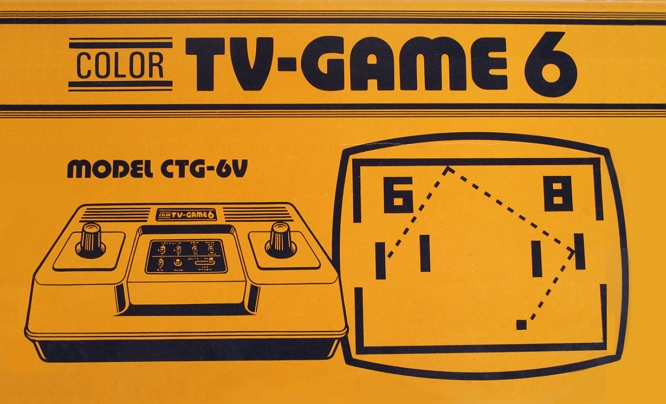
Arcade machines were big and expensive, but the technology behind them was becoming cheaper, so Atari released Home Pong in 1975. The arcade hit was now available to play without leaving your house, and suddenly, everyone wanted a piece of the action. If you had access to cheap microchips and a soldering iron, congratulations, you were now a videogame manufacturer. The home Pong console clones began to arrive, tons of them. Coleco had Telstar. APF had TV Fun. Even Nintendo released the Color TV‑Game 6, which was essentially Pong with a Japanese accent. By 1976-77, dedicated Pong machines were everywhere, of varying quality. Kitchen appliances probably considered releasing their own Pong variants at one point. But here lies the rub: no matter how many “variations” these consoles offered, they were still just Pong. People loved Pong… until they didn’t.
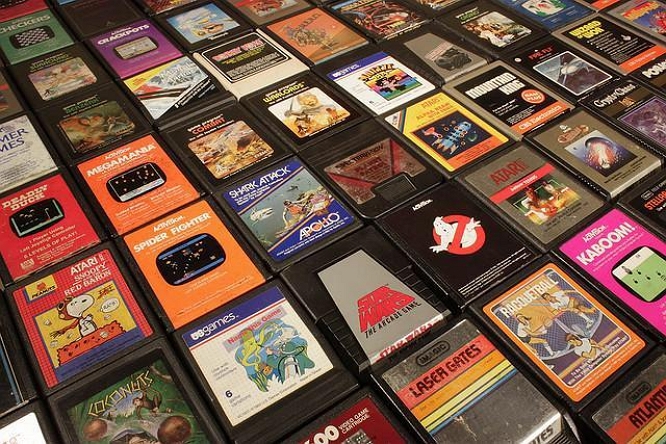
The 1983 crash is famous because it happened when gaming was becoming a cultural force. The 1977 crash is forgotten because gaming was still tiny, and because hardly anyone bothered to write about it. I’m sure you already know what caused the infamous 1983 videogame crash. No, it was not E.T. on the Atari 2600. It was several factors, the main one being that loads of electronics manufacturers jumped on the bandwagon of videogames becoming popular, and they began churning out crap, loads of it. Hardware, software, peripherals, etc. Throwing loads of stuff into the market with little to no quality control. People stopped buying, but there were still millions and millions of unsold units. Companies lost a ton of money, many not surviving, and the 1983 videogame crash was born.

Well, that’s pretty much how the 1977 crash happened, same pattern. A hit product appeared (Pong). Everyone rushed to copy it. The market became oversaturated with low‑effort junk. Consumers got bored. Sales collapsed. Companies died. By 1977, it’s estimated that there were around 500 different Pong consoles worldwide. Not 500 individual units… 500 different models. Hundreds of thousands of machines were being pumped out into a market that had already moved on. Pong created the industry… and then nearly destroyed it.
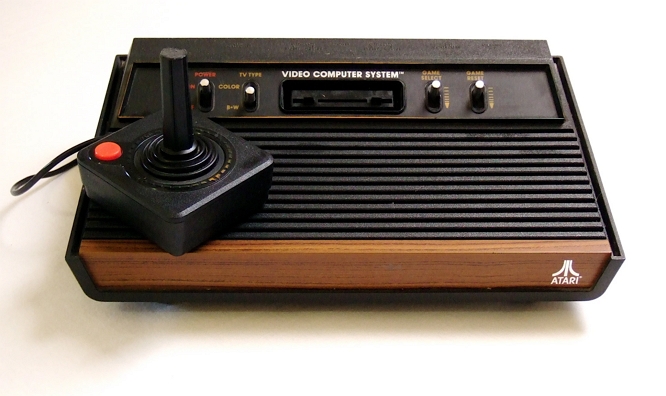
Atari survived by doing something radical: moving beyond Pong. In late 1977, right in the middle of the crash, they released the Atari 2600. A wooden‑panelled miracle. A console with interchangeable cartridges. Suddenly, you weren’t stuck with one game forever. You could play anything. Even Pong, if you really insisted. I do think that Fairchild’s Channel F deserves a mention too; it had already introduced the cartridge concept, but Atari popularised it.
So the home market was recovering, but what about the arcades? Well, Taito flew in to save the day in 1978 by releasing Space Invaders. Just as Pong had ignited the arcade boom earlier in the decade, Space Invaders dragged it back from the brink. The stories of the massive success of Space Invaders have gone down in gaming history. From then, the industry didn’t just recover, it evolved as gaming began to gain popularity once more and more importantly, with richer and more varied titles than just Pong.
Here’s the thing that has me scratching my head: the 1977 crash was more of an impact than the 1983 crash. Not in cultural memory, but in actual impact. Yet, it’s all but forgotten about, the ’77 crash was global. The ’83 crash was mostly a North American problem; the ’77 crash wiped out almost everyone. The ’83 crash was a stumble; the ’77 crash was a meteor strike. There are endless articles written, and YouTube videos from people who were not even born in 1983 covering the ’83 crash (often with lots of misinformation and hyperbole). Yet the ’77 crash is hardly mentioned. If Atari hadn’t survived, if cartridges hadn’t taken hold, if Space Invaders hadn’t arrived when it did… the entire medium might have fizzled out before it even began. There never would’ve been an ’83 game crash, because there wouldn’t have been an industry to crash.
We talk about the ’83 crash because it’s dramatic and well‑documented. But the ’77 crash? That one nearly erased the industry before it had a chance to become one, is hardly talked about. In a strange way, we owe modern gaming to that forgotten collapse. It forced innovation. It killed the clones. It cleared the field for the ideas that would define the next decade. It was the hard reset that was very much needed. Without the 1977 crash, we might never have had videogames as we know them.
 Little Bits of Gaming & Movies
Please leave a reply/comment.