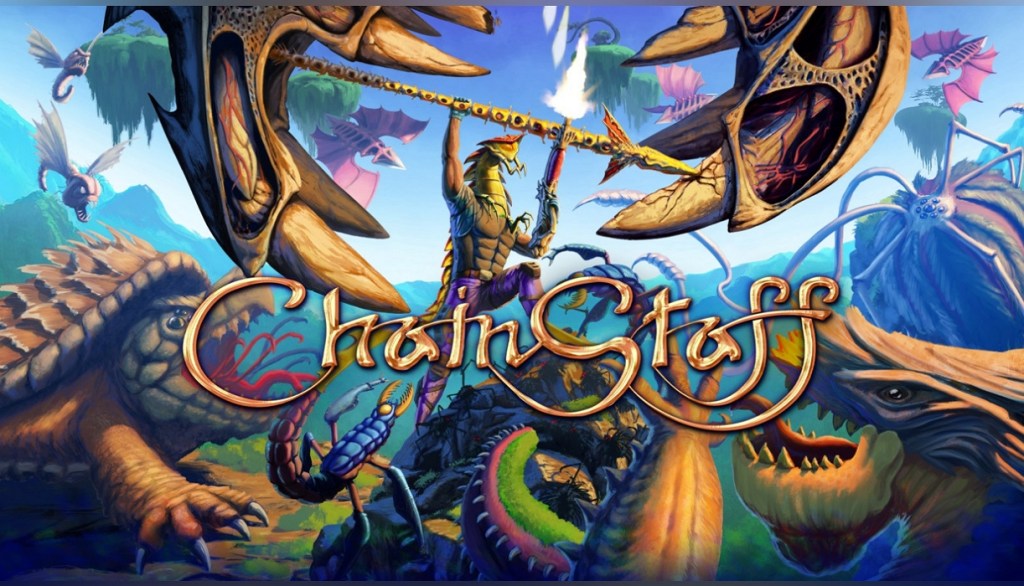
ChainStaff comes from Mommy’s Best Games. Although it is a new title released in 2026, it feels dated… not in a bad way. I mean that it feels and plays like it used to when gaming was amazing. Old-school gaming with a new-school lick of paint.
“ChainStaff is a brutal action-platformer with a transforming spear and grappling hook, blazing weapon upgrades, and a rocking soundtrack. Aliens have attached to your head! Swing, shoot, and spear your way through mutating hordes and bone-shaking boss fights, and get this thing off your head!”
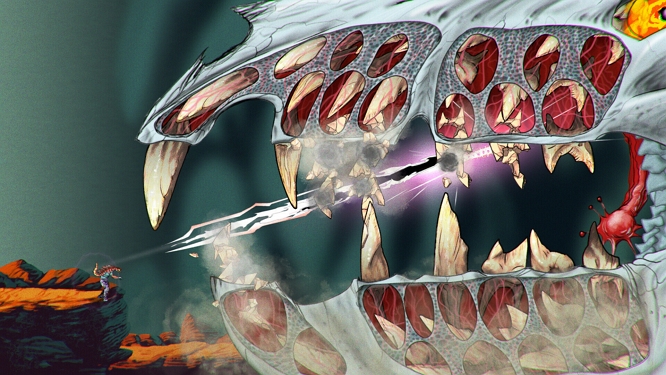
Before diving into ChainStaff, I need to address the developers’ statement: “The art is all hand-drawn and uses no AI generated baloney! Art made by real people rules.” It’s the kind of salvo that feels like it should be shouted from atop a mountain while a wizard plays a keyboard solo behind you. And honestly? They’ve earned the right to be smug. ChainStaff doesn’t just look good, it looks like someone fed an Amiga, a stack of prog‑rock vinyl sleeves, and a bucket of hallucinogenic spores into a blender and hit “obliterate.”
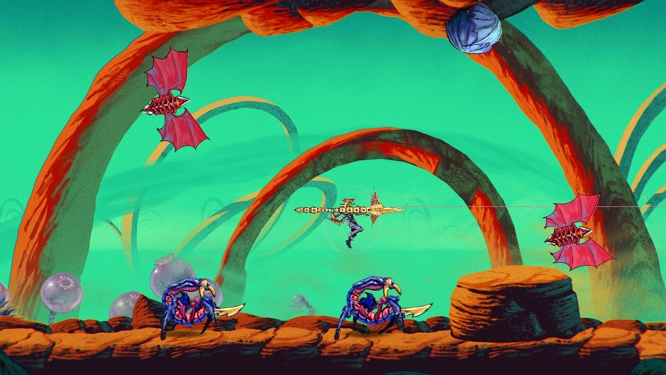
The premise is delightfully pulpy. Earth has been overrun by alien spores, turning the planet into a bug‑infested fever dream. You play as Sergeant Varlette, a soldier who is technically dead but still clocking in for work thanks to a parasitic alien clamped to his skull. It’s the sort of setup that would feel ludicrous if the game didn’t commit to it with absolute sincerity. ChainStaff knows exactly what it is, and it’s having a blast being it.
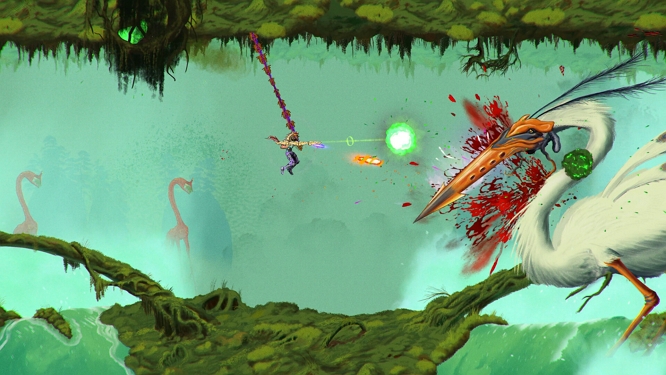
Within minutes, the nostalgia hits like a steel‑toed boot to the nards. This is pure late‑’80s/early‑’90s energy, the kind of game that would have melted your Amiga 500 while you stared, slack‑jawed, at the loading screen. The Psygnosis influence is so strong, I half‑expected the owl from the logo to swoop in on the title screen. The ChainStaff logo itself looks like Roger Dean designed it during a particularly vivid dream, and the levels resemble the inside of a prog‑rock album gatefold where gravity is optional and everything glows ominously. It’s like you’re playing through the art of a Yes or Uriah Heep album. It’s utterly mesmerising. More than once, I stopped mid‑action just to admire the scenery. The soundtrack matches the visuals beat for beat. Crammed with metal riffs, synth flourishes, and enough dramatic flair to make you feel like you’re storming the stage at a 1976 arena tour. It’s very easy to forget you’re supposed to be playing ChainStaff rather than just vibing to it.
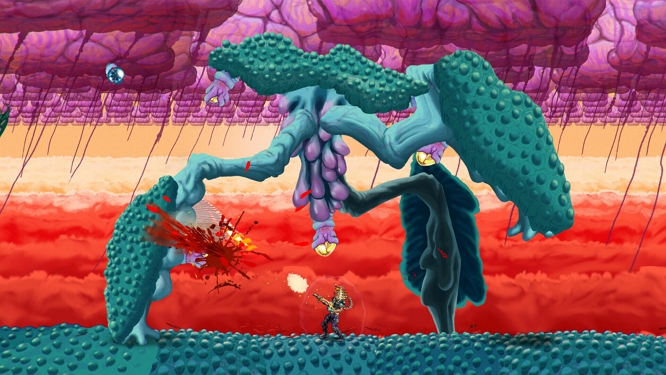
But spectacle alone doesn’t make a great game. ChainStaff’s gameplay is a cocktail of Shadow of the Beast and Turrican, with a soupçon of Bionic Commando, and Contra thrown into the mix, shaken vigorously, and served with a garnish of “remember when games didn’t care about realism?” Levels are mostly linear but peppered with secrets, optional routes, and Metroidvania‑style gating. New abilities, double jumps, waterfall swimming, gas‑cloud gliding, open up previously inaccessible areas, encouraging repeat runs for the obsessive, 100% hunters among us.
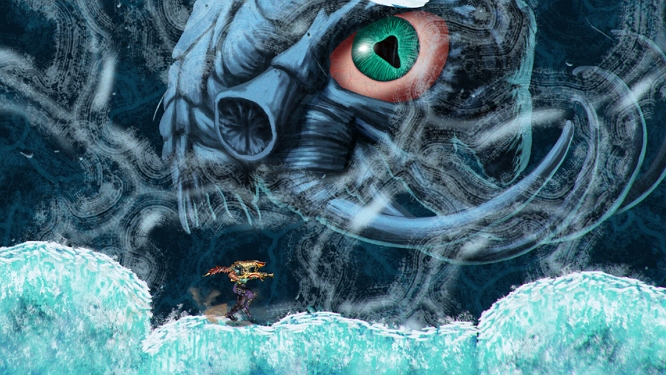
Each level tasks you with finding a core spore, defeating a boss, and rescuing injured soldiers. The latter introduces one of the game’s more darkly comic mechanics: when you find a wounded comrade, you can send them back to base for medical help… or you can eat their heart or slurp their brain like a morally compromised smoothie. It’s grisly, yes, but it’s also so gleefully over‑the‑top that it loops back around to being funny. So you can play as a noble soldier or a walking alien HR nightmare. Oh, and there are special upgrades that you can only get by harvesting your fellow soldiers’ organs.
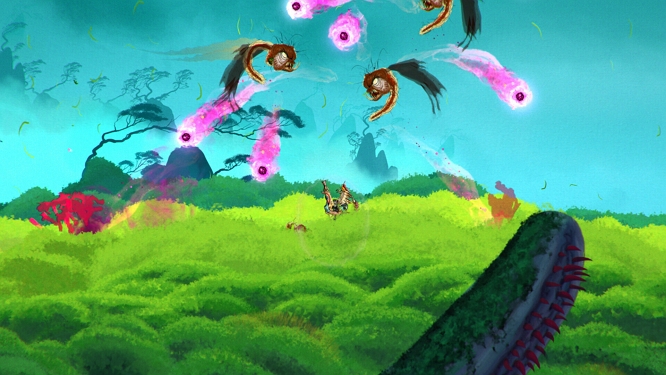
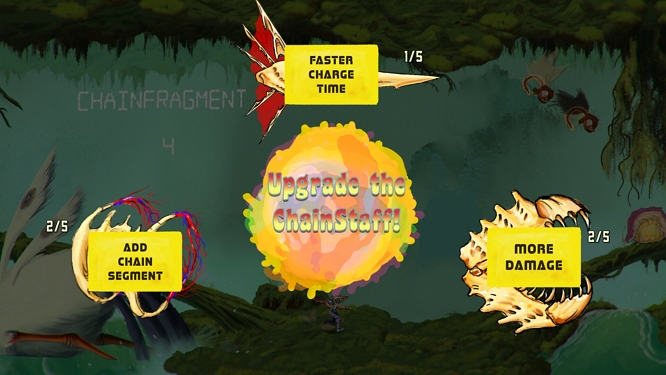
Upgrades are plentiful. Tech points enhance your gun with missiles, grenades, and other toys, while the titular ChainStaff is a wonderfully eccentric Swiss Army weapon. It’s a spear! It’s a controllable platform! It’s a structural support beam! But best of all, it’s a grapnel used for traversal, exploration, and it’s just damn handy for taking out enemies and bosses. It’s basically the tool MacGyver would carry if he’d grown up listening to King Crimson. Finding fragments to upgrade it adds another layer of exploration, and the interplay between staff, gun, and movement abilities gives the combat a satisfying, rhythmic flow.
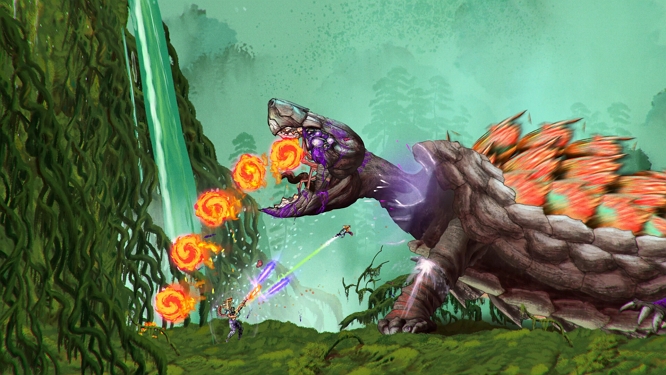
ChainStaff is tough, but crucially, it’s fair. It channels the spirit of old‑school difficulty without the cheap nonsense that often came with it. Boss fights are chunky, screen‑filling spectacles that feel like they should come with their own tour merch. Levels are sprawling, imaginative, and reward curiosity. If you really pushed me, I did have one personal gripe. The default control scheme is… enthusiastic. It feels like the game is trying to map every idea it’s ever had onto your thumbs simultaneously, and for me, it felt awkward. Thankfully, the developers have provided a buffet of customisation options. Full rebinding, alternate layouts, and a twin‑stick mode let you sculpt the controls into something far more intuitive. Once I configured the controls to how I liked them, the game played beautifully. As I said, it’s a personal gripe, but one that was easily fixed.
It took me around seven hours to reach the credits, but I’ve spent closer to twenty on additional playthroughs exploring, upgrading, and revisiting earlier levels with new abilities. And do you know what? I still want to play some more. Multiple endings, New Game+, and a wealth of secrets give ChainStaff real staying power. Out now for PC, PlayStation, Xbox and Switch.
Ultimately, ChainStaff is a rare treat: a retro‑inspired action-platformer that understands its influences without being trapped by them. It’s visually stunning, mechanically rich, and proudly, gloriously weird. It won’t convert players who dislike an old‑school challenge, but for those who crave that era’s uncompromising energy, and who appreciate art that looks like it escaped from a 1970s record store, it’s an easy recommendation. ChainStaff doesn’t just look like a lost Amiga classic, it looks like the one your older brother swore existed but you could never find. It’s like a game that Psygnosis planned to release in 1995 as a swansong of the Amiga years, but never did. And now that it’s here, it absolutely rocks.
 Little Bits of Gaming & Movies
Please leave a reply/comment.