When Street Fighter II arrived in arcades back in 1991, I was a fifteen‑year‑old, wide‑eyed, utterly clueless idiot. I can still picture the exact moment I first saw it: the arcade near Lickey Hills in Birmingham. It’s still there today, now reincarnated as a bar/restaurant/live‑entertainment hybrid, but proudly housing a few retro cabinets for us old farts. I’d played the original Street Fighter, but the sequel felt like a whole other level of gaming.
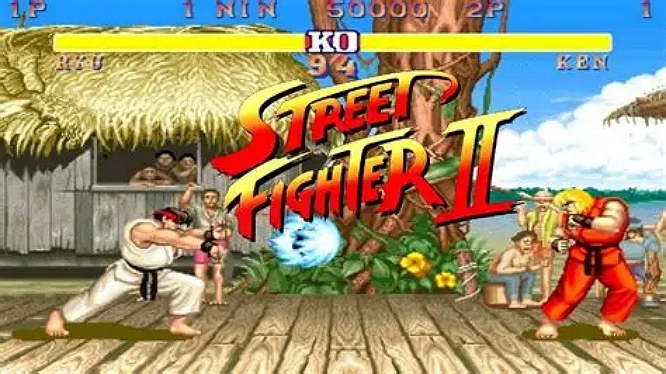
My first ever go? I picked Zangief. No idea why. I was staring at the character select screen, selected at random, and ended up facing Dhalsim. I was annihilated. I didn’t know how to play; I just knew the game looked astonishing. Huge sprites, vibrant animated backgrounds, sound effects that felt like they were punching the air out of the room. I was so dazzled by the spectacle that the concept of learning the controls didn’t even cross my mind. My second attempt wasn’t much better. After Dhalsim had decimated me, I switched to Ken and found myself up against Ryu (classic match-up). I was destroyed again, but this time, I noticed something: special moves like fireballs. And with the audio quality of early‑90s arcade cabinets being… let’s say “not Dolby Atmos”, I had absolutely no idea what Ryu was shouting. To my fifteen‑year‑old, clueless‑idiot ears, it sounded like: “How do Ken?”
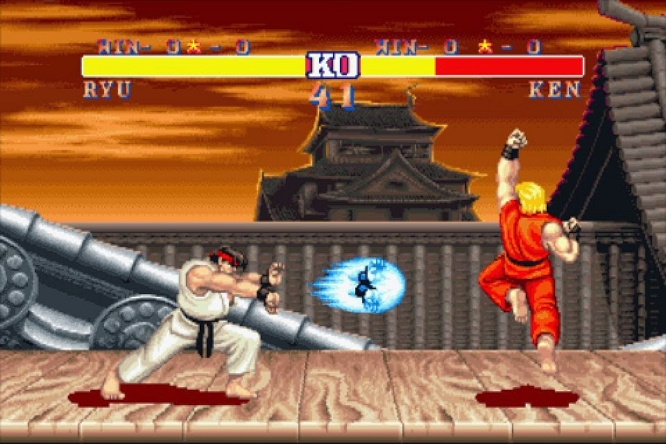
Being English, and “How do” being a perfectly normal northern greeting, I genuinely thought Ryu was politely saying hello to Ken… while simultaneously trying to beat the shit out of him. Back then, it never occurred to me that the characters were speaking Japanese. Or that they were meant to be from different countries. The fact that they had profiles listing height, weight, blood type, and birthdays, this was all new territory for videogames. So to me, those voice clips weren’t foreign languages, they were just muffled nonsense. Of course, now everyone knows Ryu wasn’t greeting Ken with a friendly How do? But what was he saying? And what did it mean? With the help of a Japanese translator, I dug into the actual phrases behind those iconic, fuzzy audio clips, and that’s what this article is all about.
Hadouken
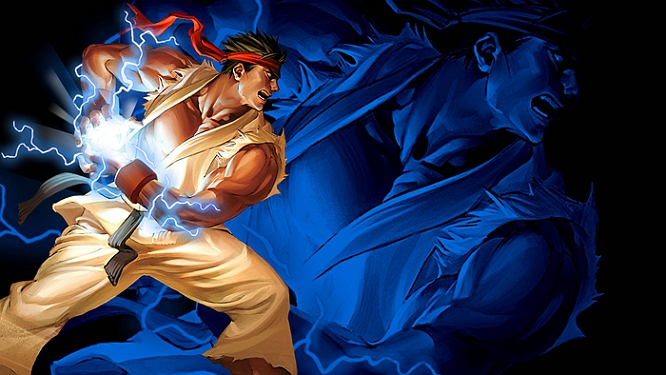
Let’s start with the big one. “How do Ken?” was, of course, Hadouken (sometimes spelt Hadoken). Technically, it’s two words:
- Hadou: wave motion
- Ken: fist
Put together: Wave Motion Fist. Which makes some sense, given the whole “energy projectile from the hands” thing. A fun extra: the Hadouken’s conceptual roots come from the 1974 anime Space Battleship Yamato, where the ship fires a devastating energy beam called the Wave Motion Gun (Hadouho). So Ryu’s famous fireball is basically anime naval artillery repurposed for martial arts.
Tatsumaki Senpukyaku
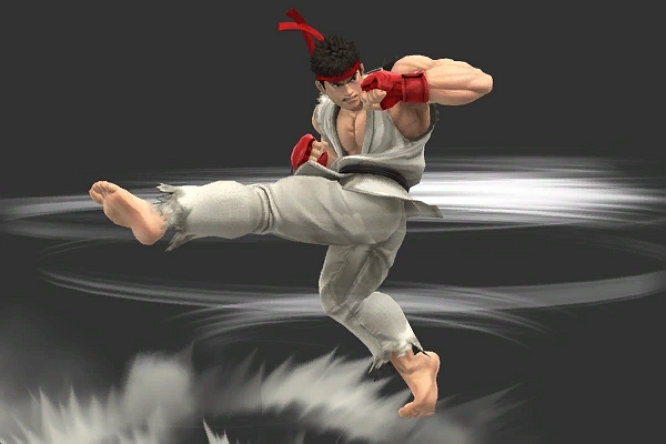
The Hurricane Kick, or as the characters shout, Tatsumaki Senpukyaku, was another one I completely misheard. To me, it sounded like: “A‑dit‑dat‑do‑Ken!” As if Ryu had suddenly broken into jazz scat singing. But, surprisingly, no. Broken down:
- Tatsumaki: tornado
- Senpu: spinning wind/whirlwind
- Kyaku: foot/leg
Put together: Tornado Spinning Leg. Which is why the English name “Hurricane Kick” is actually a pretty faithful interpretation. I still think my jazz scat singing theory was better, though.
Shoryuken
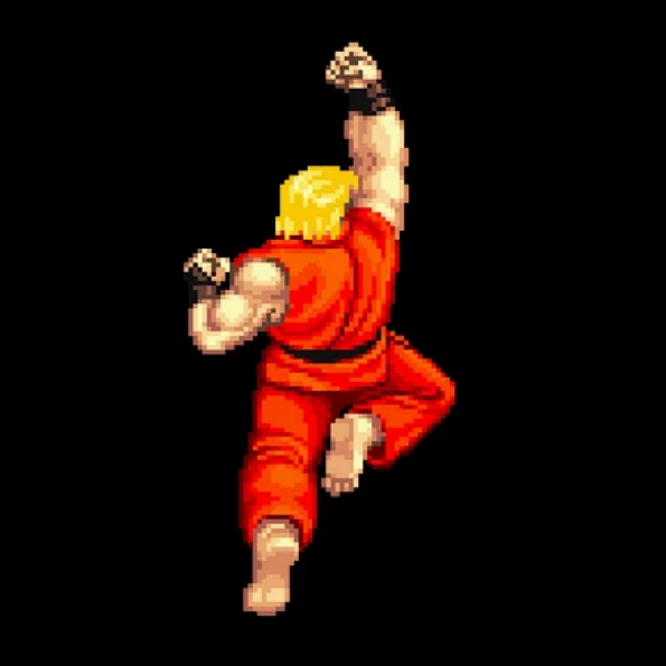
Ah yes. The most famous move in the game. And to my teenage ears, it sounded like Ryu was shouting: “Aaaaaaare you Ken?” Which, in my defence, made some sense when playing as Ryu, just maybe he was asking if everyone was Ken. However, it made much less sense when playing as Ken… unless you invented a backstory where Ken had severe memory issues and no idea of his own identity. The real breakdown:
- Sho: rising
- Ryu: dragon
- Ken: fist
Rising Dragon Fist, better known as the Dragon Punch. Another little bonus for you: it’s a three‑hit move, fist, knee, and elbow. And in the original Street Fighter, if you landed all three hits with perfect timing, it was an instant KO. No wonder Sagat lost.
E. Honda
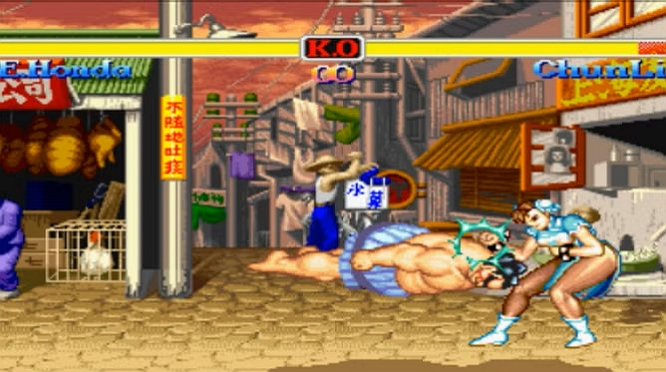
E. Honda, full name Edmond Honda, which still amuses me, also shouts something during his Sumo Headbutt. I always heard: “Two points!” Most probably because I used to play a lot of Karate Champ before SFII was released, where the judge awarded points for clean hits. Why Honda was awarding himself points mid‑match, I couldn’t tell you, but it made perfect sense to me back then. What he actually says is: Dosukoi. A traditional exclamation used to express effort, encouragement, or exertion during sumo wrestling matches. It doesn’t have a literal translation; it’s more of a chant, a vocalisation of force and spirit.
Chun‑Li
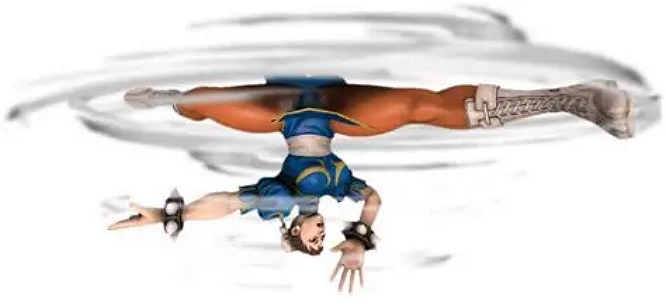
Despite being Chinese, Chun‑Li shouts her Spinning Bird Kick in Japanese. And yes, it really does sound like she’s saying it in English, because she basically is: Supiningu Bādo Kikku. Which… yeah. You don’t need me to translate that one. The low‑fi audio of the era blurred the Japanese and English together, making it sound like she was just shouting the move name in English. Turns out she was shouting the move name in Japanese that sounds like English.
Chunners had one more. Her victory cry, Yatta!, is also Japanese. Why she’s speaking Japanese when she’s Chinese is anyone’s guess. There’s no perfect or direct English equivalent, but it’s an exclamation of triumph, excitement, or joy. Think of it as shouting “Yay!” after winning.
Background Japanese
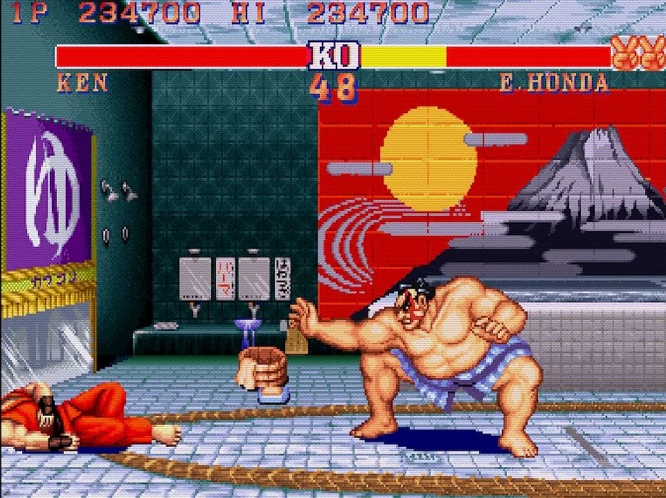
Beyond voice clips, there are a few Japanese characters hidden in the backgrounds. E. Honda’s bathhouse stage has some, but they were a bit too “non-HD” for me to make out clearly (there’s a couple on the back wall in the above pic, no idea what they say). Well, I could make out one, on the far left of the stage. I believe it reads Yu, which (when used on a sign) means public bath, which makes a lot of sense given Edmond Honda’s stage. I have been told that under that, it says Capcom in Japanese (Kapukon).
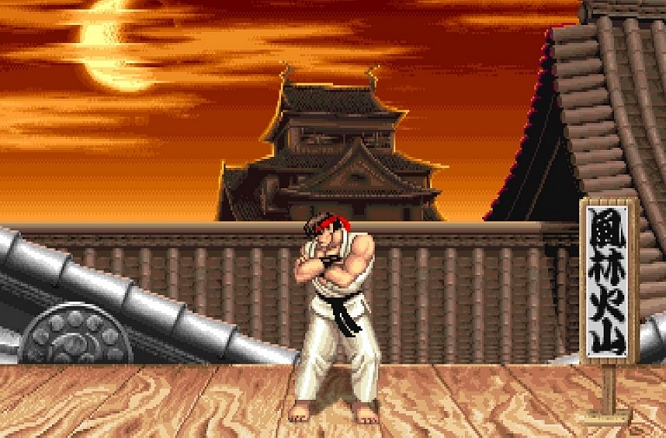
Ryu’s stage (Suzaku Castle) features two vertical banners that are much easier to read. From top to bottom, they display:
- Fu: wind
- Rin: woods
- Ka: fire
- Zan: mountain
Individually, they seem random. Together, they form Fūrinkazan, a famous four‑character idiom (yojijukugo) derived from Sun Tzu’s The Art of War. It was used as a battle standard by the legendary samurai Takeda Shingen during the Sengoku period.
The original phrase (basically) reads:
- Rapid as the wind
- Steady as the woods
- Fierce as fire
- Immovable as a mountain
Ryu’s stage uses the shortened idiom, a subtle nod to Japanese military history tucked into a fighting game backdrop.
I’m fairly sure that covers all the Japanese speech in Street Fighter II. There might be some obscure sample I’ve missed, but I think I’ve caught the major ones, and certainly all the ones that baffled my fifteen‑year‑old, clueless‑idiot self back in 1991. What once sounded like muffled gibberish turns out to be a surprisingly rich mix of martial‑arts terminology, cultural references, and historical allusions. And while the audio quality of the early-’90s didn’t do these phrases any favours, the voices are much clearer in newer titles these days. Still, it was great to learn that Ryu wasn’t casually greeting Ken (How do Ken?), but also what the English translations were.


Please leave a reply/comment.