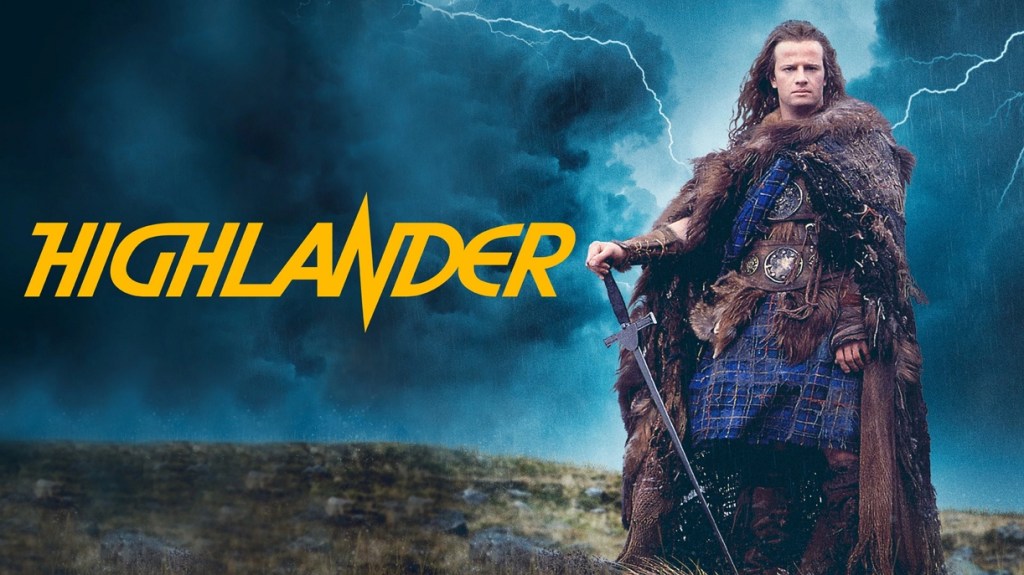
Highlander is forty years old this year. And if there is any film that never should’ve become a franchise, Highlander is it. To celebrate this flick about immortal swordfighters who chop each other’s heads off, I’m going to do something truly painful… I’m going to watch all of the films. Every last one. Yes, I’m aware the Highlander brand sprawled far beyond cinema, TV series, videogames, audio dramas, novels, comics, the lot, but for this retrospective, I’m just focusing on the mainline films. The core text. The beating, usually sputtering heart of the franchise. My goal is simple: to explore how something so imaginative went so catastrophically wrong, so very quickly.
If you’ve never seen any of the films, consider this your warning: this article contains SPOILERS. Though frankly, some of these films spoil themselves long before I get the chance.
Highlander
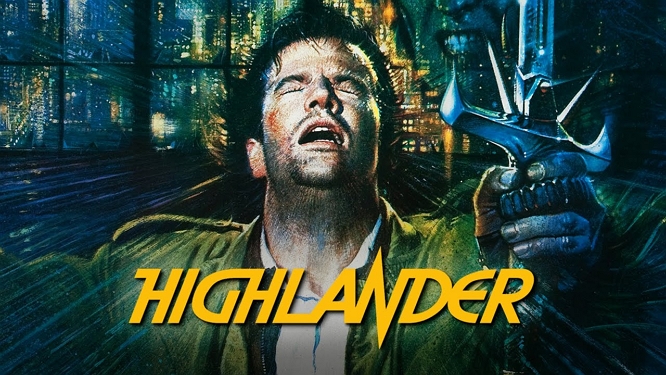
Highlander wasn’t a huge box‑office success; in fact, it lost money. But when it hit the home‑video market, something remarkable happened. It didn’t explode; it ignited. Quietly, steadily, and persistently. The film crept into the cultural bloodstream like a whispered secret passed between teenagers in rental shops. It confused critics, underperformed in cinemas, and then, on VHS shelves, suddenly made perfect sense. Its blend of fantasy, rock‑opera swagger, neon‑lit melancholy, and sword‑clashing melodrama found the audience it had always deserved. Highlander became the kind of film people rented, rewound, memorised, and evangelised about to their mates down the pub. A cult classic in the purest, most hard‑earned sense.
At its heart is Connor MacLeod (Christopher Lambert), a young Scottish warrior in the 16th century who is mortally wounded in battle by a monstrous brute known as The Kurgan (Clancy Brown). Connor dies… until he doesn’t. The next day, he’s up and walking, completely healed, which leads his village to assume he’s in league with the Devil. Banished and heartbroken, Connor begins a new life and meets Heather, who becomes the love of his life.
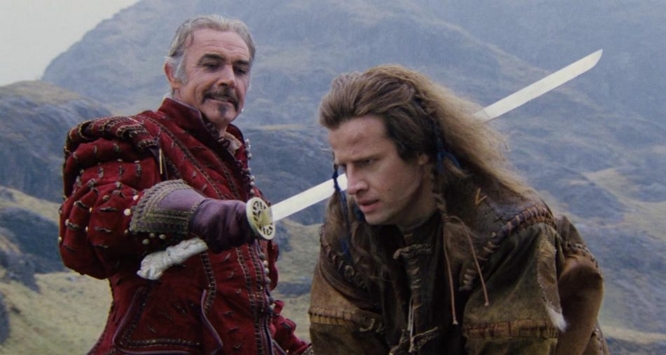
Their peace is shattered by the arrival of Juan Sánchez Villa‑Lobos Ramírez (Sean Connery), a Spanish (he’s not Spanish, he’s Egyptian!) traveller who reveals the truth: Connor is an immortal. He will never age, never fall ill, and can only die if someone removes his head. Ramírez is also an immortal, as is The Kurgan, and countless others scattered across the world. Their destiny is to fight until only one remains. This final confrontation is called The Gathering, and the last immortal standing will claim The Prize.
Highlander may have flopped in cinemas, but its cult following has never wavered. The Queen soundtrack certainly didn’t hurt, it’s one of the great marriages of film and music, elevating the story into something mythic. But for me, Highlander has always felt like a self‑contained tale. The film’s mantra, “There can be only one,” isn’t just a catchy line, it’s the entire narrative structure. Immortals fight until only one survives. That’s the story. Full stop.
There isn’t a lot of wiggle room for sequels when the entire point is that everyone except one is dead. But Hollywood has never let something as trivial as narrative logic get in the way of a sequel. Thanks to Highlander’s massive success on VHS, a follow‑up was commissioned and released in 1991. Oh dear…
Highlander II: The Quickening
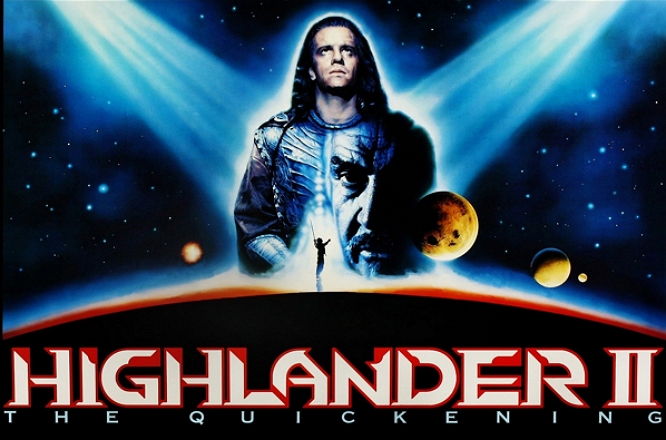
Highlander II: The Quickening is often regarded as one of the worst film sequels ever made, and for once, the Internet hive mind is absolutely correct. What Highlander II manages to do is take everything that was great about the first film and hurl it straight out of the nearest window. If you thought the plot of the original was a bit stupid (and let’s be honest, it was)… strap yourself in.
We begin in the distant future of 2024 (I’ve lost you already, eh?) where Connor MacLeod is now an old man. Having claimed The Prize at the end of the first film, he’s been allowed to age. He’s also used his newfound powers to help develop a giant shield around Earth to replace the damaged ozone layer. I did warn you the plot was going to get worse, and we’re only at the opening crawl.
One of the strengths of the original Highlander was its ambiguity. Who were the immortals? Where did they come from? Why did they exist? The film didn’t explain, and it didn’t need to. But Highlander II decides ambiguity is for cowards. Here, everything is “explained”, and the explanation is that the immortals are aliens from a planet called Zeist. Yes, I did just type that, and yes, you did just read it. They’re aliens from a planet called Zeist. And they’re not even immortal on Zeist. The planet is a grim, war‑torn wasteland where Connor MacLeod was once part of a rebellion led by Ramírez. They attempted to overthrow the tyrannical General Katana (Michael Ironside), but were captured. The priests of Zeist sentenced Connor and Ramírez to be exiled and reborn on Earth as immortals, destined to fight for The Prize. So the events of the first film happened… because of a pissed off alien priest.
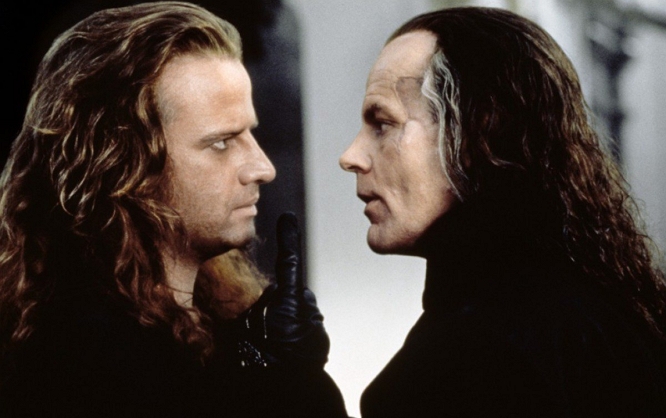
Back in the “future” of 2024, Connor is now elderly and on the brink of death, until General Katana, who hasn’t aged a day over many centuries despite being mortal on Zeist (don’t think about it too hard), decides to send two alien assassins to Earth to kill him. They fail, get decapitated, and this somehow makes Connor young and immortal again. If you think I’m doing a bad job explaining this, here’s the film itself trying to clarify things:
Louise Marcus: “Okay, now let me just see if I can get this straight. You come from another planet, and you’re mortal there, but you’re immortal here until you kill all the guys from there who have come here… and then you’re mortal here… unless you go back there, or some more guys from there came here, in which case you become immortal here… again.”
Connor MacLeod: “Something like that.”
That is an actual exchange from the film. Someone wrote that, someone filmed it, someone edited it, someone looked at the footage and said: “Yep, that’s worth keeping in the film.”
Because Katana’s minions fail, he decides to come to Earth himself. Ramírez, who was very much dead in the first film, returns because… the script says so. Connor and Ramírez team up, fight Katana, and that’s essentially your lot.
Highlander II: The Quickening is so riddled with flaws, contradictions, and gaping plot holes (there was absolutely no reason for Katana to send anyone to Earth to kill Conner because he was old and going to die soon anyway. Also, why is Connor being alive on Earth such a problem for Katana when it was he who sent Connor to Earth to begin with?) that it becomes embarrassing to watch. It is genuinely one of the laziest, most bafflingly constructed sequels ever produced. Peter Bellwood wrote the screenplay, with Brian Clemens and William N. Panzer credited for the story. Three people were paid for this. I reckon I could’ve come up with a much better sequel idea in the time it took them to type “Zeist”.
Multiple cuts of the film exist, including one that tries to remove the alien storyline entirely, so if you’ve seen Highlander II and don’t remember any extraterrestrial nonsense, that’s probably why. But it doesn’t matter which version you watch. They’re all bad, so spectacularly bad. This is the sequel that decapitated its own franchise. And yet, despite this film effectively killing the Highlander franchise before it even got going… another sequel was made.
Highlander III: The Sorcerer
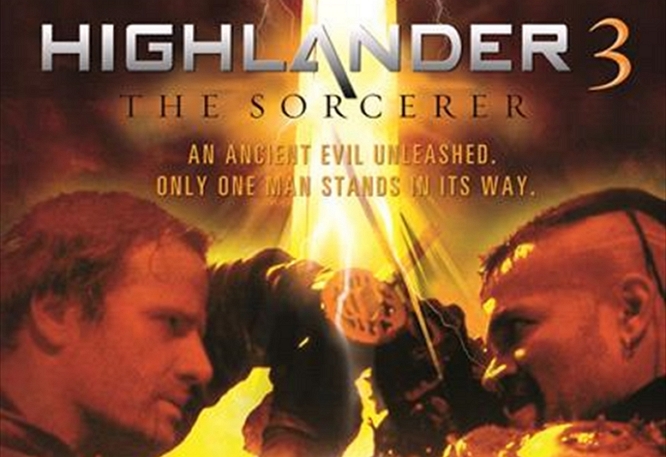
To be fair, this film is nowhere near as bad as the previous one, though that’s hardly a compliment. Highlander III: The Sorcerer (also known as Highlander: The Final Dimension) takes the boldest creative decision imaginable: it flat‑out ignores Highlander II and pretends the events of that cinematic disaster never existed. And honestly? That was the correct choice. Many fans even consider this the “true” sequel to the original film, which tells you everything you need to know about the state of the franchise by this point.
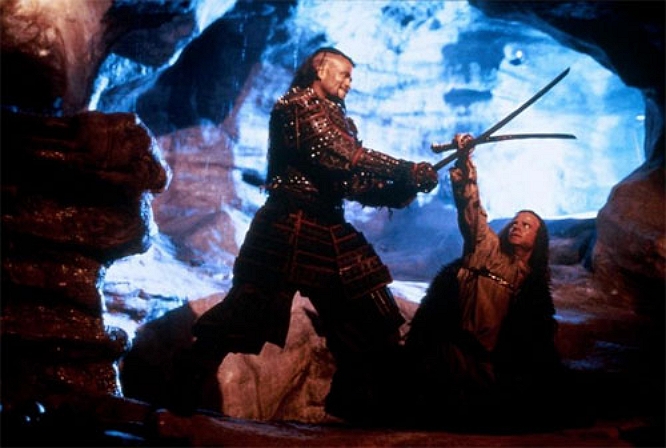
So, onto the plot, and yes, we are all collectively agreeing to pretend Zeist never happened. Highlander III functions as both a prequel and a sequel. In the 16th century, following the death of his wife Heather (from the first film), Connor travels to Japan seeking training from an immortal sorcerer named Nakano (played by the always‑brilliant Mako). Unfortunately, another immortal, Kane (Mario Van Peebles), also wants Nakano’s power. He tracks him down in a cave, decapitates him, and the resulting Quickening collapses the entire cavern, trapping Kane inside. This neatly explains why Kane didn’t participate in The Gathering from the first film… but also raises the question of why nobody mentioned this fairly significant immortal‑sorcerer‑cave‑collapse incident at any point in Highlander. Connor was there at the time.
Fast‑forward to 1987. Connor and Brenda (the lass from the first film) are involved in a car crash. Brenda dies, but Connor walks away unharmed, proof that he is still immortal and never actually won The Prize at the end of Highlander. Because of course he didn’t. There were still immortals buried in caves in Japan, obviously. By 1994, two archaeologists excavate Nakano’s cave, accidentally freeing Kane, who immediately resumes his centuries‑old mission to hunt down Connor. And that’s essentially the film: Connor vs. Kane, round one thousand… and some very poor CGI work.
Now, to give credit where it’s due, Highlander III: The Sorcerer makes far more sense within the established lore than aliens from Zeist ever did. The first sequel was an utter embarrassment, and while this second attempt is undeniably better, it’s still not a particularly good film. Most reviews can be summarised as: “Well… it’s not as bad as Highlander II.” When that’s the bar, you know the franchise is in trouble. Only three films in, and Highlander is already begging to be put out of its misery.
With Highlander III failing to make much of a dent critically or commercially, the powers‑that‑be decided to step away from cinema for a while and focus on the TV spin‑off that had launched a couple of years earlier. Now, I don’t really want to cover the TV show here, I’m focusing on the films, and I didn’t like the show much anyway, but it is relevant to what comes next. So here’s the quick version:
Duncan MacLeod is a fellow clansman of Connor MacLeod and, somehow, another immortal (where do they keep coming from when Connor has already been the “only one” twice now?). Duncan has lived for around 400 years. Connor finds him and asks him to hunt evil immortals. The show ran for six seasons, and what followed was a film that attempted to tie together both the movie continuity and the TV continuity.
Highlander: Endgame
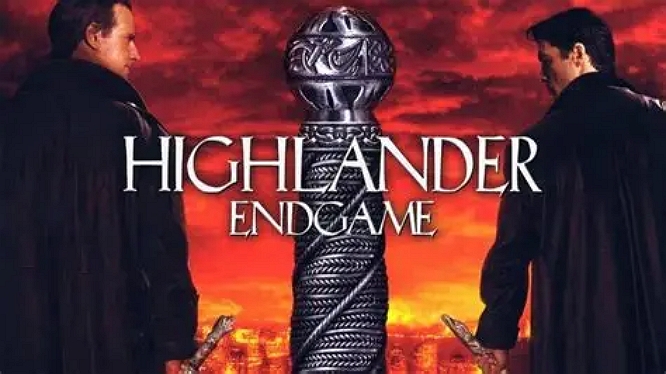
As I said, this was an attempt at connecting the film series with the TV show. Christopher Lambert returns as Connor MacLeod, and he’s joined by Adrian Paul as Duncan MacLeod, the star of the TV spin‑off. On paper, it’s a clever idea: merge the cinematic MacLeod with the small‑screen MacLeod and create one unified Highlander mythology. In practice… well, let’s get into it.
We begin in 1555. Connor returns to his childhood home in Glenfinnan, Scotland, where his mother is being terrorised by the village priest Jacob Kell (Bruce Payne). Kell eventually executes Connor’s mother for witchcraft. Enraged, Connor kills Kell and burns Glenfinnan to the ground. Unfortunately for Connor, Kell is reborn as an immortal, because of course he is, and vows revenge. He spends the next four centuries killing anyone Connor cares about. Subtlety is not this franchise’s strong suit.
Connor eventually retreats to The Sanctuary, a place where immortals are kept under surveillance by a subgroup called the Watchers to prevent The Prize from ever being won. (You’d think Ramírez might’ve mentioned this in the first film, eh?) Kell discovers The Sanctuary, storms it, and seemingly beheads every immortal inside, including Connor. Meanwhile, Duncan has a vision of The Sanctuary and begins investigating. He soon learns that Connor survived Kell’s attack and is still alive. Kell, ever the overachiever, now plans to kill Duncan as well, just to twist the knife. Connor, realising Kell has become too powerful, tells Duncan that he must behead Connor so Duncan can absorb his power and stand a chance of defeating Kell.
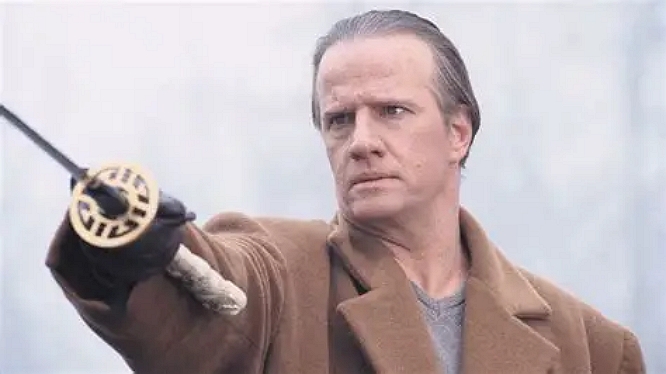
It’s an “interesting” idea, I’ll give them that. A bold attempt to merge the film continuity with the TV continuity. But interesting does not mean good. What we end up with is yet another entry in the “not as bad as Highlander II” category. A low bar, but one this film clears with a wobble. With the fourth film in the franchise done, you’d think the series might finally take the hint. But no, Highlander is nothing if not stubborn. Immortal, one could say.
This is usually the point where fans chime in: “What about the animated film?” Well, first, I haven’t seen it. Second, from everything I’ve researched, it has virtually nothing to do with the live‑action films anyway. Yes, the main character is a MacLeod, but it’s an adoptive name, he’s no relation to Connor or Duncan. Still, many fans consider it canon, so it deserves a quck mention.
Highlander: The Search for Vengeance
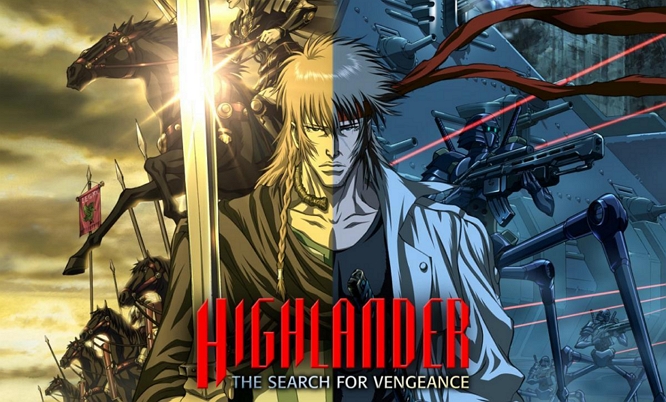
I have never seen this, as I previously mentioned, but from what I gather, it is supposed to be quite good. Though I’m not entirely convinced I can trust the praise, given that most of it boils down to: “It’s the best Highlander film since the first one!” Honestly… that is not high praise. That is the cinematic equivalent of saying, “Well, at least this sandwich isn’t mouldy.” Every film after the original has ranged from complete shit to plain horrible at best. When a film is “praised” for not being as bad as Highlander II, that’s not really praise in my eyes. That’s trauma bonding. Once bitten and all that.
Still, maybe one day I’ll give it a view. I’m open to being pleasantly surprised, or at least not spiritually wounded. So, onto the final of the canonical Highlander films…
Highlander: The Source
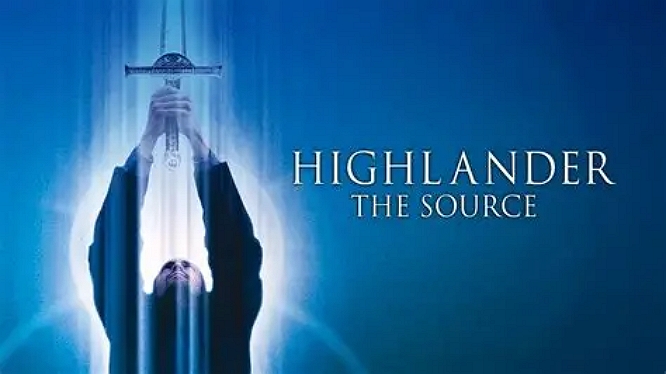
Many people think that Highlander II was the worst of the sequels… prepare to be wronged. Some people don’t even know this film exists, which is understandable, because it wasn’t a big release, nor was it even a direct‑to‑DVD affair. No, this cinematic turd was made exclusively for the Sci‑Fi Channel (and no, I’m not spelling it that stupid way, it’s Sci‑Fi). A low‑budget, asinine effort that feels less like a film and more like a contractual obligation someone tried to drunkenly write at 2 am.
But what about the plot, eh? Well, Duncan MacLeod is back, this time having to fight his way to something called The Source with a small team of instantly forgettable sidekicks. Along the way, they fend off the new bad guy on the block: The Guardian. And what exactly is The Source? Well… it’s this thing the writer included in the script for some reason. Trust me, I’ve just made far more clear sense than the film ever does.
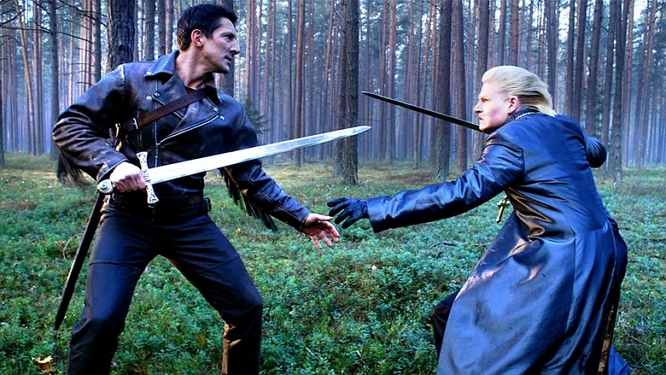
I genuinely don’t want to talk about this one too much. Not out of laziness, but out of self‑preservation. This is a film that drains your will to live. It’s something that needs to be seen to be believed, not because it’s good, but because it’s so catastrophically bad that words simply cannot do it justice. Really, stop reading this and go track down a copy of Highlander: The Source. Watch it, experience it, and let it wash over you like a cold, muddy wave of disappointment. Because, inexplicably, this film is so bad that it makes Highlander II look almost watchable. Oh yeah, there is a Highlander sequel that is worse than Highlander II, and this is the only film of the franchise that can’t be described by using the classic “not as bad as Highlander II” clause. Just let that sink in for a while…
The Immense Death Of The Franchise
That was a rough journey. From imaginative and unique cult classic to a big lump of excrement with nothing of any real worth in between. Could this win the award for worst film franchise ever? I honestly cannot think of one more deserving. Don’t get me wrong, there are some truly horrible movie franchises out there with some spectacularly bad sequels. But even the worst offenders usually manage one or two entries that are at least okay. Highlander has nothing. The first film was great, a few low-budget issues, but mostly great, and everything that followed was terrible in its own special way. I honestly don’t understand how, with so many cinematic failures, this franchise managed to produce as much as it did. Because, for some reason, Highlander is a big franchise. Much bigger than it has any right to be. Beyond the films I’ve covered here, it spawned three TV spin‑offs, one animated, two live‑action, plus several comic books, a whole series of novels, and even two videogames. Two! Despite all this, the franchise has been treated with absolutely no respect. It’s like watching someone inherit a classic car and immediately use it as a wheelie bin.
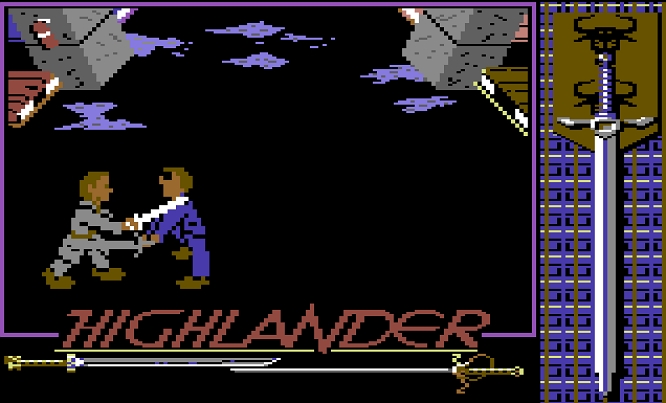
Now, I can only speak from the parts of the franchise I’ve personally endured. I tried the first TV spin‑off and didn’t like it much. I remember the animated show aimed at kids, yes, this franchise about immortals chopping each other’s heads off had a children’s cartoon. I watched a couple of episodes of the other live‑action spin‑off, The Raven… that was unpleasant. I haven’t read the comics or the novels. I did play both videogames, and they were also terrible. So no, I haven’t consumed every scrap of Highlander media, but I’ve seen more than enough to safely say: there is no worse franchise out there.
What Highlander Could Have Been
Now, I’m not trying to say Highlander should never have become a franchise, just that it deserved to have been a better franchise. When the whole mantra and coda of the first film is “there can be only one,” and the story ends exactly as that mantra promises… you can’t really make sequels, can you? Not without bending the rules, breaking the lore, or, in the case of Highlander II, launching the entire mythology into the sun.
I said before how I think I could’ve come up with a better concept for a Highlander sequel than the writers of Highlander II did, and I stand by that. I’m no Hollywood writer, but here are a few ideas off the top of my head that would’ve expanded the world without detonating it:
- Ramírez and The Kurgan clearly knew each other in the first film. There’s a story right there, a prequel exploring their discovery of immortality, their early battles, their grudges, their centuries‑long rivalry. A proper mythic clash.
- A film running parallel to the original, following the other immortals. Their journeys, their duels, their own path toward The Gathering. A tapestry of perspectives instead of a single thread.
- A centuries‑spanning epic about Connor’s long life. The wars he fought, the friends he made, the loves he lost, the eras he survived. Imagine a Highlander film that actually embraced the richness of its premise instead of running from it. It could’ve even shown Connor getting mixed up in real-world history.
There are centuries of stories baked into the concept. Entire eras. Entire cultures. Entire conflicts. You could build a dozen films without ever touching aliens from Zeist or magical ozone‑layer forcefields. The mythos was right there, waiting. But the writers decided to make one of the worst film sequels ever instead.
But of course, Highlander is coming back. Not as a sequel, we’re getting a remake. And, surprisingly, I’m quite optimistic. There’s no confirmed release date yet, but the film is being shot as I write this, so mid to late 2027 seems very likely.
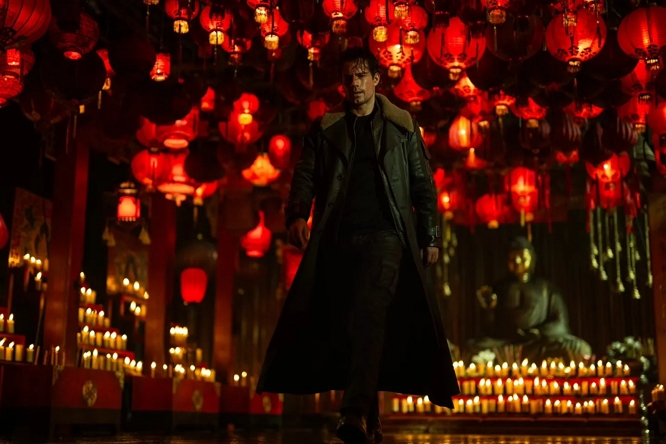
Why the optimism? Well, for starters, the director is Chad Stahelski, the man behind John Wick. If anyone understands choreography, myth‑building, and the poetry of violence, it’s him. I reckon he could direct a really great swordfight. The remake stars Henry Cavill as Connor MacLeod, and one thing I genuinely admire about Henry is that he respects the source material. See his reasons for leaving The Witcher. He’s a nerd in the best possible way, and he fights for authenticity. Stahelski has also confirmed they’re using the sublime Queen soundtrack, but in a new way (possibly new recordings using some of Freddie’s unused takes?). That alone shows respect for the original. And finally, Dave Bautista is playing The Kurgan. Dave is awesome. Full stop. He’s one of the few muscle-bound actors who can do physical menace and emotional nuance. Inspired casting, and I’m 100% sure that we aren’t getting aliens from Zeist.
This remake actually sounds like it’s in good hands, and it might just be the Highlander film fans have been craving for decades.
This Is How Far the Franchise Fell
I’ve been thinking of a more practical way to show just how far this franchise has collapsed in on itself, and I think I’ve found it: the music. Let’s start with Princes of the Universe by Queen, the version used in the original Highlander.
A genuinely great song. It still sounds incredible today. Freddie’s voice is powerful, theatrical, and utterly committed. The music is brash but melodic, Brian May’s guitar solo is iconic, and the lyrics actually mean something within the context of the film. When you understand Highlander, its myth, its melancholy, its swagger, the soundtrack becomes a vital part of the storytelling. It elevates the film, and Queen’s music becomes a character of the film.
Now, here’s that same song as performed by… someone. I don’t care who. Does it matter? This version appears in Highlander: The Source.
Yeah. That’s really terrible, isn’t it? That auditory assault describes the state of the franchise far better than I ever could with words. Bland, tasteless, banal, and insulting. From Queen to whatever that “noise” was, I can add nothing more.
The whole series should have taken The Kurgan’s advice: “It’s better to burn out than to fade away.” And yet… here we are. Forty years later. Still talking about it, usually in a bad way. Despite everything, the sequels, the retcons, the aliens, the ozone shield, the Sci‑Fi Channel fever dream, I’m willing to give the remake a chance. At its very worst, it can always be bundled into the “not as bad as Highlander II” crowd. And honestly, that’s already a win just on the principle that it can’t be as bad as Highlander: The Source.
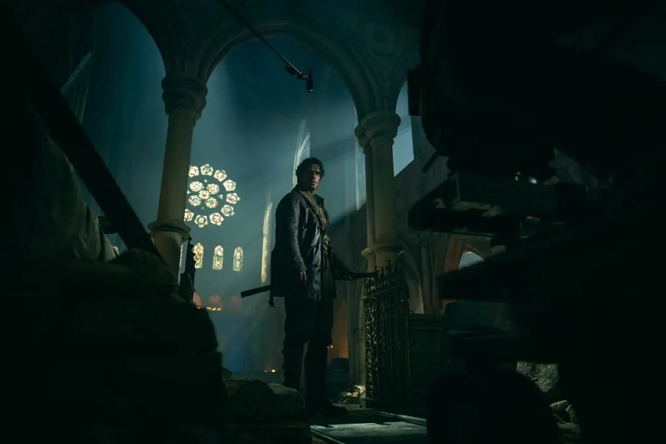
If there’s one thing this retrospective has proven, it’s that Highlander fans are immortal in their own way: stubborn, loyal, and eternally hopeful that one day… one day… perhaps the franchise will finally get the film it deserves. If there can be only one (again). Let’s hope the next one gets it right.


Please leave a reply/comment.