
The Elephant Man is an astonishingly powerful film. Released in 1980, it tells the true story of a man the world came to know as John Merrick, a man who began developing severe physical deformities as a child, deformities that worsened dramatically over the years until Victorian society labelled him The Elephant Man.
I have this vivid memory of watching it on TV in the mid‑80s with my mom. I was too young to understand the nuance, but old enough to feel the dread. It scared the shit out of me. Even now, decades later, I still see it as a horror film, not because Merrick was frightening, but because the world around him was. Back then, I didn’t know it was a true story. Now, as an adult, with modern technology at my fingertips, I can learn about the real John Merrick in ways the film simply couldn’t offer.
And in a strange way, that mirrors Merrick’s own life. In the late 19th century, when both the film and the real story takes place, nobody knew what condition Merrick suffered from. Medical science was still fumbling in the dark. It wasn’t until long after his death, when his remains were examined using DNA analysis and modern diagnostic techniques, that researchers proposed neurofibromatosis type I. Others argued for Proteus syndrome. Some suggested a combination of the two. Even today, experts debate it, and given the time that’s passed, we’ll probably never know for certain.

But that uncertainty is part of the point. This article is about how information evolves, how what we thought we knew can shift dramatically once new evidence emerges. I can research John Merrick now in ways they couldn’t when they made the film. Which brings me neatly to the title of this article: Why John Merrick? Because… that wasn’t his name.
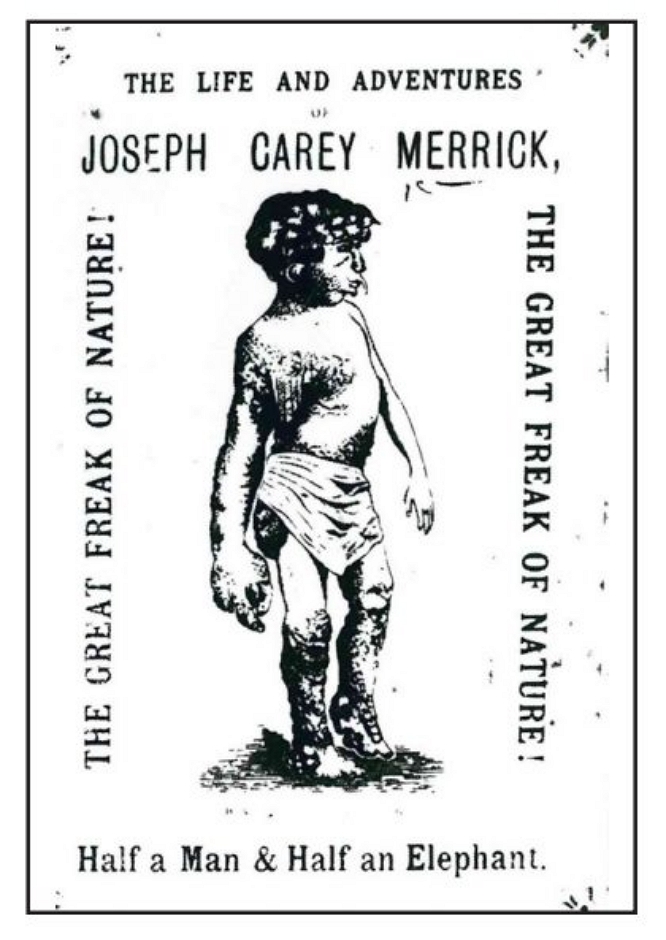
His real name was Joseph Carey Merrick, not John. Yet if you say “John Merrick” to anyone of a certain age, they’ll know exactly who you mean. Say “Joseph Merrick” and you’ll often get a polite incorrect correction… “Don’t you mean John?” So why did the film call him John when his name was Joseph? This is where modern research helps untangle the truth. And because I love falling down research rabbit holes, I dove head‑first into Joseph Merrick’s.
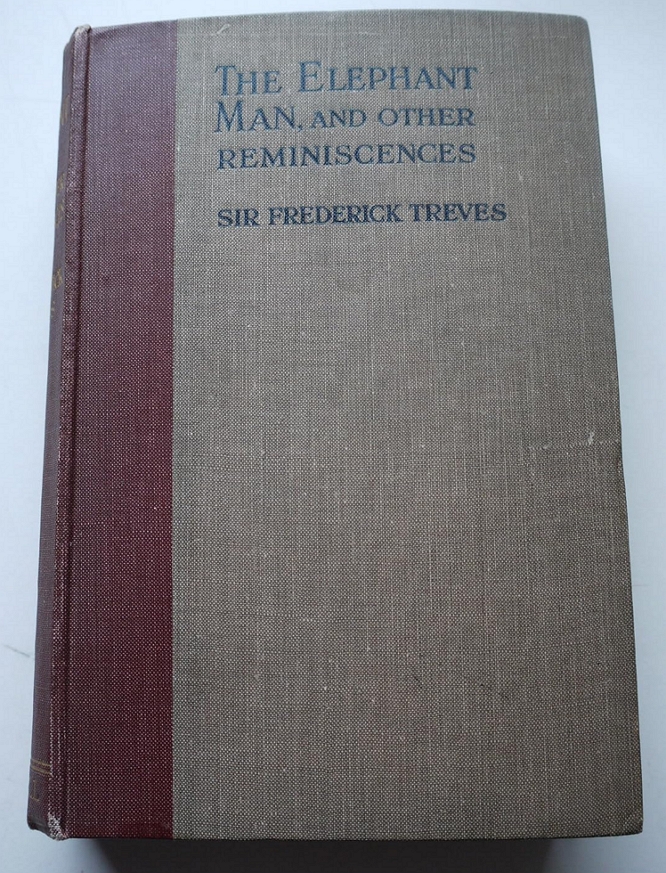
The Elephant Man is based on the writings of Dr Frederick Treves, played by Anthony Hopkins in the film. Treves was real, and yes, he and Merrick met and formed a genuine friendship. Treves published The Elephant Man and Other Reminiscences in 1923, thirty‑three years after Merrick’s death, and that book is the film’s primary source of information. So did Treves simply forget the name of the man he spent four years caring for after such a long time? Nope In Treves’s original manuscript, he wrote the name correctly: Joseph Merrick.
So did the film get it wrong then? Again, nope. You see, the film followed Treves’s published version, which does call him John. Treves himself changed the name between manuscript and publication. So the film wasn’t inventing anything, it was simply following Treves’s own revised text and the only real known information at the time.
Why did Dr Frederick Treves change the name? Nobody knows, and nobody ever will. It’s one of those odd little historical mysteries that has simply evaporated into time. How do we know that the change happened? Well, you can literally see it for yourself. Sadly, I can’t just use an image here; the unpublished manuscript is protected by legal restrictions and can’t be published online. But if you ever find yourself in Whitechapel, you can request a supervised visit to the Royal London Hospital Archives. Under strict rules and supervision, they’ll bring out Treves’ original handwritten manuscript, and there it is: he wrote Joseph, crossed it out, and replaced it with John. A tiny edit with enormous cultural consequences. And it got me exploring what else did the film get wrong.
Take Mr Bytes, for example. In the film, Freddie Jones plays him as a ruthless, violent showman who beats Merrick and forces him into a freak show. Bytes is monstrous, a drunken pantomime villain. But the real man he’s based on, Tom Norman, was nothing like that. Norman was a working‑class showman, yes, but by all accounts he was kind, protective, and surprisingly progressive for the era. He paid Merrick well. He gave him independence. And crucially, Merrick approached him, not the other way around. Merrick wanted to earn money, wanted to be seen, wanted to take control of his own life. He was never forced into anything.
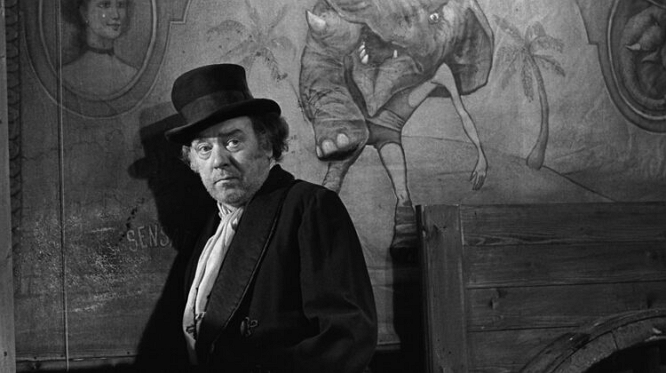
Treves, however, didn’t see it that way. He was a respected surgeon, a man of status, and he looked down on showmen, all of them. Norman included. Treves wrote Norman as a cruel exploiter, a sadist, a villain. And Norman was furious. After Treves published his book, Norman publicly condemned the portrayal, writing an open letter defending himself and saying of Merrick that he was:
Tom Norman: “A gentle, intelligent man, and I treated him as such.”
People who had seen Merrick’s show backed Norman up. They said Treves’ depiction was unfair, snobbish, and simply wrong.
Because Norman paid Merrick well and gave him independence, Merrick wanted to see more of the world. He went on tour in Belgium with a different manager. Norman stayed in London running his business. In Belgium, Merrick’s new manager robbed him and left him stranded.
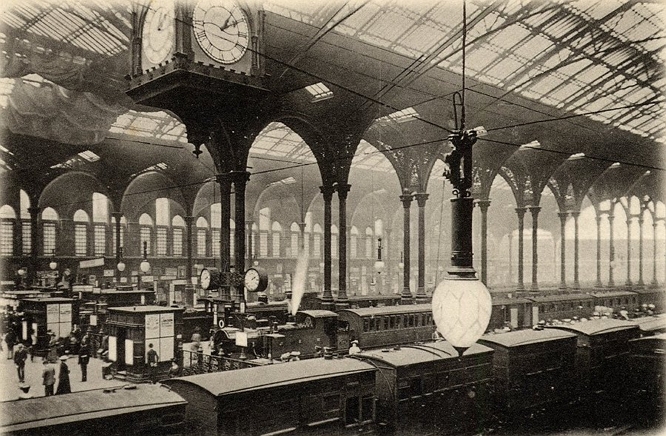
Eventually, Merrick made his way back to London. Police found him at Liverpool Street Station, confused and exhausted. They contacted the hospital, and Merrick was brought in by staff.
This is mildly hinted at in the film when Mr Bytes cages Merrick up, but he’s let out and helped to escape by other performers. Merrick is then shown boarding a boat. But as Mr Bytes was an erroneous character based on Tom Norman who treated Merrick with respect, the scene in the film definitely didn’t happen in real life.
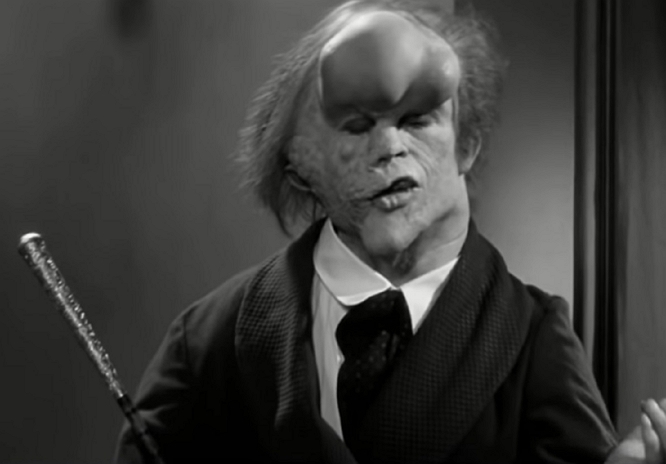
And then there’s Joseph Merrick himself. The film’s depiction of his personality is one of its biggest departures from reality. On screen, Merrick is childlike, timid, emotionally fragile, barely able to speak in full sentences. In truth, Joseph Merrick was articulate, thoughtful, socially aware, and possessed a dry, intelligent sense of humour. He read widely. He wrote letters. He held conversations. He was not naïve or simple, he was a grown man with a sharp mind and refined manners. Those who knew him described him as “the perfect gentleman.”
His physical deformity and the effects on him was exaggerated too. Yes, the film used real plaster casts of Merrick’s body as a starting point, but it added dramatic flourishes. For example, the film shows Merrick’s right arm as deformed and largely useless. In reality, Merrick’s right arm was deformed but mostly normal, he used it to write, to eat, and to build intricate cardboard models. And those models still exist today: St Philip’s Cathedral, The Church of the Holy Sepulchre, and others, all made from paper and card, now displayed at the Royal London Hospital Museum. They’re proof of his dexterity, patience, and intelligence.
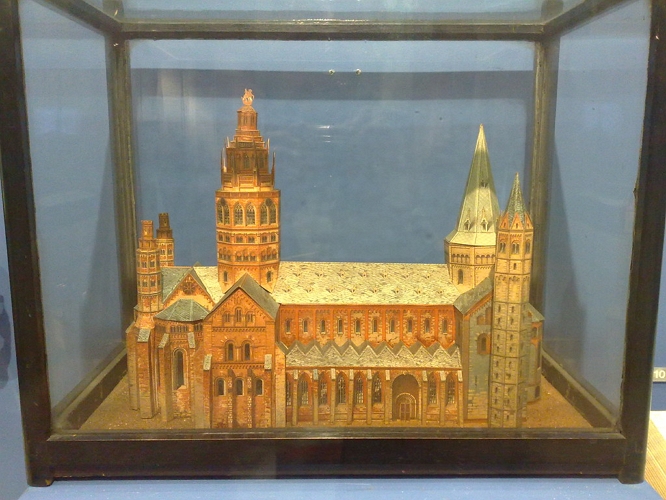
In short, Merrick’s personality and appearance in the film are largely fictional or embellished. Treves’ writings, and the testimony of hospital staff, paint a very different picture: aside from his deformities, Merrick was perfectly normal. He could speak well (not perfectly, but nowhere near as poorly as the film suggests). He was highly intelligent, well‑mannered, articulate, and socially perceptive. The film gives us a beautifully tragic story, but not the real man.
The cruelty of the public in the film isn’t accurate either. The film version has Merrick hounded through the train station, chased by a mob, treated like an animal, culminating in that famous line:
John Merrick: “I am not an animal! I am a human being! I… am… a man!”
It’s a brilliant cinematic moment, a fantastic quote… but it’s pure invention. At this point, you probably won’t be surprised to hear that the film made it up. Joseph Merrick did face occasional mockery, Victorian London wasn’t a utopia, but that’s as far as it goes. The world was different then. Victorian social etiquette was rigid, and public respectability mattered. Most people were curious, shocked at first, but ultimately understanding. Merrick wasn’t a hunted creature; he was, in many ways, a local celebrity.
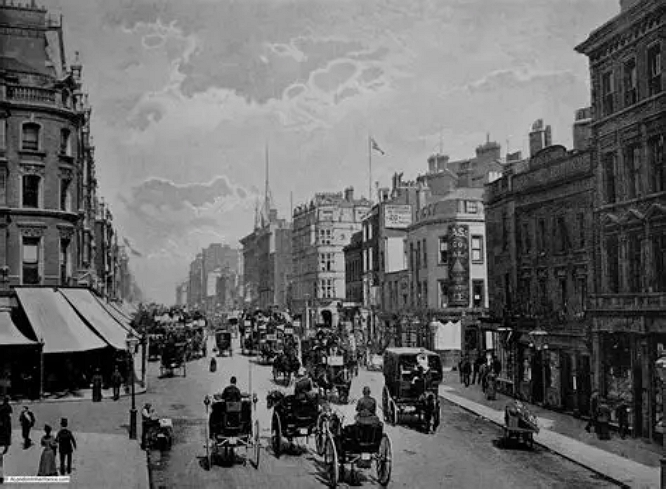
Because Merrick chose to take part in shows, people knew who he was. They visited him. They wrote to him. They sent gifts. And at the London Hospital, he was treated with genuine kindness. Doctors and nurses respected him deeply. Members of the public, people who had never met him, would turn up simply to talk. Princess Alexandra visited him multiple times, and hospital staff said she spoke highly of him. As he said in his writing, Princess Alexandra:
Dr Frederick Treves: “Showed him much gracious kindness.”
Her visits mattered because, if a Princess could see past the deformities and recognise the man, then why shouldn’t everyone else? Newspapers printed positive stories about him. The public embraced him. He became a quiet symbol of Victorian compassion. He could walk the streets and strangers would tip their hats, wish him good morning, offer gifts, money, or letters of support. The film’s mob mentality simply didn’t exist.
On the subject of respectful hospital staff. Remember the cruel hospital porter played by Michael Elphick? Bullying, took pleasure in embarrassing Merrick, made money by having people pay him to sneak them in to see him, got Merrick drunk against his will, etc. All of that… didn’t happen. Totally made up. Every member of hospital staff were professional and cared for Merrick deeply.
His living conditions were also nothing like the film suggests. The film gives us a cramped, dark, cold little room, a visual metaphor for suffering. The real Joseph Merrick lived in a private suite of rooms: a bedroom, a sitting room, a washing area. He had windows, a fireplace, shelves for his books, flowers sent by strangers, and photographs of Princess Alexandra. He had a dedicated space for his model‑building. He chose his own décor. He lived comfortably, and he took pride in keeping his rooms tidy and beautiful.l Though, when John returns to the hospital later in the film, his housing is more like it was in real life, but still shown as one room and not a suite.
He was social too, nothing like the largely isolated figure in the film. Every day, he spoke with doctors, nurses, and visitors. He loved books and talked about them constantly. He walked the hospital gardens and corridors when they were quiet. He attended chapel. Treves insisted he be treated with respect at all times, and he was. Merrick wasn’t treated as an oddity or an animal. He was treated as a human being… because he was one.
And then there’s his death. The film implies Merrick killed himself, that he chose to lie down to sleep “like normal people,” knowing it would suffocate him. It’s a heartbreaking scene, but again, it’s fiction. Treves wrote that Merrick died because the weight of his head caused asphyxiation, but he never claimed it was intentional. Modern medical analysis suggests it was accidental: Merrick’s head accidentally slipped back as he slept, dislocating his neck and compressing his airway.
Everything we know about Merrick’s final days contradicts the idea of suicide. He enjoyed his life at the hospital. He loved making his models. He loved talking to visitors. He loved planning for the future, more books, more people, more models. There isn’t a shred of evidence that he wanted to die. He didn’t want to “feel like a normal person”, because he was treated as a normal person anyway.
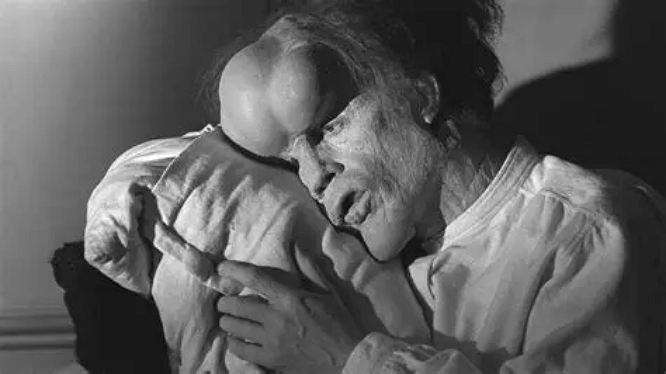
The short version is this: The Elephant Man, as fantastic and emotionally devastating as it is, is largely fictionalised. It’s designed to shock, to provoke, to wring tears from the audience. But the real Joseph Merrick was not much like John Merrick at all, aside from the condition itself (which the film still exaggerates), his treatment by strangers and by those who knew him was nothing like the film’s bleak portrayal. The movie gives us a stark, gothic tragedy. The reality was far warmer, far kinder, and far more human.
I guess that having a film where John Merrick is treated with kindness and compassion for two hours wouldn’t have been as compelling.


Please leave a reply/comment.