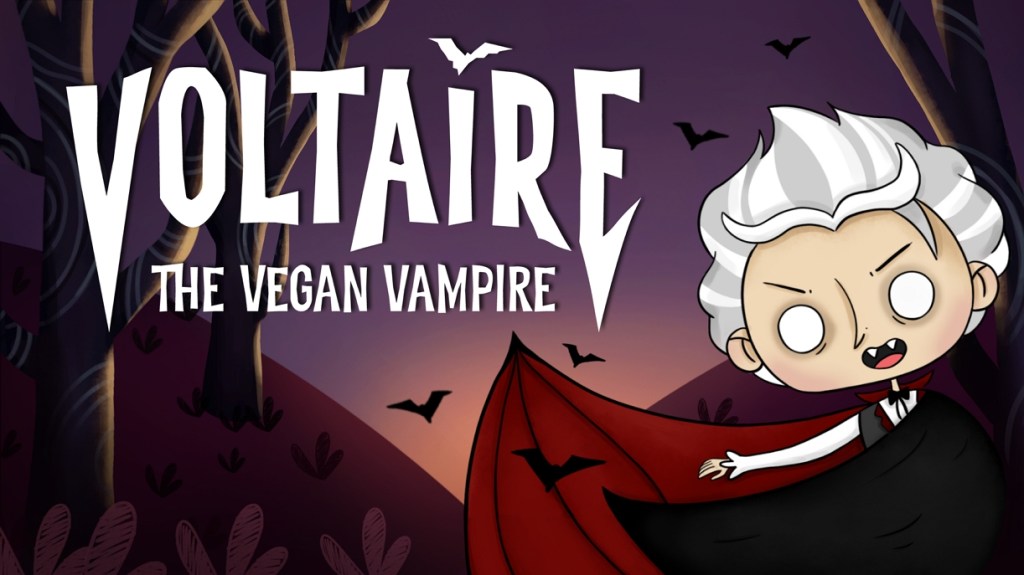
One of my favourite cartoons as a kid was Count Duckula, the adventures of a vegetarian vampire duck who wanted nothing to do with the bloodsucking traditions of his ancestors. Clearly, non-meat-eating vampires remain a surprisingly fertile, if rather niche, genre, because Digitality Games and indie.io are adding another member to the club with Voltaire: The Vegan Vampire.
“Rebel against your legacy in this farming action roguelite. Tend your spooky farm by day & defend your crops from enemies at night! Upgrade Voltaire, youngest son of Dracula, with devious new abilities & discover dozens of new plants to cultivate. Send dad a message: a vegan life is no missed steak!”
Being the son of Dracula comes with certain expectations. Drinking blood, terrorising the living, lurking ominously in castles, all the usual vampire shenanigans. Unfortunately for the Prince of Darkness, his son Voltaire has decided he wants absolutely none of it. He’s sworn off blood and meat entirely in favour of a vegan lifestyle, a decision that doesn’t exactly go down well at the family dinner table. Voltaire subsequently runs away and sets up home in the wilderness with a little help from his uncles, Frank and Stein. Unfortunately, Dad isn’t prepared to let bygones be bygones. Every night he sends an assortment of ghoulies and other unpleasant creatures to tear down Voltaire’s new home and, presumably, put an end to this embarrassing outbreak of vegetables in the Dracula family.
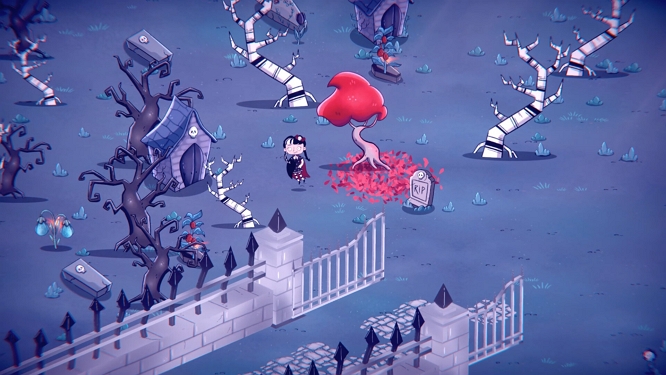
Voltaire: The Vegan Vampire is a combination of farming simulator, survival game and tower defence. During daylight hours, you’ll grow food, forage for resources and prepare your defences. Once darkness arrives, the gardening gloves come off and you’ll fight waves of enemies determined to destroy everything you’ve spent the day building.
Farming revolves around Voltaire’s hunger meter, with almost everything you do eating into it. Preparing soil, planting seeds and watering crops all require energy, meaning you need to grow enough food to provide the fuel required to grow even more food. It’s a neat little ecosystem that initially makes even the most mundane jobs feel important. Every action has a cost, so simply throwing seeds into the ground without considering Voltaire’s rumbling stomach is a quick way to make life unnecessarily difficult. Fortunately, you’re not entirely dependent on your vegetable patch. Crowberries can be foraged from bushes scattered around the map, patches of earth can be dug up for food, materials and seeds. There’s even a friendly tentacled horror lurking in the water that will hand over goodies if you feed it, proving that even unspeakable aquatic monstrosities can be won over with a decent meal.
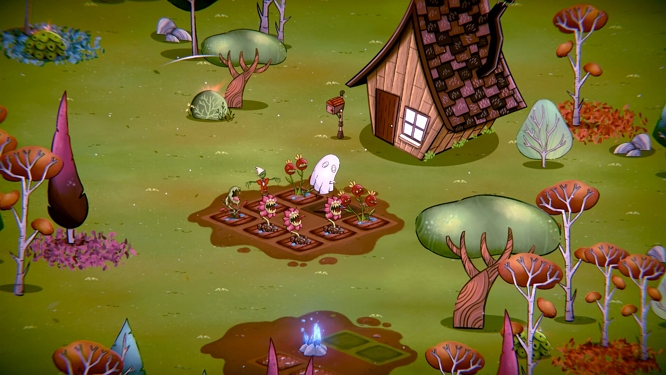
There are two broad types of crops to grow. Food crops keep Voltaire’s hunger under control, while defensive plants help protect the farm once darkness falls. These range from plants capable of attacking enemies at a distance to more aggressive varieties that will happily take a bite out of anything Dracula sends their way. As you progress, there are plenty of ways to make the daily routine more manageable. Materials gathered while exploring can be turned into useful equipment such as wells, reducing the need to constantly run around for water, while Soulstones provide permanent improvements to various aspects of Voltaire’s undead existence. You can improve his movement speed, how effectively food satisfies his hunger, and other stats.
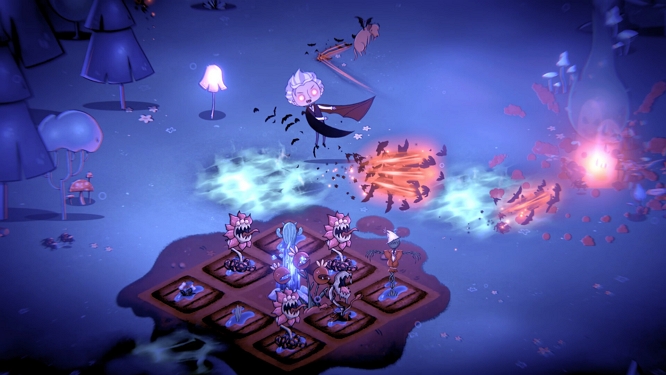
Then, after finishing your chores and taking a quick nap in your coffin, nighttime arrives and Voltaire: The Vegan Vampire becomes a very different game. Enemies converge on the farm from multiple directions, targeting both your crops and your home. Voltaire initially has a fairly basic offensive arsenal, meaning those first few nights involve plenty of frantic running around as you desperately try to plug holes in your defences. Surviving successive attacks, however, allows you to expand Voltaire’s combat abilities considerably. Stronger attacks become available alongside ranged options and you can even have little companions that orbit Voltaire, attacking anything foolish enough to get too close.
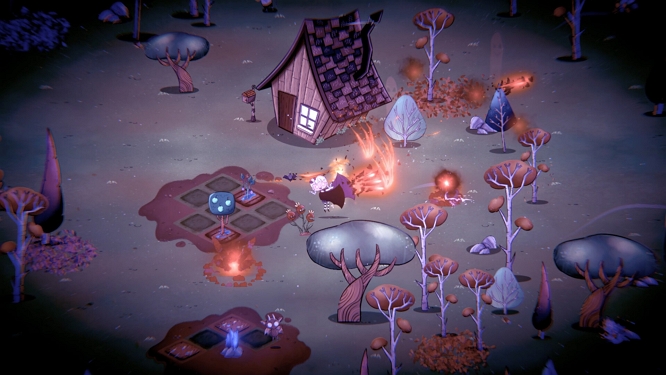
During the opening stages there’s genuine tension in trying to balance Voltaire’s three main elements: keeping you hunger at bay, developing the farm, and preparing for the next assault. Resources are limited, hunger constantly needs managing and surviving until morning can really feel like an achievement. You’re repeatedly forced to make small but meaningful decisions. Do you plant another crop to secure tomorrow’s food supply, or use those resources to strengthen the defences for tonight? Getting that balance wrong can leave Voltaire starving during the day or standing amid the wreckage of his home the following morning.
Unfortunately, once you properly understand how all these systems interact, that tension begins to disappear. The biggest problem here is the (un)balance of power. Voltaire becomes significantly stronger as the game progresses, but his enemies never seem capable of keeping pace with him. Those early encounters, where you’re desperately sprinting between different parts of the farm trying to prevent disaster, gradually give way to Voltaire annihilating regular enemies with increasingly little effort. Even boss fights that should provide significant tests of your growing abilities become surprisingly straightforward.
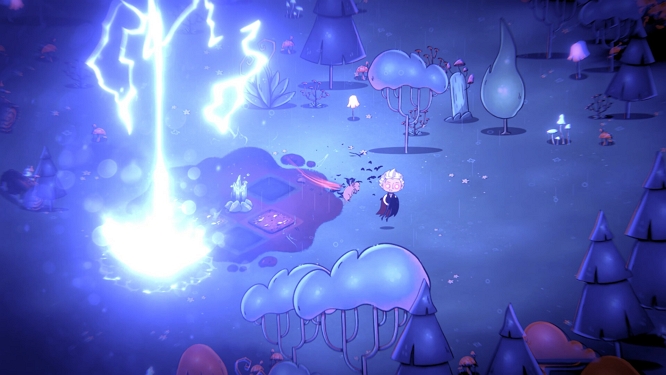
The farming element suffers from much the same problem, albeit for different reasons. Early on, managing hunger and resources gives almost every action a degree of importance. Planting an extra crop matters because you might actually need that food tomorrow, and wasting energy can leave you struggling later in the day. Eventually, however, you can accumulate such an enormous stockpile of vegetables, seeds, water and other supplies that maintaining the farm becomes almost unnecessary. Why worry about carefully managing tomorrow’s harvest when you already have enough food stuffed into your inventory to survive for the foreseeable future?
The daily routine can become repetitive fairly quickly. Scouring the same areas for Crowberries, digging up patches of earth, gathering resources and tending crops is enjoyable when you’re still discovering how everything works. Once you’ve established the most efficient routine, repeating the same jobs every morning begins to feel exactly like you’re doing chores.
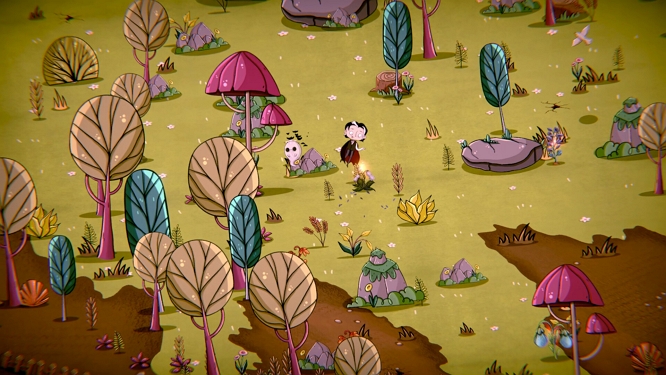
There are roguelite elements here too, with penalties for failure, but failure never feels like the defining threat you might expect from the genre. If your house is destroyed, you take a resource penalty and restart the day, but it doesn’t take particularly long before Voltaire becomes powerful enough that failure barely enters the equation. And that’s a shame, because there’s a lot to like about Voltaire: The Vegan Vampire. The premise is wonderfully silly, its creepy-cute presentation gives the game plenty of personality, and combining farming with tower defence is a genuinely interesting idea. Growing crops provides the resources and defences needed to survive the night, while surviving the night allows you to continue developing the farm. During those opening hours, there’s a satisfying relationship between the two. When you’re struggling to balance hunger, crops and defences, you can see exactly how well that combination can work. The problem is that the systems aren’t balanced well enough to sustain it.
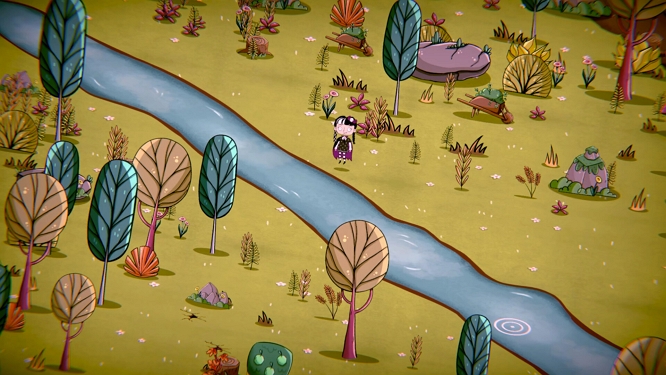
Voltaire: The Vegan Vampire is at its best during those first few hours, while you’re learning its rhythms and figuring out how to survive. Once you’ve cracked the farming, built up a substantial vegetable stockpile and transformed Voltaire into an undead wrecking ball, both halves of the game gradually lose much of their purpose. Farming becomes increasingly unnecessary, while combat becomes increasingly trivial. Perhaps that will suit more casual players who enjoy seeing their character develop from vulnerable runaway to ridiculously powerful vegetable-fuelled killing machine. More experienced gamers looking for the challenge promised by its survival and roguelite elements, however, may find themselves getting bored long before Dracula finally admits defeat.
Voltaire: The Vegan Vampire has charm, personality and a clever central idea, and there’s genuine fun to be had while its various systems are still pushing against one another. Unfortunately, it’s to easy to exploit those systems, the tension rapidly evaporates. For a game about vampires, it ultimately becomes just a little too fangless.


Please leave a reply/comment.