Welcome, weary travellers, and step lightly across the threshold.
For eight series, the dungeons of Knightmare tested the wits, the courage, and more often than not, the sense of direction of young adventurers across the realm. Yet for a television spectacle so deeply rooted in the magic of early computer gaming, born, as the great Chronicler Tim Child himself has attested, from the sprawling labyrinths of Atic Atac and Dragontorc, it has always struck me as a curious piece of sorcery that so few digital trials ever emerged.
In the golden age of gaming, only two official visions were conjured into existence: the Activision title of 1987, and Mindscape’s offering in 1991. Two. A meagre hoard, wouldn’t you say?
Well, cast aside your scepticism and ready your knapsacks, for a new quest is stirring in the gloom. Ahead of Knightmare’s 40th anniversary in the year 2027, a dedicated fellowship of just two artisans is hard at work forging an official third Knightmare game. I recently summoned these brave developers to the antechamber to interrogate them on their craft.
Enter, stranger… and mind your step.
Steve: First and foremost, thank you for doing this. I know game development eats up an enormous amount of time, especially for a two-person team. To kick things off, would you like to introduce yourselves to my readers?
Ewen: I am Ewen Watson, the producer, developer, writer and composer of the upcoming official Knightmare point-and-click adventure game.
Sathya: I’m Sathya Schlösser. I’m a professional children’s book illustrator and animator for children’s media and I am the artist and animator for this game.
Steve: I grew up watching Knightmare; it was an absolute staple of my youth here in the UK. I still remember hurrying home from school, desperate to hear THAT theme music and watch Treguard guide another doomed team through the dungeon. How did you two first get into the show?
Ewen: I used to love Knightmare growing up. I was a big fan of CITV at the time and used to love the variety of shows on there like Art Attack, ZZZap, Dreamstone – that sort of thing. But the programme that I was most intrigued by was Knightmare. I couldn’t quite understand what it was all about but, for a child in the 90s, it was absolutely thrilling stuff! I’ve remained very fond of Knightmare ever since.
Sathya: I’m from Germany and had never even heard of Knightmare until I got introduced to it by Ewen around 3 years ago. When he started to write the game, he would watch the original TV show on YouTube and I joined in!
Steve: Knightmare is clearly a massive passion project. Is this your first time developing a game, and how are you finding the experience of wrestling it into reality?
Ewen: This is my first game! As a lover of the classic LucasArts point-and-click adventure games, I had always wanted to make one myself, so decided to give it a go a few years ago and became really obsessed with it. It’s a really hard thing to learn how to do, but the Adventure Game Studio engine that I’m using is quite accessible, and there’s a lot of community support online.
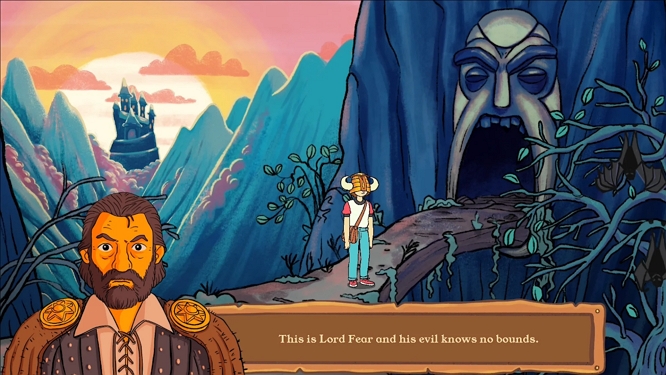
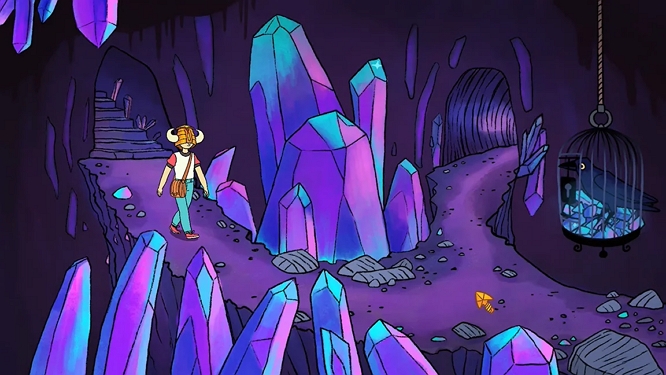
Sathya: I have previously worked on another game, for which I created various character animations such as spellcasting, idle animations, walk cycles, and a range of other actions. For this current game, however, I am responsible for all the graphics and animation. I design every character and animate all their actions, from picking up objects and idle states to walk cycles for each individual figure. I have also illustrated all the backgrounds and rooms for the game. It is truly wonderful and exciting to work on this project alongside Ewen. We inspire one another brilliantly and consistently come up with creative ways to make a space engaging. Furthermore, it is incredibly helpful to get a third opinion or a fresh perspective from our other team member Dan Druce—he is our web designer and marketing guru and also works as a professional graphic designer.
Steve: Looking at what you’ve shown so far, the visual style really stands out. The website boasts hand-drawn graphics and classic animation. In an era where AI is everywhere, and often overused by smaller teams, was going fully hand-drawn the plan from day one, or was AI ever even on the table?
Sathya: AI was never on the table. We love handmade and authentic stuff – even if it takes us a long time and a lot of money to get there. But we can feel proud of what we created with our own minds and hands.
Ewen: We have no interest in using AI. We have both worked in the creative arts industry our whole lives, long before generative AI existed, and we value the process and sense of achievement that comes with hand-crafted projects. There’s a real sense of camaraderie on our game, and it’s fun to make it ourselves.
Steve: The voice cast is an absolute coup. You’ve managed to secure (among others) Mark Knight returning as Lord Fear and the mighty Hugo Myatt back as Treguard. How on earth did that come about, and what was it like having these two undisputed Knightmare legends involved?
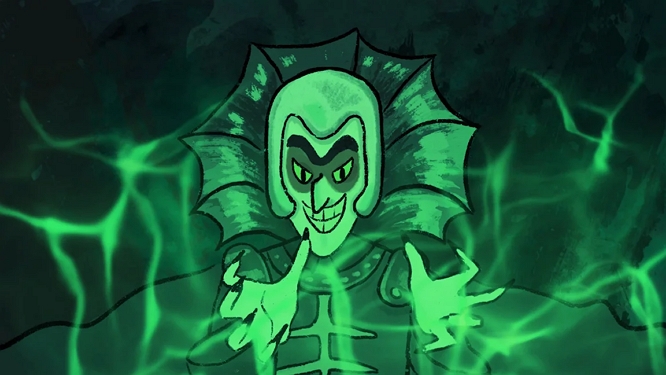
Ewen: I always knew that I wanted the original voices in the game and was aware that some of the actors were still working. My one caveat was that we had to have Hugo Myatt. Without him, I wouldn’t have wanted any voices at all in the game. You just can’t have Knightmare without the real Treguard! Thankfully, he was absolutely up for it and was wonderful to work with. He stepped straight back into the role, and it’s one of the greatest honours of my life to watch him perform the role in the studio. Once I had Tim Child and Hugo on board, all the other actors were more than happy to get involved. Of course, every game needs a great villain, and Knightmare has the amazing Lord Fear. Working with his original actor, Mark Knight was a blast. Most of Mark’s lines were improvised, and we spent a whole day with him recording takes. The hardest part was choosing what to use! We actually had another Knightmare actor, Clifford Barry, recording with Mark too and to see them bouncing off each other was hilarious.
Steve: You also have the official backing of the show’s creator, Tim Child. Has Tim been hands-on at all, or dropped in with any obscure behind-the-scenes lore to help guide the project?
Ewen: Tim has been very gracious in allowing us to make the game. He really liked our game’s art direction and what we were doing with Knightmare and was really happy to learn that we wanted to make a sincere adaptation of his work and treat it seriously. He’s been mostly hands-off creatively but has offered a lot of assistance and guidance when we have needed it.
Steve: Adapting a passive television format into an interactive point-and-click adventure is no small task. What were the biggest hurdles in translating what made the show so iconic into game mechanics, and did you have to bend any classic rules from the show to make it fun to play?
Ewen: When I was first planning the game, I was aiming for a faithful recreation of an episode of Knightmare. However, it became apparent fairly early on that some elements of the show’s format didn’t really translate to a fun game. For example, the life force gameplay mechanic was designed to push the contestants forward so it wouldn’t be boring for television. In a game, a lot of people enjoy taking their time and feeling immersed in the world. For that reason, we removed the time limit completely and gave the player the ability to move back and forward between areas of the game. These kinds of decisions were very hard to make, and I certainly don’t want to make the Knightmare purists angry! But it really doesn’t make for a fun computer game if you die every time you stop for a few seconds or walk through the wrong door. I think the best way that I can frame it is that we aren’t remaking an episode of Knightmare. We are making a game based on Knightmare, but we will be staying very true to the source material.
Steve: Classic point-and-click design in the 80s and 90s really split into two camps. You had LucasArts, who kept you safe so you could never truly get stuck or die, and Sierra, who took sadistic pleasure in murdering the player every three seconds. Given how notoriously lethal the TV show was, which philosophy won out for Knightmare? Are we looking at a friendly puzzle-solver or a pure Sierra death trap?
Ewen: I was LucasArts all the way! I loved those games, and I think it was great that you couldn’t die. But it’s Knightmare, right? So dying will be an option, but the game won’t punish you for exploring or trying things out.
Steve: With Ed Welch’s awesome theme music, the iconic logo influence, and Tim’s blessing, how important was it to keep the overall look and sound faithful to the series rather than modernising it?
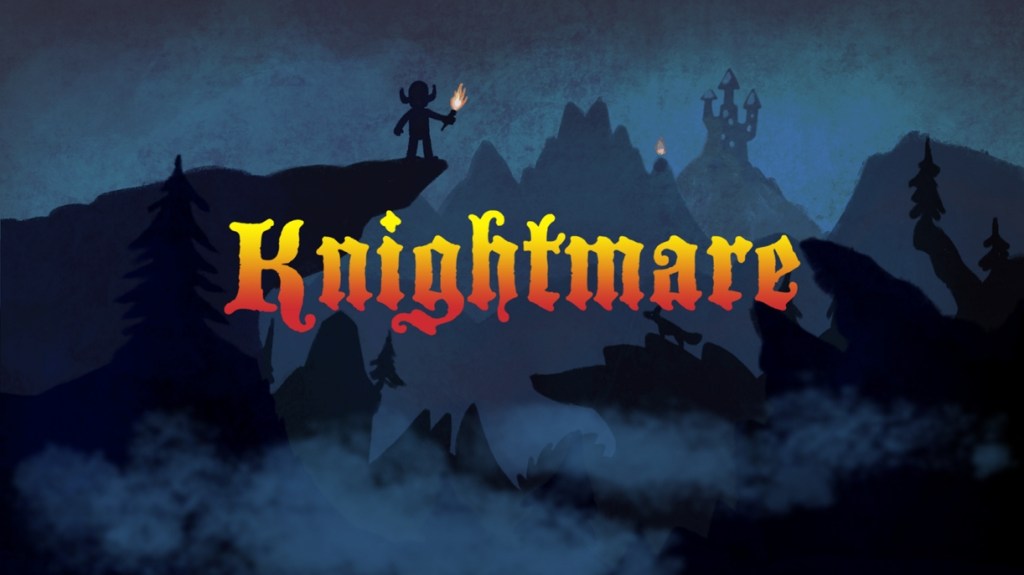
Ewen: In terms of visuals, we were really influenced by the show’s original animated intro, which looked amazing and works really well for an adventure game. I’m sure some people would want a more realistic style or some kind of VR element, but that just isn’t where our skills or interests are.
Sathya: Our approach was to go with what we know and what we love. We love the look of frame-by-frame animated characters, and we love hand-drawn backgrounds. I’m a big fan of Disney and Ghibli films, and I love children’s books that look like they were illustrated using watercolour or crayon, where you can actually see the texture. I use a software called Procreate, which has certain brushes that imitate that feel.
Ewen: In terms of the sound design, it will be mostly synths and digital instruments to capture the feeling of the original show. We are trying to build tension in a similar way to the series by using suspenseful synth sounds. The show didn’t actually have a lot of music outside of its intro, but our game will have background music in places that we hope will add to the experience.
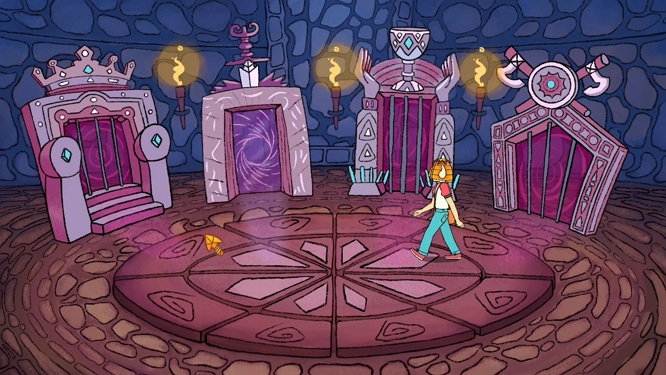
Steve: Are there plenty of obscure jokes or nods tucked away for long-time fans? Specifically… can we expect a tribute to Simon’s immortal “sidestep left” disaster?
Ewen: There will be a lot of references to characters and events that happened across the series. I don’t want to spoil anything, but we hope that fans of Knightmare will enjoy some of the easter eggs we’ve included.
Steve: Releasing the game completely for free next year for the show’s 40th anniversary is incredibly generous. I know it’s a one-to-two-hour experience, but free is still amazing. If the feedback is stellar and fans go wild for it, would you ever consider taking on a larger, more robust Knightmare title down the line?
Sathya: If this game is received well, then we’d love to make a larger game and continue what we’ve started.
Ewen: This version is self-funded, but if we did a full version, we’d have to explore our options.
Steve: Less of a question, more of a personal request from a lifelong fan: can we please, please kill Folly the Jester?
Ewen: As a fan of Limmy, I appreciate the sentiment. However, Alec Westwood has waited a long time to play Folly again, and he’s very excited to be involved, so he wouldn’t be very happy about it! We won’t be killing off any characters – just the Dungeoneer!
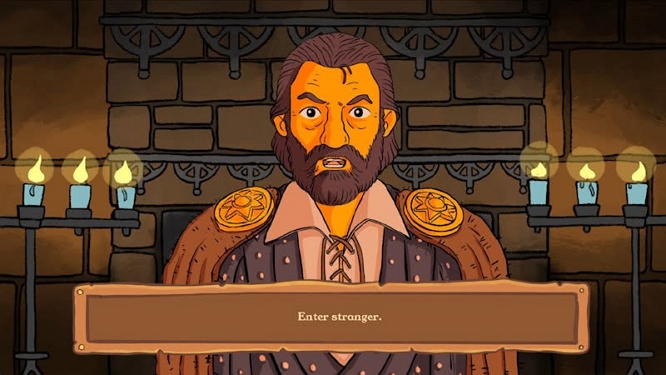
Steve: And finally, the most important question of all: did you manage to get Hugo Myatt to utter the sacred words… “Oooohh, nasty” for the game?
Ewen: All I’ll say is that it wouldn’t really be Knightmare without it, would it?
My deepest gratitude to the master artisans Ewen and Sathya for granting us an audience, for I know their forges burn late into the night preparing Knightmare for its grand unveiling next year. As a staunch champion of indie games, and a lifelong devotee of the show itself, you have my solemn oath that I shall chronicle the game on this very blog when the portals open next year. I await the trial with keen anticipation.
Until that fateful hour, you may track the progress of this quest across the ether. Seek out the game and its progress on Facebook, Instagram, YouTube, Twitter (yes, I do still call it Twiter), and Bluesky, or consult the official Knightmare game website for further portents.
And remember, travellers: whether you step forth into the dark or linger by the hearth… the only way is onward. Farewell!


Please leave a reply/comment.