Streaming services were meant to be the future. The sleek, smooth, modern alternative to faffing about with DVDs, TV schedules, and that one Freeview channel that only ever shows repeats of Homes Under the Hammer. They promised convenience and simplicity. A world where you could watch whatever you wanted, whenever you wanted, without needing a spreadsheet to track where your favourite show had migrated this month.
Instead, we now have so many streaming platforms that trying to keep up feels like being trapped in a subscription‑based version of Whac‑A‑Mole. I stopped counting at one hundred… one hundred! Now, that count is global and includes even the smallest streaming services in the smallest countries. Real niche ones like the “Scandinavian Noir About Someone’s Missing Doneky” service, or the “Documentaries About Ducks” platform that probably exists somewhere in the world.
But the number of services (and the direct drop in quality they offer) isn’t even the worst part. No, the real insult, the thing that really gets under my skin and does its level best to annoy me, is how aggressively inconvenient these supposedly convenient services have now become. And how we’ve somehow ended up paying for things we’ve already paid for, in a sort of digital Groundhog Day of monetary regret.
Take Amazon Prime Video as an example. You pay for the subscription. You log in. You scroll. You spot a film you fancy. And then you see it: the cursed little yellow shopping bag. The icon that whispers, “Oh, you wanted to watch this? Well, tough, that’ll be extra.” So now you’re paying for the privilege of paying to watch something on a service you’re already paying for. It’s like a subscription nesting doll, a financial Russian tragedy.
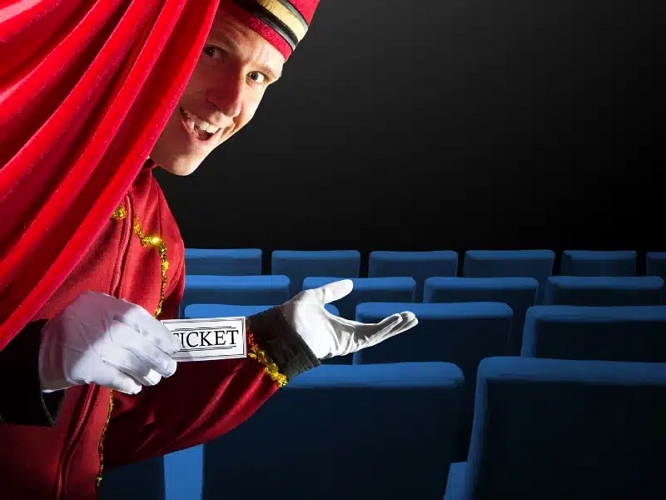
It’s the equivalent of buying a ticket to watch a film at the cinema, walking past the snacks on display (because nobody should pay £8 for a small bag of M&Ms ), handing your ticket to the usher, being directed to Screen 4… only to find another bloke at the door demanding a second payment before you’re allowed in to watch the film that you have already paid to see, after having to remortgage your house for a small popcorn and Fanta.
And the pricing? Don’t get me started. Why is a 45‑year‑old film sometimes more expensive than a film released three years ago? I tried to watch an old classic recently, not included with the subscription, naturally, and it cost £3 more to “buy” (which isn’t buying, it’s renting until they remove it from the service) than a recent blockbuster. Imagine going to a bakery and being told that a stale and mouldy loaf of bread costs more because it’s “vintage.” There’s also the issue of searching for a film on a service, it pops up, you click on it, only to be told that it’s not available. If it’s not available… why is it searchable on the service, why does it have its own page on the service if it’s not on the service?
But the crowning achievement of streaming absurdity, the absolute peak of nonsense, is that we can now pay for ads. Pay. For. Ads. One of the original selling points of streaming was no ads. Netflix (when they launched as a streaming service, not when they were a physical media rental thing) practically tattooed it on their forehead. They were proud that there were no ads and it was one of their main selling points. Here’s one of their early marketing ploys.
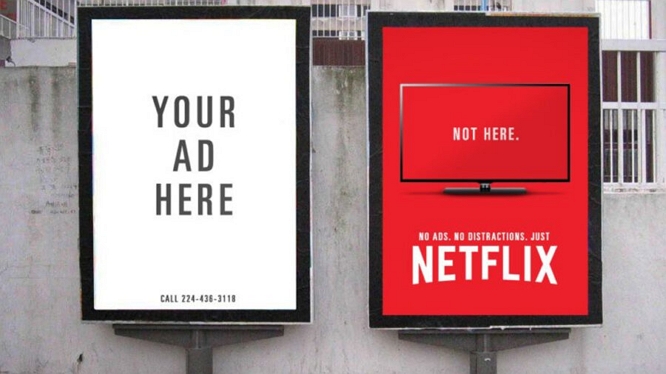
Their tagline was “No Ads. No Distractions. Just Netflix.” No ads, that was the whole pitch and Netflix was proud of it. That was the reason people fled traditional TV like it was a Keir Starmer press conference. And now? Netflix proudly offers a subscription tier with ads. As if that’s a perk. As if we should be grateful for the opportunity to pay to be advertised at. The entire point of ads is that they subsidise the content so you don’t have to pay, right? That’s the deal. That’s the ancient covenant that we all agreed on. But now we’re paying to watch ads designed to sell us things while we’re already paying to watch the thing we wanted to watch. It’s capitalism doing a victory lap while setting off fireworks and sticking the middle finger up to us at the same time.
If a service has ads, it shouldn’t cost money. If a service costs money, it shouldn’t have ads. This is not a radical stance. This is basic logic, the sort of thing you’d expect to find carved into a stone tablet somewhere between “Thou shalt not steal” and “Thou shalt not covet thy neighbour’s Wi‑Fi.”, it is a directive of streaming services. But here we are. Paying more, getting less, and being told it’s progress. At this point, the only thing streaming seamlessly is my annoyance.


Please leave a reply/comment.