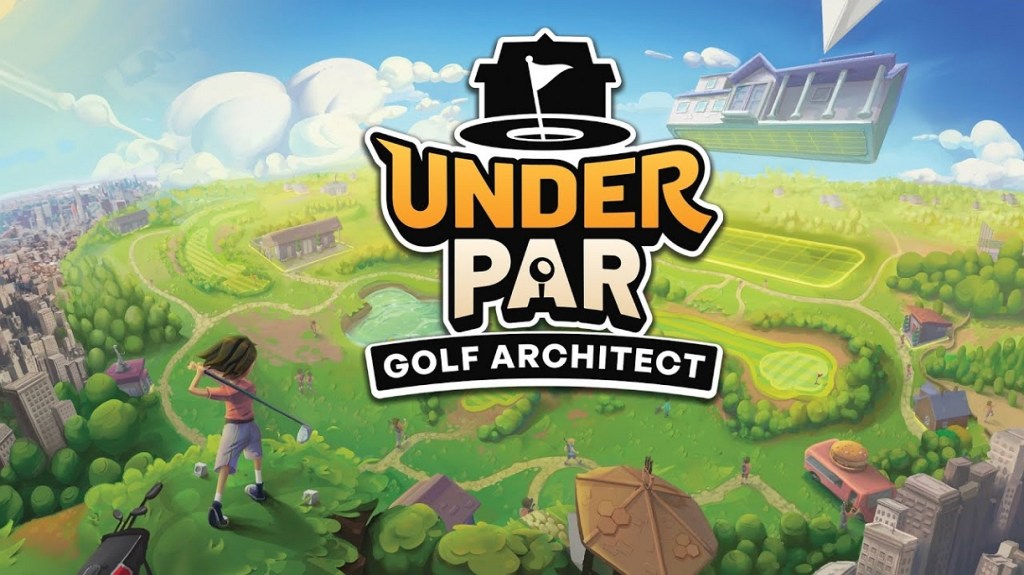
I played golf on a proper, professional golf course once… once, and I was really, really bad at it. Crazy golf, now that’s more my kind of thing. I tell you what I am good at though, games where you are given a plot of land and have to create a profitable business. Broken Arms Games and Gambit Digital offer up Under Par Golf Architect for me to review, but is it a soaring eagle or a double bogey?
“Step into the shoes of a golf architect as you build and manage your own golfing paradise! Sharpen your strategy by designing incredible courses to challenge the most demanding golfers and watch your club flourish as you attract VIP players, hire quirky staff and hold prestigious tournaments.”
Under Par Golf Architect arrives with a clear lineage. Anyone who has spent time with classic management sims like Theme Hospital, RollerCoaster Tycoon, or more specifically, Sid Meier’s SimGolf, will recognise its structure almost immediately. Scenarios are laid out across a world map, each with a checklist of goals to complete. Earn stars, unlock new regions, repeat. It’s a familiar loop, and the game leans heavily on that familiarity. The map itself offers a small flourish: you navigate it by driving a golf cart between the scenarios, even ploughing through scenery if you feel like it. It’s a playful touch, ultimately inconsequential, but emblematic of the game’s tone; light, mildly silly, and not especially concerned with depth.
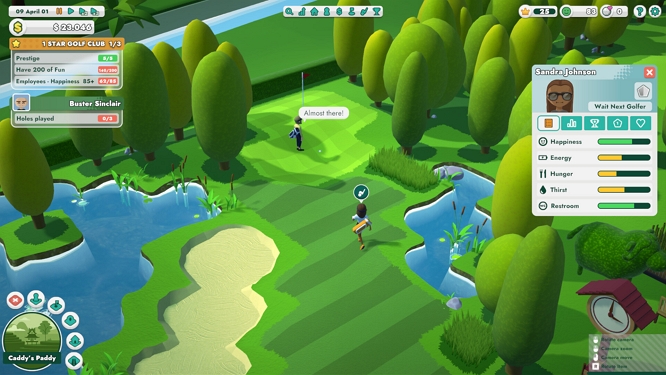
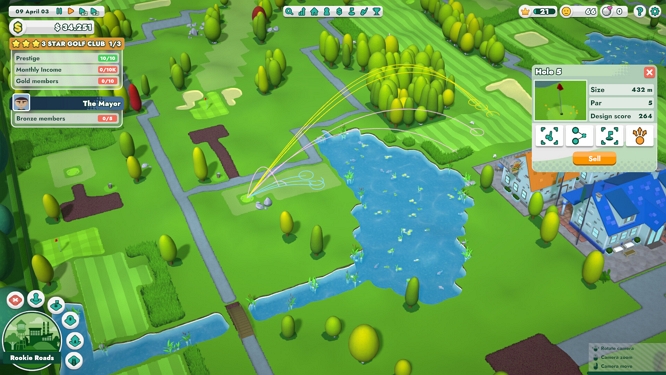
Each scenario tasks you with achieving a three‑star rating by meeting a set of objectives: build a certain number of par‑4 holes, attract gold‑tier members, raise the “fun factor”, and so on. You design holes, tweak their layout, and receive a quality rating that influences guest satisfaction and spending. Layered on top is a suite of supporting buildings — shops, restaurants, spas, along with staff to run them and groundskeepers to keep the course tidy.
On paper, it’s a full-featured management sim. In practice, it’s a simplified one. Progression is tied to star ratings, unlocking new items and upgrades, and you can even host tournaments or play a stripped‑down version of golf yourself. But the golf gameplay is rudimentary, more akin to a mini‑game tucked inside a larger title than a system with real nuance. It works, but it’s undeniably janky.
Some design decisions actively undermine the experience. Once you complete a scenario, you can’t continue and have to quit out back to the main menu, forcing you to reload your career and then manually drive your cart all the way back across the map to the next scenario. It’s a small irritation that becomes a repeated one, and it breaks the flow of progression in a way that feels unnecessary.
The tutorial, meanwhile, is functional only if you already know what you’re doing, as it lacks detail. It tells you what to build, but not how to build it. I had to fiddle around with button presses and search through menus before I understood where everything was. Veterans of the genre will adapt quickly, but the onboarding is surprisingly opaque for newcomers to the genre of a game that otherwise seems pitched at accessibility. The presence of three, day‑one DLC packs is difficult to ignore. DLC is typically used to extend a game’s lifespan once it has been out for a while, not to pad it out at launch. Their immediate availability feels less like an attempt to give the gamer more game and more like an attempt to extract additional revenue from players before they’ve even settled in. It’s not a good look.
The most significant issue, however, lies at the heart of the design: the game doesn’t reward creativity or strategic thinking. You can craft interesting, challenging holes with doglegs, hazards, and varied terrain, but the game almost discourages it. The AI golfers prefer simple, straight, hazard‑free holes, and those consistently earn the highest ratings. As a result, the optimal strategy is to build bland, linear designs with decorative trees on either side (which inexplicably count as hazards), breeze through objectives, and move on. This undermines the entire premise of being a “golf architect”. When the most imaginative part of the game is also the least effective, the management layer collapses into routine box‑ticking.
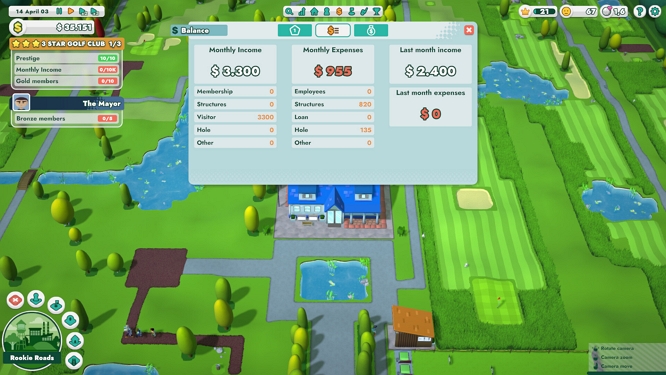
Compounding this is the near-total absence of failure states. Guests may dislike your course, but they still show up and spend money. Employees may become unhappy, but it rarely matters, they simply take a break and return to work refreshed. There’s no meaningful pressure, no risk of collapse, and no real incentive to engage with the systems beyond the bare minimum required to earn stars. The result is a management sim with very little actual management. I finished all the scenarios in one sitting because there’s no way to fail, the management mechanics are slight, and because there’s just no challenge here.
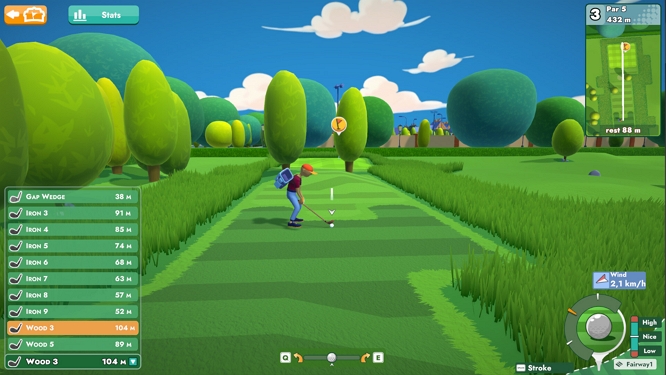
Under Par Golf Architect is available now on PC, PlayStation, Xbox, and Switch 2. It’s approachable, visually pleasant, and occasionally charming, but it’s also far too easy and lacks the depth that genre veterans expect. Newcomers may find it a gentle introduction to business sims, though the weak tutorial risks frustrating exactly those players. For seasoned fans, the cracks appear early: shallow systems, unchallenging scenarios, and design choices that discourage creativity. There’s potential here, but as it stands, Under Par Golf Architect feels like it is stuck in a sand trap, a game that gestures toward complexity without ever committing to it. For me, Under Par Golf Architect isn’t an eagle or a double bogey, it’s about par for the course.


Please leave a reply/comment.