
I’ve been on a bit of a casual gaming kick recently, slowing down, decompressing, and letting my brain idle in neutral. Today’s chill-out pick is Summerhouse, from Friedemann and Future Friends Games
“A tiny building game about beautiful lived-in houses. No rules or restrictions, just pure creativity.”
Summerhouse is now on consoles after its 2024 PC release, and it fits neatly into the cosy game niche: soft edges, low stakes, and zero pressure. It’s a creative sandbox, and it’s minimalist. The premise is disarmingly simple. You choose one of four backdrops, a cityscape, a desert, the mountains, or the country, and you’re handed a palette of blocks, walls, windows, doors, and decorative bits. You drag them around, layer them front or back, and assemble a house. Or several houses. Or a weird architectural collage that looks like a postcard melted in the sun.
It’s charming in concept, and the tactile, paper‑cut‑out feel gives it a warm, analogue texture. The 2D layering system adds just enough depth to keep your builds from looking flat, and there’s a certain meditative pleasure in nudging pieces around until they click into place.
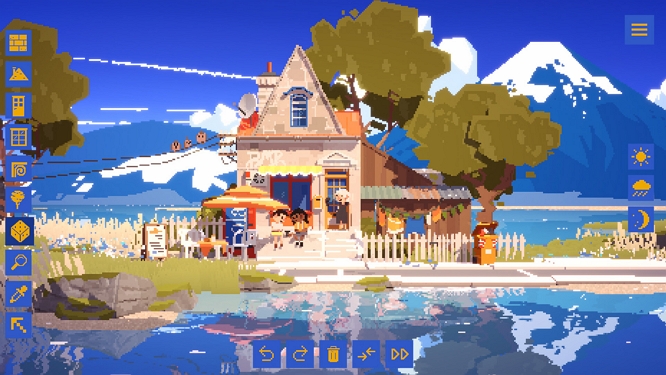
But the freedom comes with a catch: Summerhouse is so hands‑off it barely exists. There are no goals, no challenges, no real progression, no defined structure, nothing to push you, guide you, or reward you. It’s pure creative expression, but also pure creative isolation. This is where the game’s minimalist philosophy starts to feel less like design and more like absence.
Even the gentlest sandbox experiences usually give you something to chew on, a light objective, a trickle of new tools, a sense of discovery. Summerhouse offers none of that. It hands you a box of blocks and wanders off. There’s not even a tutorial. And while the mechanics are simple, the UI isn’t intuitive enough to justify the total lack of onboarding. You’re left poking at icons until something happens. I wasn’t expecting direct hand-holding, but some gentle guidance could’ve worked wonders. Especially playing on consoles, where the controls aren’t quite as smooth as on PC. I still don’t know how to access some of the icons on the screen, and I’m not sure if that is a me fault or if the console controls have not been properly optimised.
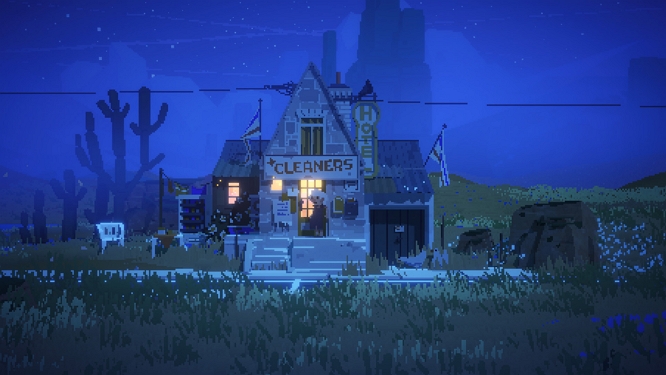
The creative concept is nice and all, but another game mode that offered a challenge would have elevated this title. A progression system could’ve transformed the whole experience. Imagine having to hit a score threshold for your builds and earning points, to then use those points for unlocking new architectural styles, new textures, new quirky décor, new backdrops, and more. Not complexity, just variety. A push to keep building. There is a way to unlock new blocks, but it’s not tied to challenge, and there’s very few of them.
At under £4, Summerhouse isn’t going to empty your wallet, and I genuinely enjoyed tinkering with it. There’s a gentle pleasure in building houses against pastel backdrops, and for a brief moment it scratches the same itch as doodling in a notebook. But once that novelty fades, there’s nothing underneath. No systems to explore. No surprises waiting. No reason to revisit your creations. It’s a toy, a sweet, harmless, fleeting toy, but not a game with any staying power. I spent a couple of hours with it for this review, and I don’t feel any pull to return. It’s cosy, yes. It’s cute, yes. But it’s also thin, limited, and strangely hollow.
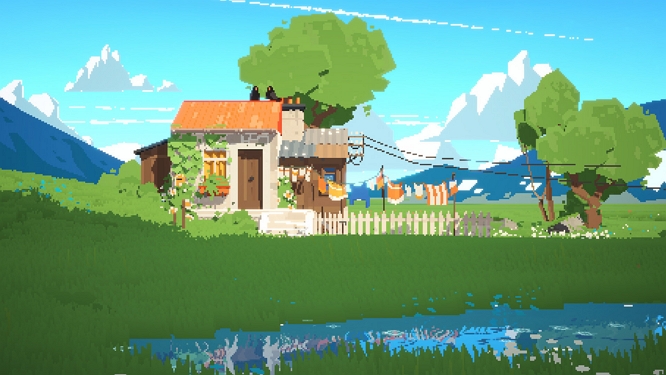
Summerhouse is a gentle, creative, and mild distraction that delivers a pleasant vibe but little substance. If you want a low‑pressure building toy to unwind with for an hour, it’s worth the small asking price. If you’re looking for a cosy game with progression or longevity, this isn’t it.


Please leave a reply/comment.