At long last, after years of running this site, scribing hundreds of articles, and covering everything from pixelated plumbers to AAA blockbusters, I finally get to write an article that lets me combine two of my favourite subjects: videogames and women’s nipples. This is the sort of high‑calibre cultural analysis that lesser gaming outlets like IGN, Polygon, and Kotaku simply don’t have the knowledge, backbone, historical grounding, or sheer journalistic bravery to tackle… nipples!
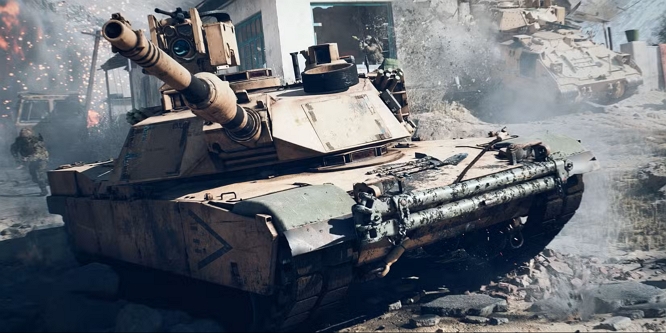
I often marvel at the fact that I’ve lived through the entire evolution of gaming, not just the technological leaps, but the cultural ones too. It’s mildly depressing that there are gamers today whose earliest memories of the medium involve pristine HD graphics, buttery‑smooth framerates, and games that look like this…
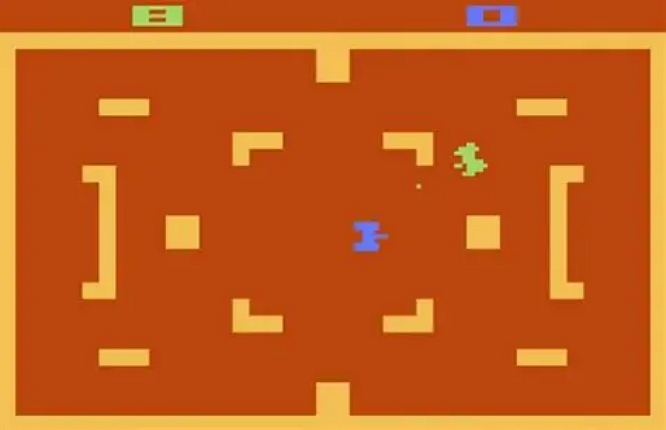
Whereas I, who can now be described as being a “mature gamer” (and a great many others) lived through gaming up to today. But we were introduced to gaming and grew up with videogames when they looked like this…
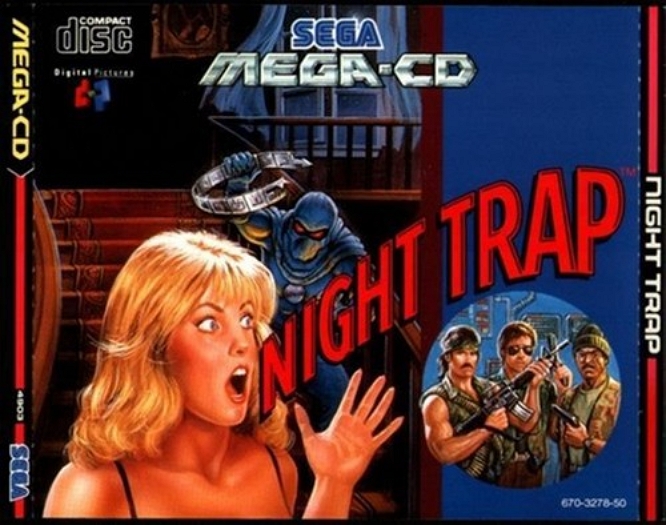
Over the decades, games have become bigger, more advanced, more detailed, and more cinematic. But alongside that evolution, we older gamers have also witnessed the rise of gaming moral panics. Politicians blaming Grand Theft Auto for antisocial behaviour and rising crime. Hand‑wringing think‑pieces insisting violent games create violent people despite mountains of scientific research saying otherwise. And of course, the legendary, utterly misguided backlash against Night Trap, to name but a few.
But I want to go back even further in gaming history, to one of the first major gaming controversies I remember personally. Not all the way back to Death Race in 1976 (arguably the first gaming scandal), but to 1987, when gaming was beginning to sink its hooks into us youngsters. And finally, after that lengthy intro, I get to talk about the controversy involving women’s nipples.
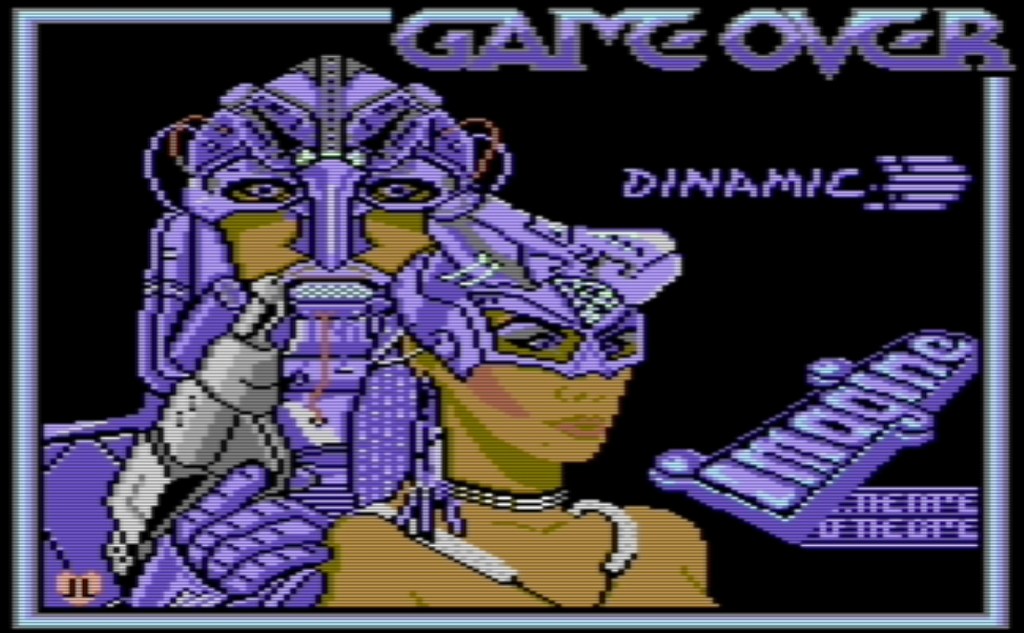
There was a game called Game Over. I may have lost some younger readers already, so let me explain: back then, we didn’t have checkpoints, autosaves, or cloud backups. You got a set number of lives, usually three, and when they were gone, that was it. Game over. Back to the start. No mercy. Game Over itself was a flip‑screen shooter (no scrolling) released across several 8‑bit home computers. It was… fine. Not terrible, not great. A solid “it exists” title. If you want to see it in action, here it is.
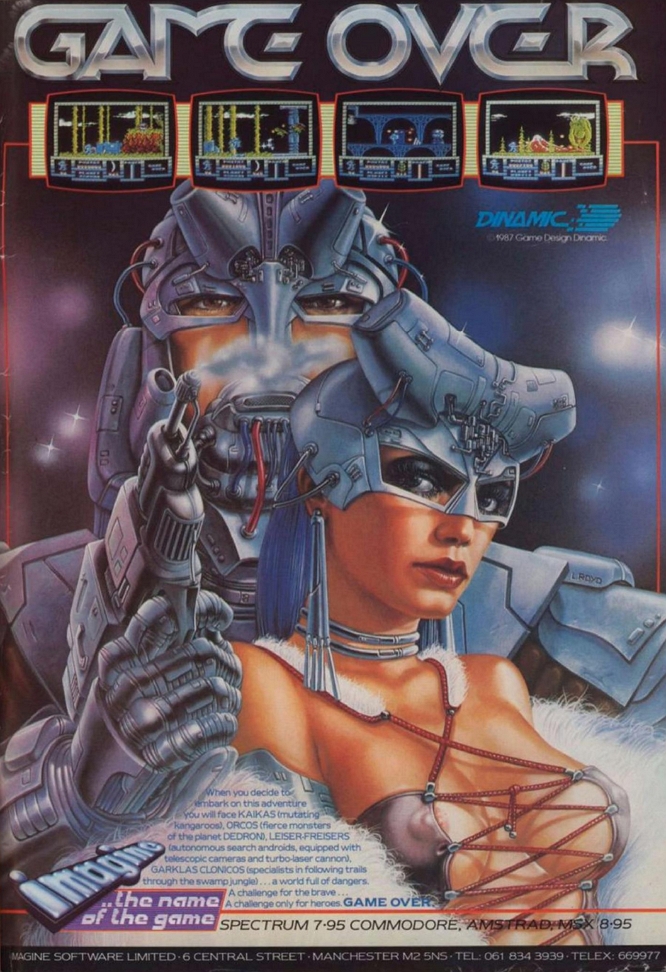
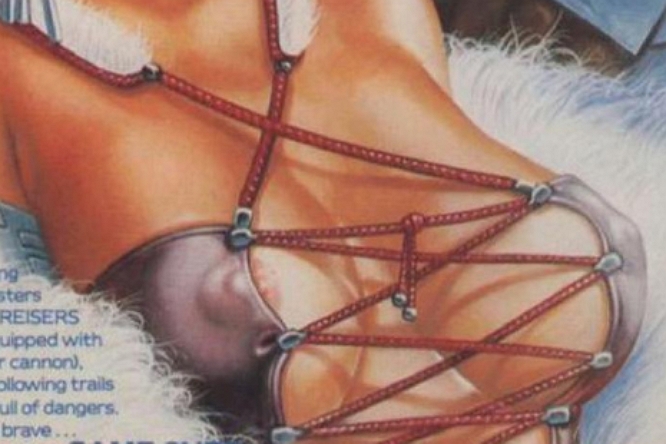
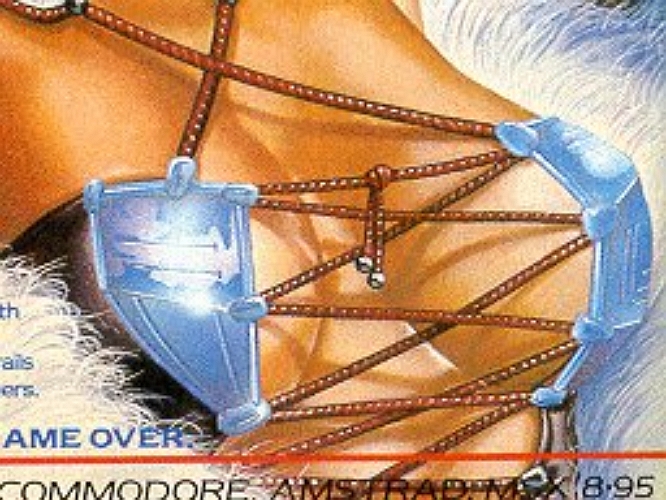
Where things get interesting is the game’s magazine advertisement and original cover art, featuring protagonist Arkos and antagonist Queen Gremla. The controversy erupted because the artwork included a partially visible female nipple, anatomically correct, non‑sexual, but enough to send 1987 into a mild cultural meltdown.
And for the eager historians among you, here’s a close‑up of the specific detail that caused the uproar.
As the game launched across multiple 8‑bit platforms, the ad ran in July 1987 in several magazines like Your Sinclair and Crash. Speaking of Crash, their readers voted the artwork as the best game inlay of 1987… perverts! However, magazines refused to continue running the ad (it was never run in its original form after July). Some retailers just point-blank refused to stock the game at all. And so began a frantic wave of censorship: cropping the artwork, slapping logos over the chest, even placing a non-too-subtle screenshot directly over the areola with all the subtlety of a brick through a window.
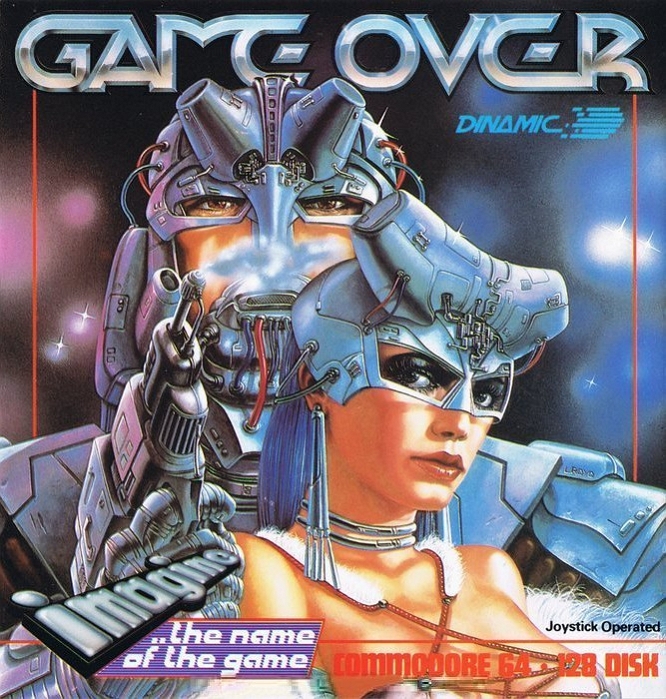
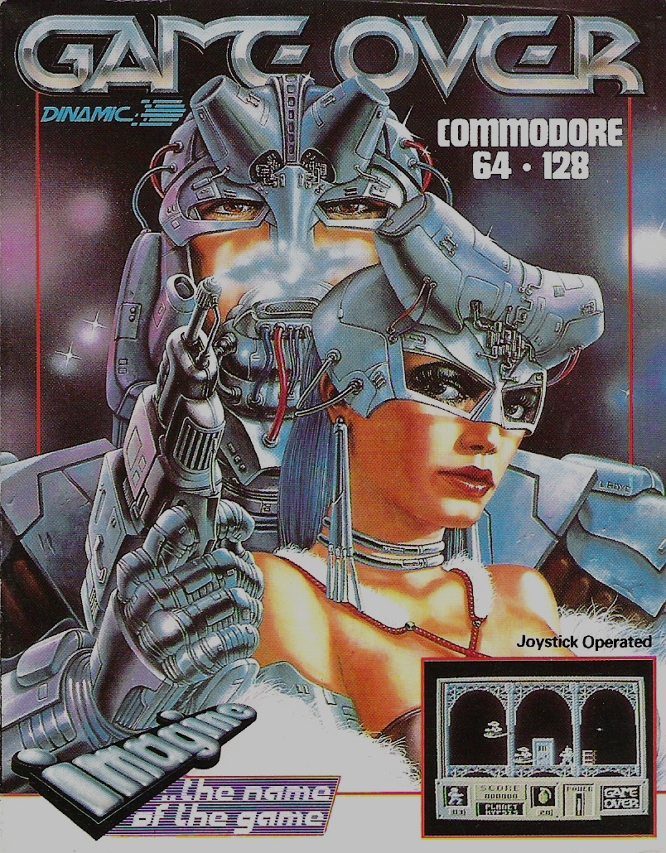
Crash magazine deserves a special mention. Their art editor, Oliver Frey (his brother Franco co-founded Crash), a genuinely brilliant illustrator, produced perhaps the most infamous censorship of all: a very obvious, very hastily added breastplate covering the offending nipple (and even the other fully covered nipple). It was the graphic‑design equivalent of sliding a pair of Y-fronts on Michelangelo’s David.
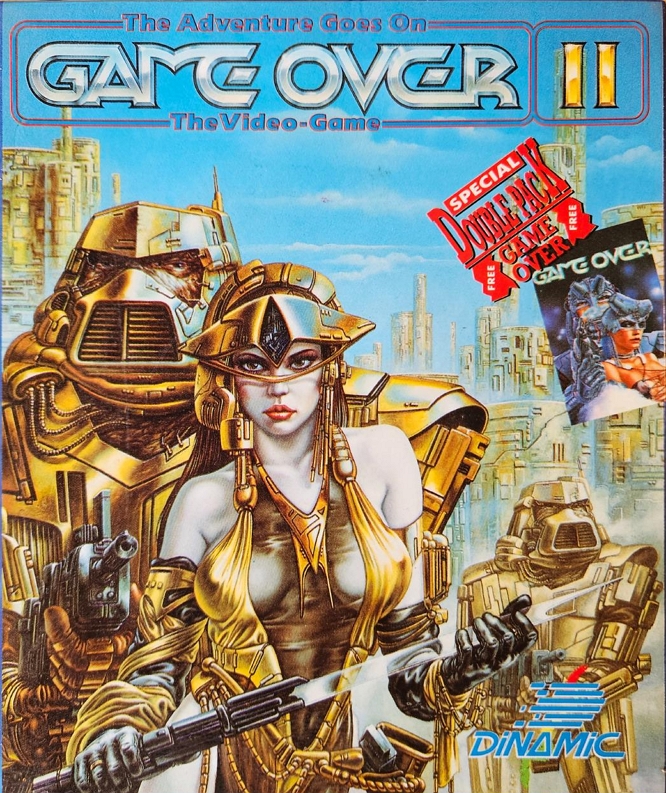
Game Over wasn’t a great game. The artwork is arguably the only reason anyone remembers it today. It did, however, spawn a sequel, Game Over II. Except it wasn’t originally a sequel at all. It began life as a standalone game called Phantis, developed by Dinamic Software. For its release outside of Spain, it was rebranded as Game Over II, with a lightly rewritten story to create a tenuous connection to the first game. The artwork toned down the anatomical detail this time (no visible nipple), but still featured a female character with an ample bosom.
And the legacy didn’t end there. A spiritual successor to Phantis was released as recently as 2014: Ultionus: A Tale of Petty Revenge. And yes, the lead character is once again a woman with massive, bouncy tits. Why this obscure lineage of games has such a fascination with mammary‑themed character design is a question for another day.
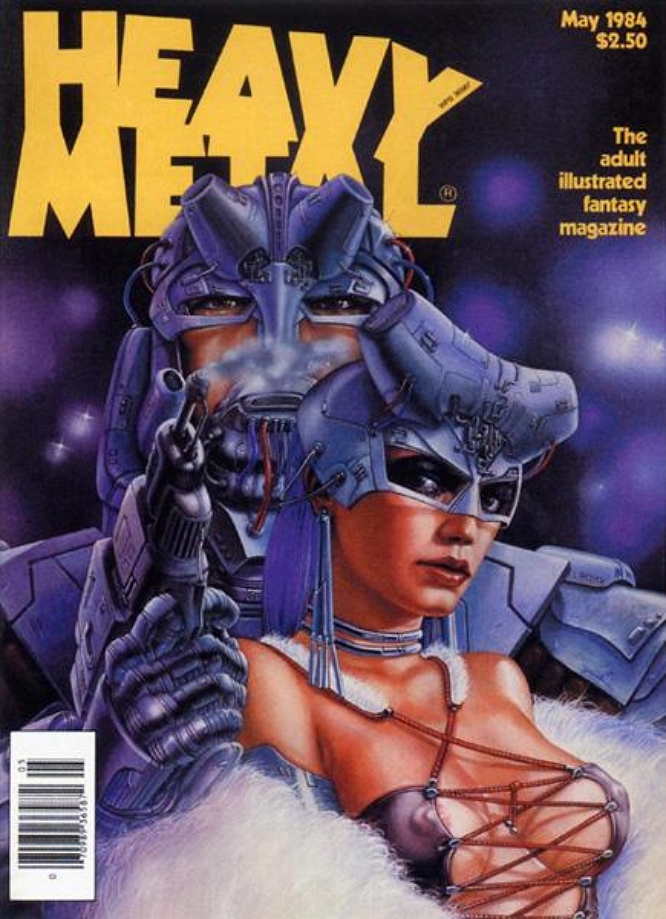
But there’s a final sting in this tale. The original Game Over artwork wasn’t all that original, as it was never created for the game. It was drawn by renowned fantasy artist Luis Royo, and first appeared on the cover of Heavy Metal magazine in May 1984, three years before it became the face of a slice of historic videogame controversy.
And that, dear reader, is the story of the most talked‑about nipple in 1987 gaming. Find an older gamer, someone mid‑forties or above, and ask them about the old C64/Speccy game Game Over. I’d bet good money they won’t remember the gameplay all that well, or even the game at all. But they’ll remember the artwork. Because sometimes, in the wild early days of gaming, it wasn’t polygons or pixels that caused a stir, it was a single, tiny detail on a piece of painted cover art.


Please leave a reply/comment.