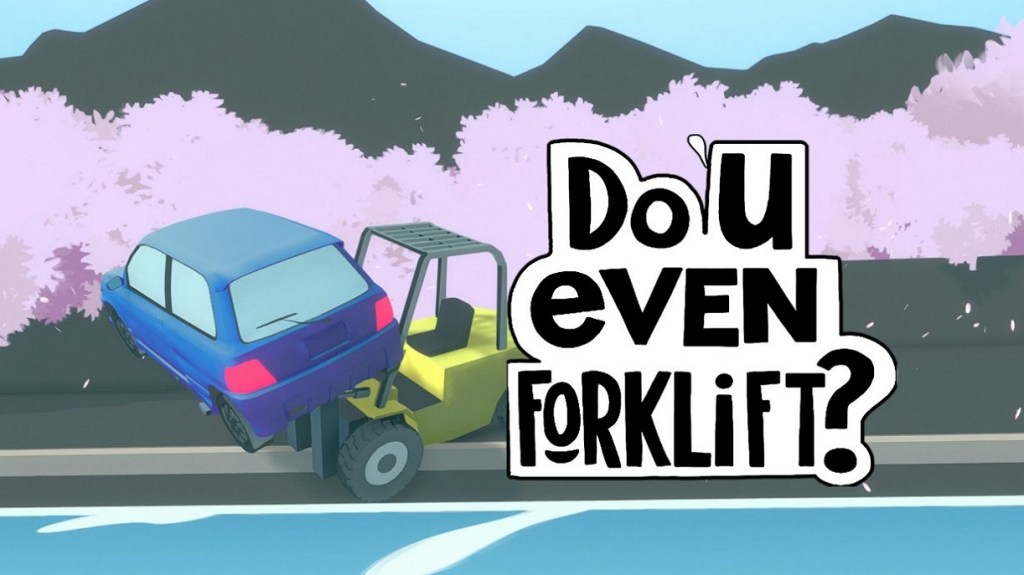
It’s a perfectly good question. Do U Even Forklift? comes from Garage 5, Take IT Studio! and Kurki Games. And to answer that question: yes, I do… now.
“Silly, physics-based forklift game inspired by Ghibli and Japan car culture! Use your forklift skills in logic puzzles with many unexpected outcomes!”
Before we go any further, a small but mildly baffling detail: the game is titled Do U Even Forklift?, as you can see from the main image and trailer (and in-game)… but it’s not in the press release I was sent or on storefronts, which insist on Do You Even Forklift? I have no idea why. I don’t know if this affects searchability, SEO, or the cosmic forklift balance of the universe. I just thought I’d mention it, because it’s the sort of thing that sticks in my brain like a splinter.
I do enjoy a bit of silliness now and then, a reminder that games don’t always need to be po-faced prestige dramas about trauma, war, a man with a beard… or a man with a beard that has faced the trauma of war. Do U Even Forklift? absolutely ticks that silly box. It’s light, and it’s the kind of game that feels like it was made by people who once saw a forklift and thought, “Yes. That needs to be a game.”
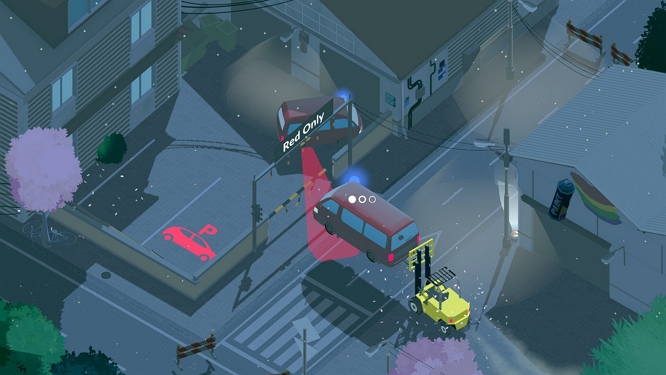
The premise is beautifully straightforward: use your forklift (or occasionally something even dafter) to fill a parking space. Early levels are exactly that, drive forklift, park forklift, job done. But Do U Even Forklift? quickly starts adding wrinkles. A car might be blocking the space. No problem: forklift it out of the way. Then the game starts layering in more absurdity, and before long you’re essentially playing vehicular Jenga.
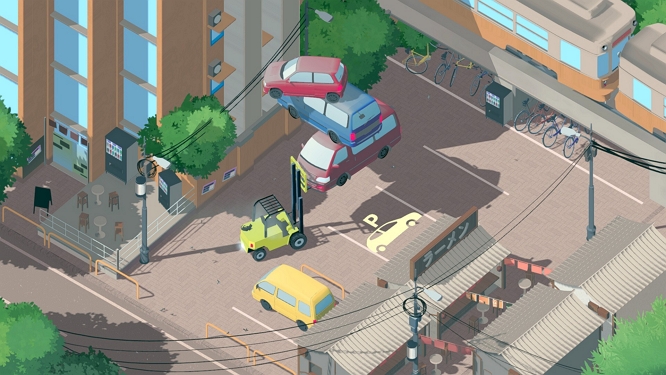
One level had me picking up a green car, placing it on a red truck, then picking up the red truck (now wearing the green car like a jaunty hat) and stacking the whole thing onto a blue truck, before delicately slotting this automotive totem pole into a parking bay. And that was one of the more sensible puzzles.
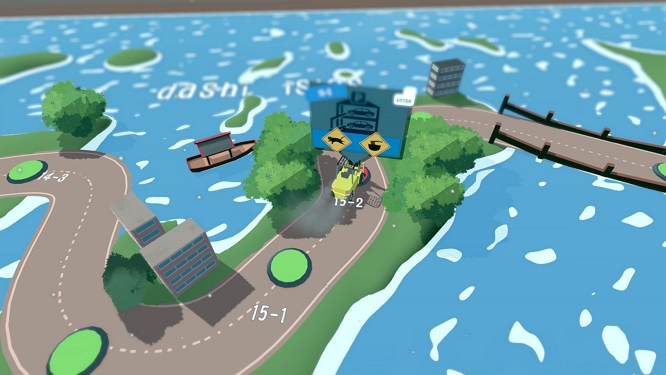
As you progress, the game keeps introducing new mechanics: Cars with alarms that can only be moved a limited number of times. Electric vehicles still plugged in, which must be moved without unplugging them. Filthy cars that need a trip through the carwash to reveal their true colours. Each gimmick is fun, inventive, and often genuinely clever. The problem is that they vanish almost as soon as they arrive. Each area is four levels long, and each area introduces a new idea… then immediately discards it. There’s very little layering, not much escalation. It feels like the game has a bucket full of great toys but insists on handing them out one at a time, then snatching them back before you’ve had a proper play.
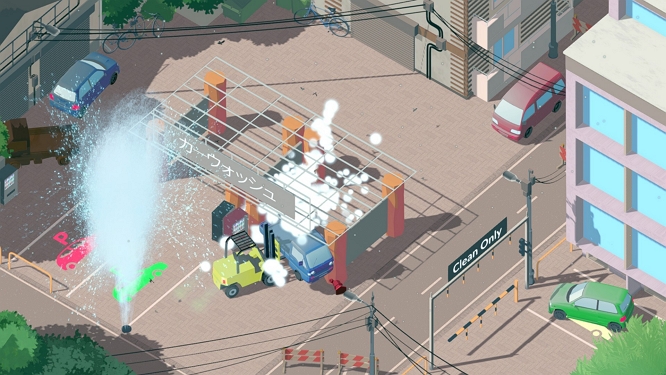
The levels themselves are tiny. At first, this works, compact puzzles, quick solutions, a nice pick‑up‑and‑play rhythm for the opening few areas. But as the game progresses, the small scale becomes a limitation. You start to see the outlines of what the game could have been with larger spaces, more elaborate setups, and mechanics that build on each other instead of politely taking turns. The puzzles never really get difficult. They get busier, but not deeper. For a bit of a distraction, the game introduces “hidden” ramen bowls on each level. Only, they’re about as hidden as a bonfire in a phone box. Massive plume of steam, right there in the open. They stop being a fun optional challenge and become more of a “yes, yes, I see it, let me get on with the puzzle” distraction.
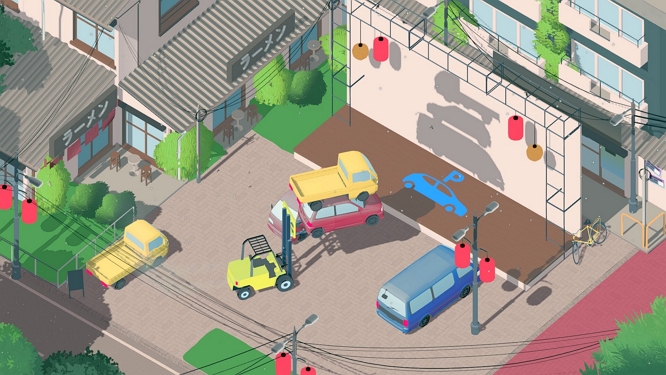
The game looks lovely. It’s cute, colourful, and clearly inspired by the softer, rounder edges of Ghibli-esque design. The forklift itself handles surprisingly well, with a pleasing weight and wobble that sells the physics-based chaos. There’s a real tactile joy to scooping up a car and yeeting it somewhere it absolutely shouldn’t be. But again, the game never pushes its own strengths. It’s content to be a charming but small toybox when it could have been a genuinely deep and memorable puzzle game.
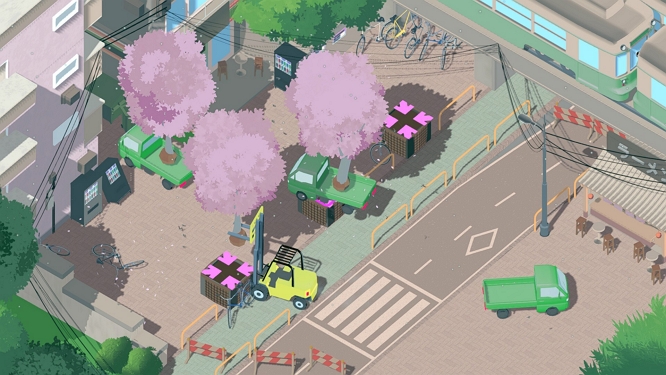
Out now for PC, PlayStation, Xbox, and Switch for around £7, Do U Even Forklift? is undeniably fun. It’s cheerful, silly, and occasionally inspired. But it’s also a game that introduces great ideas only to abandon them, and whose small levels eventually feel like a constraint rather than a design choice. The core idea is brilliant, but the execution is limited. But for £7, it’s a breezy little puzzler that’s absolutely worth a go, especially if you fancy something light, colourful, and just the right amount of daft.


Please leave a reply/comment.