Within the music industry, there is an oft-used phrase: “the tricky second album”. Breaking this down to the basics, the phrase highlights the troubles that musical artists face after releasing a debut. With a debut, there is no expectation, no fan or critical praise to meet. Artists can put a record out, and it simply is what it is. By the time the second album arrives, however, people are aware, a fanbase exists, and critics are poised. There is a pre-built expectation that this second release will surpass the first. A lot of artists fall at this second hurdle because they might only really have had one album in them. But because that first record was a success, the money came in, the urge to please the crowd took over… and the talent just wasn’t there.
I think this applies to films too, only the danger zone shifts to the third film in a franchise. And when it comes to franchises, the horror genre seems to push for a threequel more aggressively than any other. If you think about it, there are some genuinely great trilogies in cinema history, and then they release a fourth film, and the grand fall from grace begins. For me, it is that tricky third horror film that can make or break a franchise. Some franchises hit three and stop: a neat trilogy, done. Others hit three and keep pushing forward, leaving me to question if they ever should have bothered. Now, I am not talking commercial status here. Some films make big money at the box office while being utter crap. This is entirely about my personal critical view.
So that is what this article is all about. I am going to explore the third film in several horror franchises and ask whether it was really worth carrying on, or if the franchise should have stopped at that third film… or even before it. In no particular order, just as they come to mind, here are my picks of tricky third horror films, and my verdict on whether they should have quit while they were ahead… or behind.
Dracula: Prince of Darkness (1966)
A classic. I think the Hammer Horror films were perhaps the first horror flicks I watched as a kid. Being English, the Hammer movies were a mainstay on television when I was growing up, and the Dracula pictures were the most watched of the lot. This third entry is arguably the best of the entire franchise, too.
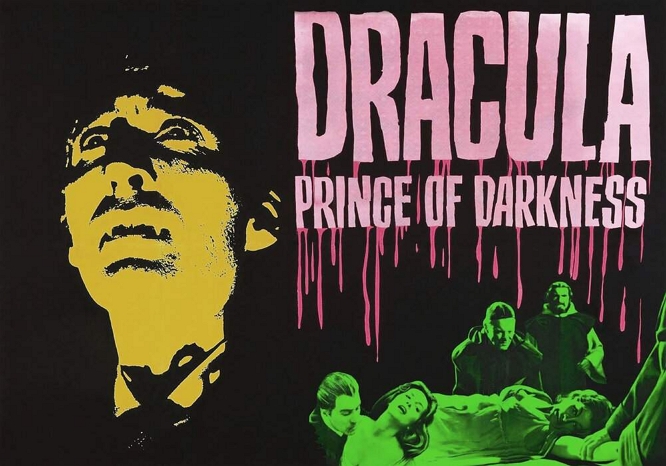
While the original Dracula is a masterpiece, The Brides of Dracula was utterly redundant, it didn’t really add anything and can safely be ignored. But Dracula: Prince of Darkness took what made that first film so good, built upon it, and improved it. What happened after? The franchise dragged on for six more films, and they progressively got worse and worse. Titles like Dracula A.D. 1972 and The Legend of the 7 Golden Vampires are truly terrible.
This is one third film where the nail in the coffin was ready to be hammered in, and frankly, it should have been. If they had ended here, you would have had one great first film, a watchable but forgettable sequel, and a brilliant last act. Overall, a solid trilogy. But no, they dragged it out for six more instalments.
The Exorcist III (1990)
Here in the UK, we have the BBFC (British Board of Film Classification), who handle age ratings for films. In the 1980s, a moral panic was launched that created the infamous “video nasty” list, and several notable features were either heavily censored or outright banned. One such flick caught up in all of this was the original The Exorcist. It took until the late 1990s, when there was a management change at the BBFC, for the film to finally be released fully uncut.
I got to see the original in all its glory in early 2000 for the first time, and I loved it (I did a kind of retrosepctive). So I immediately went out and bought a copy of the sequel, Exorcist II: The Heretic, which is easily one of the worst films ever made. As a result, I just didn’t bother with The Exorcist III for many years. If the first sequel was that abysmal, surely the next one must be even worse.
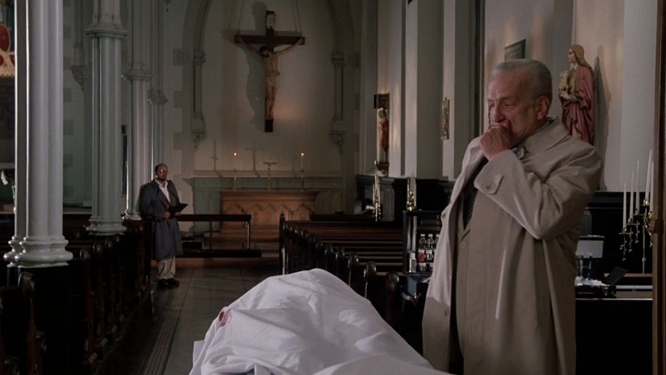
I was very wrong. The Exorcist III is a fantastic sequel. It has a different flavour to the original, which is a good thing, but it keeps the same atmosphere while pushing things into even darker territory. Oh, and of course, it features one of the greatest jump scares in movie history. Much like the previous Dracula franchise, this gives us a great first film, an awful first sequel, but a brilliant third. Again, if they had stopped there, we would have had a good, if slightly uneven, trilogy. But no. They made more films, including two really bad prequels (that were essentially the same film), another awful sequel, and there is yet another new one scheduled to come out next year. This is a franchise that peaked with The Exorcist III and has been racing downhill ever since.
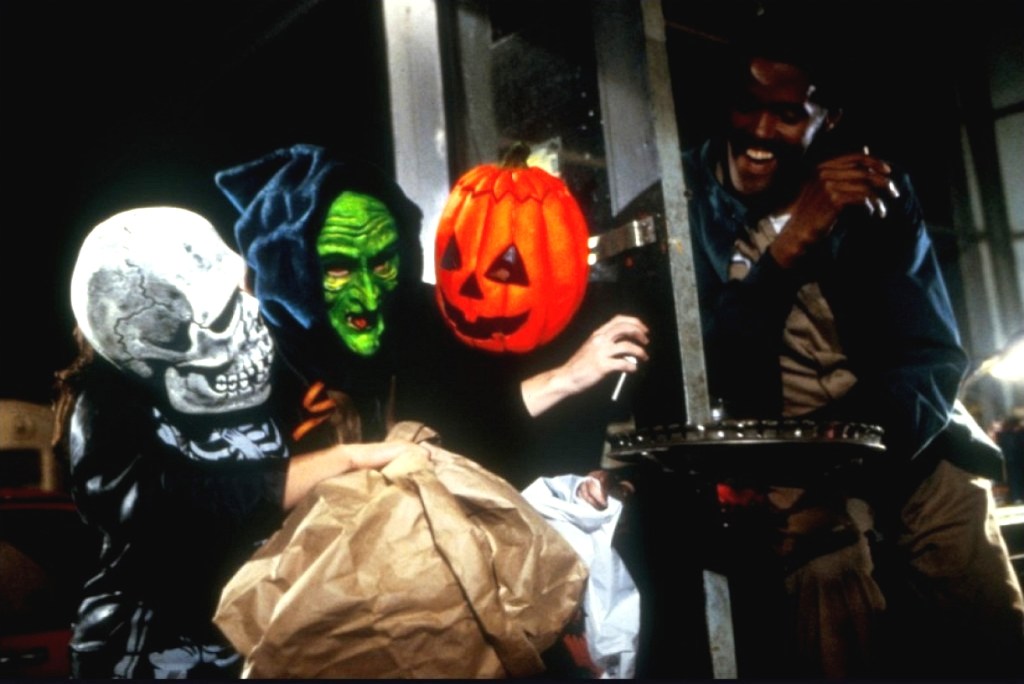
Halloween III: Season of the Witch (1982)
Now we are getting into cult territory. I adore John Carpenter as a filmmaker. Some of my absolute favourite flicks are Carpenter cuts: Assault on Precinct 13, Escape from New York, The Thing, Big Trouble in Little China, They Live, In the Mouth of Madness… I need to stop myself. Do you know which Carpenter film I’ve lost total interest in, like, totally? The original Halloween (I did a lengthy retrospective of the franchise). I still admire it for being ground-breaking and for (if not strictly speaking inventing the sub-genre) popularising the modern slasher. But it’s just not a particularly good film.
The oft-told story is that John Carpenter never wanted to keep using Michael Myers as a recurring killer. He wanted each Halloween film to be a standalone seasonal tale, bringing us a brand-new story every year. But when the original became a massive success, the studio talked him into writing a direct sequel, a project Carpenter himself admits to not wanting to do, but he was offered a ton of money, got drunk, and wrote it anyway.
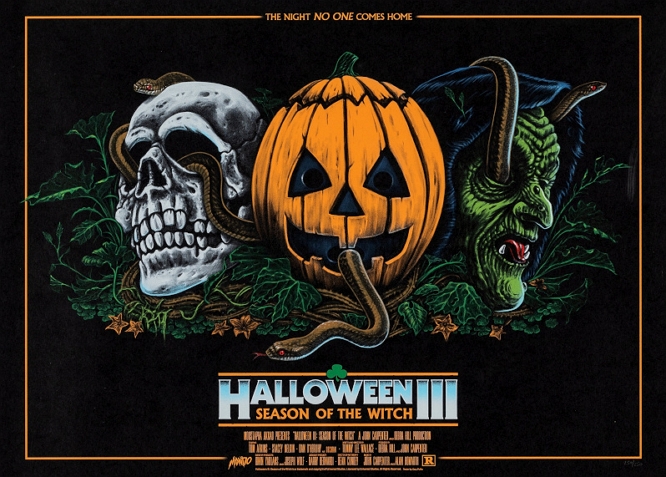
After Halloween II, Carpenter got back to his original idea of the films being standalone chapters, and the result was Halloween III: Season of the Witch, which was brutally lambasted by fans and critics at the time. So Michael Myers was hauled back from the dead for every entry thereafter, leaving us with the same tired story regurgitated for years. However, Halloween III has gained a fiercely strong cult following more recently, and people are finally starting to see how damn good it really is. This is my absolute favourite of the franchise, and I liked it before it was cool to like it. This is the one film I always have to watch every Halloween, every year, without fail. I might watch other scary films throughout October, but the 31st is reserved exclusively for Halloween III. Even now, as I write this, I’m getting excited to watch it again soon.
This really could have been the turning point of the franchise. It could have taken bold steps and given us brand-new tales every year. Instead, we just got Michael Myers coming back to kill really stupid characters, while the films grew tiresome and trite. It’s not necessarily that this film should have ended the franchise; rather, it should have revitalised it.
A Nightmare on Elm Street 3: Dream Warriors (1987)
From one classic horror icon to the undisputed king of the 1980s. I still think that the original A Nightmare on Elm Street is one of the finest horror films ever made (Yes, I did do a lengthy retrospective of the franchise), wonderfully refreshing and crammed with brilliant imagination, thanks to writer-director Wes Craven. And, of course, it introduced the world to Freddy Krueger, who would go on to become a cinematic legend. A Nightmare on Elm Street 2: Freddy’s Revenge reminds me of Halloween III in a few ways: it was lambasted by fans and critics at the time, only to find a passionate cult status later in life. I adore A Nightmare on Elm Street 2… not so much the third film.
This is where I inevitably piss off the fandom, because A Nightmare on Elm Street 3: Dream Warriors is often heralded as the best sequel in the franchise, with some even holding it in higher regard than the original. I don’t. For me, this third film is the exact point at which the franchise died. While the films (including this one) went on to feature some genuinely amazing kill scenes, the stories got progressively worse, and Freddy stopped being scary as the studio turned him into a wisecracking cartoon character spouting bad one-liners. “Freddy Mania” was a real thing, and as the character became a pop-culture icon, he was everywhere. This was the film that kick-started all of that.
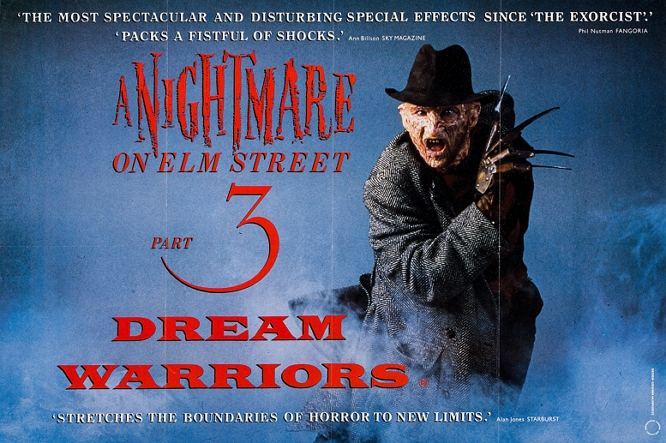
This film marked the turning point of decline. The more popular Freddy became, the worse the films got. This one isn’t the worst of the franchise, not even close, but it’s pretty bad. Wes Craven actually wrote a very different, more cerebral, and meta film involving Freddy invading the real world during the production of a new sequel. He eventually got to make that movie with Wes Craven’s New Nightmare, which I think is brilliant. On top of that, John Saxon wrote a compelling screenplay for a prequel that detailed how Freddy became what he became and his involvement with the Manson Family. Talk about great ideas for fresh takes. Instead, we got a very generic studio sequel.
In a way, I’m glad this third film happened the way it did, because it allowed Wes to circle back to his meta idea and deliver the sublime New Nightmare years later. But for me, it is still where the creative decay of the franchise began… and I’ll always lament that we never got to see John Saxon’s prequel idea come to life.
Psycho III (1986)
When it comes to undisputed classics, few films can claim that crown as confidently as Psycho. It’s right up there as one of my all-time favourites (to the point where I put together one of my famously lengthy retrospectives of the franchise). Not only is that first film an absolute masterpiece, but Psycho II is a brilliant sequel that respects the original and genuinely builds on it. It’s an exceptional piece of cinema… right up until the last ten minutes. And then came Psycho III.
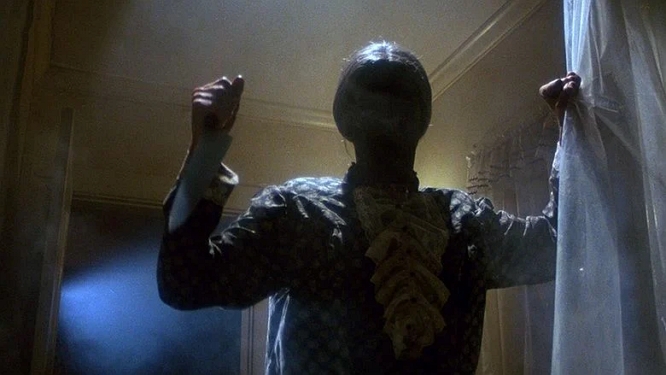
Not only did Anthony Perkins return as Norman Bates, but he also sat in the director’s chair. Whereas the previous two films used tension and suspense to devastating effect, Psycho III leans headfirst into full-on 1980s horror sleaze. There are a few decent moments here and there that save the film from being a total train wreck, but as an overall piece of work, it’s quite poor. It doesn’t really function as a good Psycho film, though it’s just about passable as a generic ’80s slasher. The murders make no sense, though. They’re shot and edited to hide who the killer is, even though we already know from the opening beat that the killer is Norman. With the first two flicks, hiding the killer’s identity was a major plot point and a brilliant reveal at the end. But we know Norman is the culprit right from the start, so why hide it? This is one third film that should have firmly buried the franchise… but they made another one anyway, and that isn’t very good either.
Leatherface: The Texas Chainsaw Massacre III (1990)
The original The Texas Chainsaw Massacre is one of those horror classics that seems to deeply split opinion. Personally, I’ve always loved it. It’s often mistakenly believed to be an extremely bloody and gory film, but it really isn’t. There is very little actual blood, and the horror is primarily psychological, just look at the infamous dinner table scene as a prime example. This was followed up by The Texas Chainsaw Massacre 2, which took a wildly different, gleefully dark comedic approach, featuring quite possibly Dennis Hopper’s greatest film performance outside of the 1990 Super Mario Bros. movie.
For the third instalment, however, they ditched the pitch-black comedy and pivoted to a straight-up, bloody slasher film based on a screenplay by David J. Schow (who also wrote A Nightmare on Elm Street 5: The Dream Child, which suddenly explains a lot about why The Texas Chainsaw Massacre III is a bit shit). This reminds me somewhat of Psycho III, in that it jettisons everything that made the original so special and devolves into a generic, substance-free ’80s slasher flick.
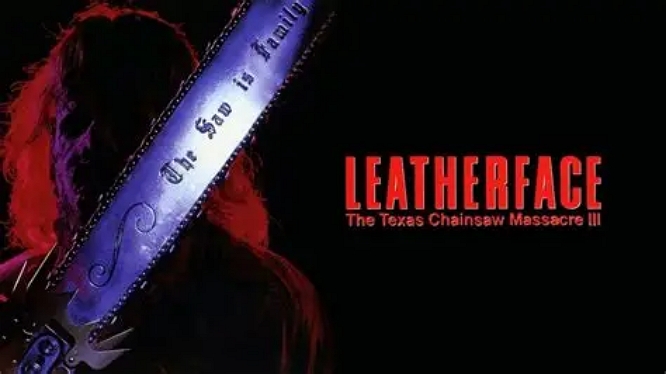
There are currently nine films in this franchise, sprawling across sequels, remakes, prequels, and reboots, with apparently another one still in the works. The entire point of this article is to look at the third film and decide if the franchise should have continued. To be honest, I’m not entirely sure it should have continued past the first one! Even though I have a soft spot for The Texas Chainsaw Massacre 2 precisely because it acknowledged it could never better the original and chose to pivot into a twisted comedy instead, at least I have a little respect for that instinct. But from the third entry onwards, this franchise is pretty damn awful. I honestly have no idea how they managed to squeeze nearly ten films out of it.
Amityville 3‑D (1983)
I’m going to start with a little confession: I really don’t like The Amityville Horror. The film that started it all, the classic that birthed the franchise (based on a definitely massive hoax of a book). I do quite like Amityville II: The Possession, though. But here we are at the third film, and naturally, it jumps straight onto the popular 1980s horror film 3D bandwagon (Parasite, Jaws 3-D, Silent Madness, Dogs of Hell, Tales of the Third Dimension, to name but a few). It worked even better if it happened to be the third film in a franchise, because studios could shoehorn the 3D right into the title, as is proudly the case with Amityville 3‑D.
So then, aside from gimmicky 3D effects that didn’t do much for the actual viewing experience, what else does this third entry bring to the table? Pretty much nothing. Meg Ryan is in it… and that’s about all I can honestly remember. Even bad films usually have something memorable going for them, but Amityville 3‑D doesn’t even have that.
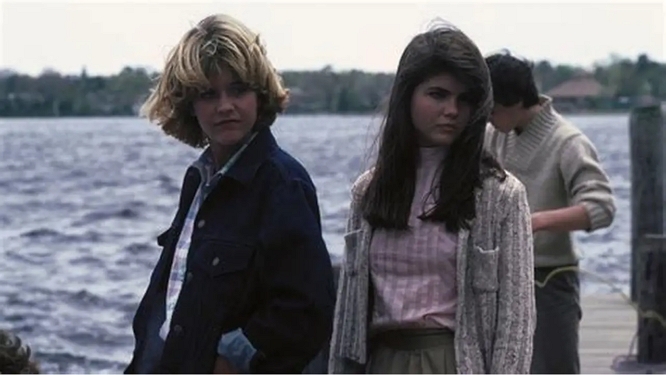
Now, let’s talk franchise longevity. I just covered The Texas Chainsaw Massacre and pointed out that it has nine films, with a tenth on the way. Ten films in a horror franchise is a lot, they usually sputter out around six or seven. So, how many films do you think bear the Amityville name? Well, there are the ten official studio releases, with two more on the horizon. Twelve is quite a lot of films, eh? But that doesn’t even scratch the surface, because there has also been a relentless slew of independent Amityville films, sixty-one of them, to be precise. Coupled with the studio releases, that’s seventy-three Amityville movies in total. These indie cash-grabs boast titles like Amityville: The Final Chapter and The Last Amityville Movie, despite dozens more films being pumped out after both of them. They also feature such masterpieces of cinema as Amityville Vibrator (yes it is about a possessed sex toy), Amityville Cop, Amityville in Space, Amityville in the Hood, Amityville Christmas Vacation, Amityville Death Toilet, Amityville AI, and many, many more.
Should the franchise have died after the release of Amityville 3‑D? Honestly, I don’t think it would have mattered either way, nothing was ever going to stop the independent scene from eventually birthing Amityville Rex.
Friday the 13th Part III (1982)
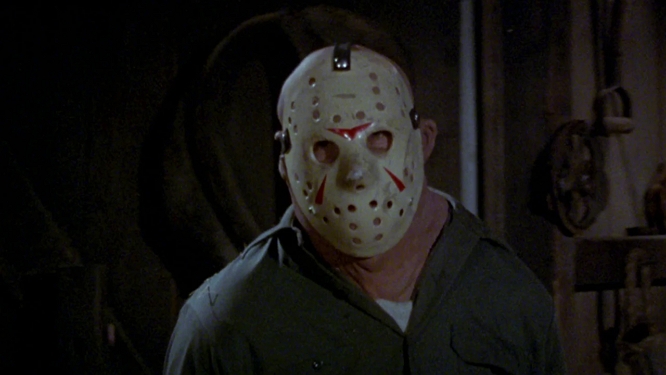
Well, you didn’t think I was going to talk about 3D horror films and skip this one, did you? While they refrained from putting 3D in the actual title (but not the marketing), this was very much a 3D picture and the third instalment in the franchise. And it is not even remotely shy about it. Yo-yos flying straight at the camera, popcorn popping in your face, Jason firing a harpoon gun right down the lens, and more. Honestly, watching this in proper 3D is a great bit of goofy fun. As for the film itself, however, it’s pretty standard, copy & paste stuff.
These flicks have never been high art, nor should they be, but even at this relatively early stage in the franchise, the formula was already starting to wear thin. Fans always chime in with, “But this is the one where Jason gets his hockey mask!” And yeah, it is, that’s about the only truly notable thing that happens. The inherent trap of the slasher genre is that there is only so much you can do with stupid teenagers having sex and getting carved up before you’re just repeating yourself. At least with something like A Nightmare on Elm Street, you have the entire dream world canvas to get creative. With Friday the 13th, there’s genuinely very little room for variation… unless Jason goes to space.
Still, I’m glad they didn’t stop here and pushed forward with more sequels, purely because some of them are so utterly atrocious that they cross over into being stupidly enjoyable. Friday the 13th Part VIII: Jason Takes Manhattan is a particularly laughable highlight. It’s not a great franchise by any stretch of the imagination, but it is undeniably fun.
Well, I didn’t actually plan this, I just sat down at the keyboard and started typing. But it’s naturally evolved into quite an epic, and I’m splitting the article into three parts. Ironically, it’s ended up as a literal trilogy of its own. I just hope my writing doesn’t end up getting as terrible as some of the films I’m covering. So, onto Part Two.


Please leave a reply/comment.