I fucking love Hellraiser. It remains one of my all-time favourite horror films, an absolute masterclass in gothic dread, leather-bound body horror, and exquisite suffering. The first sequel was pretty good too, expanding the lore in all the right twisted directions. As for the rest? Well… the less said about the long slide into straight-to-DVD oblivion, the better. I even produced a massive retrospective on the franchise almost ten years ago, so my blood, sweat, and tears are firmly baked into this series’ history.
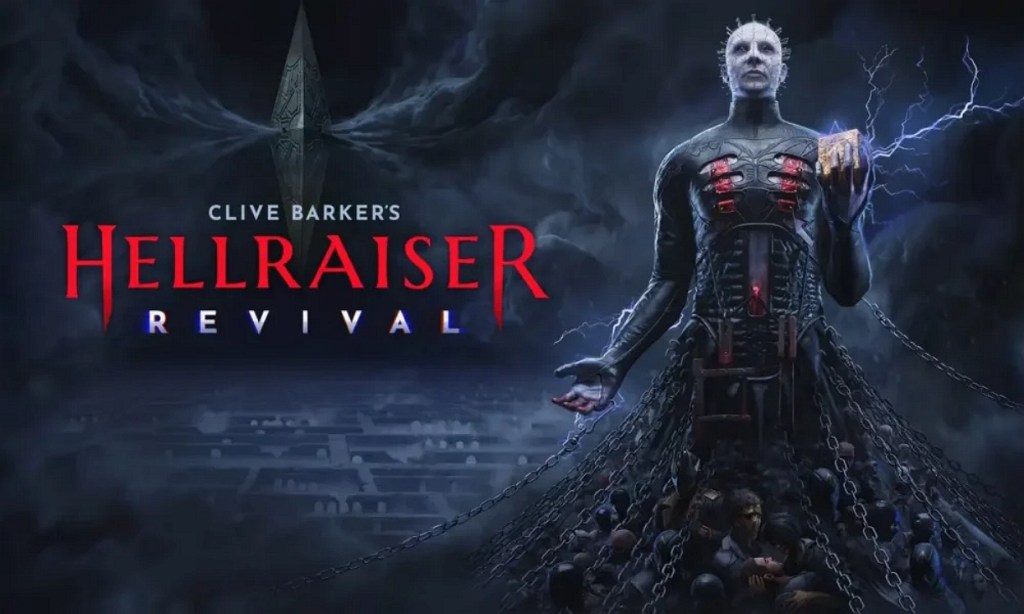
Now, here we are in 2026, and I finally get to sink my teeth into Clive Barker’s Hellraiser: Revival from Saber Interactive.
“Experience a new chapter in the legendary horror series like never before. Clive Barker’s Hellraiser: Revival takes first-person action horror survival to the next level. Wield the powers of the Genesis Configuration puzzle box to survive your bargain with the infamous Pinhead.”
I’ll be honest: modern licensed horror games based on classic film IPs have really pissed me off over the last few years. They’ve fallen into a lazy, copy-paste groove. Friday the 13th: The Game, Evil Dead: The Game, Halloween: The Game, The Texas Chain Saw Massacre… the game. They’re all fundamentally built on the exact same asymmetrical, multiplayer survival horror template, just wearing a different brand’s skin. You play a few rounds, the novelty wears off, the player base dies, and the game gets abandoned.
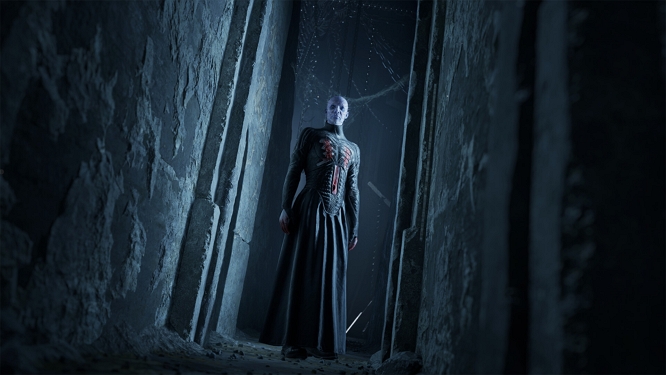
Even when developers toss in single-player content, it’s always slight, hollow, and thrown in as an afterthought. Whatever happened to rich, single-player-only horror experiences built around cinematic icons? Well, that’s where Hellraiser: Revival comes in. It’s a dedicated, single-player, narrative-driven title. No multiplayer here. But the question is: is it Hellraiser great, or Hellraiser: Judgment awful?
You play as Aidan, a fella who finds himself in way over his head during an opening sex scene with his girlfriend, Sunny. Wanting to push the boundaries of their kink, Sunny introduces a mysterious, ornate puzzle box into the bedroom: the Genesis Configuration. Naturally, solving it doesn’t end in climax; it ends in torturous Hell.
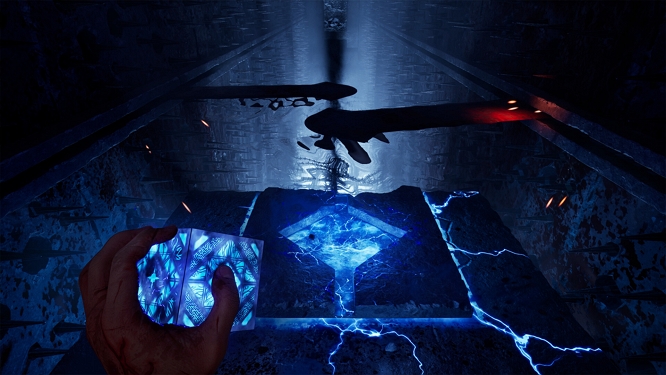
The Cenobites manifest, and Pinhead literally gets his hooks into Sunny, tearing her apart in classic, agonizing fashion. Desperate to drag her back from the Labyrinth, Aidan strikes a bargain with the Hell Priest himself. What follows is a descent into insanity where Aidan must navigate not only a gauntlet of twisted hell spawn, but also a bizarre, sadomasochistic cult, the Scarlet Church, obsessed with the box.
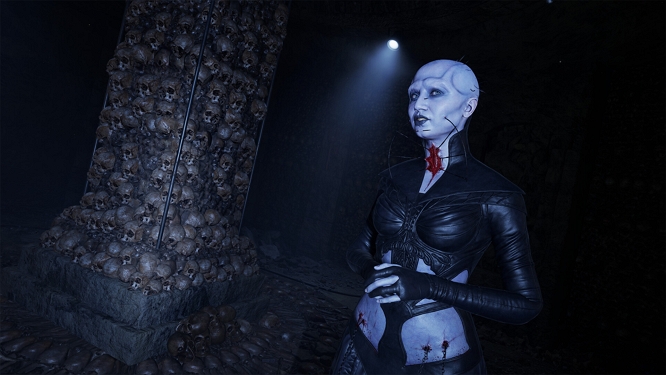
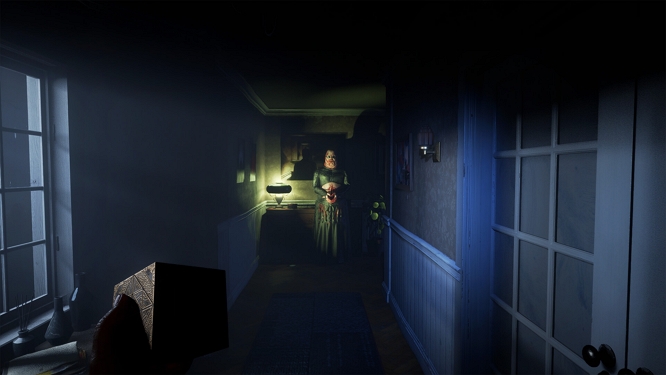
Visually and atmospherically, the developers have done a staggering job recreating the oppressive, filthy aesthetic of Barker’s universe. It is explicitly gory, drenched in slick blood, and completely unapologetic about its depiction of hard-hitting sex, BDSM, and rough eroticism. It really does look the part. This is Hellraiser in its truest form.
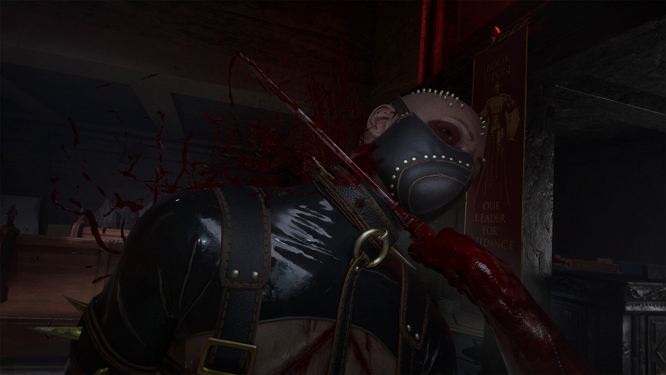
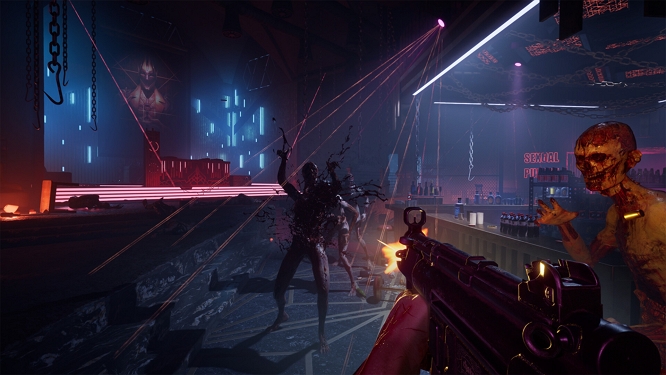
Just wandering through the various environments, from sticky, neon-lit underground sex clubs to rusted, damp industrial corridors, feels deeply unsettling. The game is uncompromising in its desire to shock, building an atmosphere of genuine dread. In terms of blood, this could be the goriest game I have played recently. Crucially, it doesn’t rely purely on cheap gore for shock value; the visceral imagery delivers directly on the franchise’s core themes of overindulgence, sensory extremity, and human arrogance.
When it comes to raw mechanics, Revival clearly takes heavy cues from modern Resident Evil titles, mixed with a healthy dose of Condemned: Criminal Origins.
You manage a strict, grid-based inventory that forces tough choices on what to carry (though capacity can be expanded over time). You spend much of your time scouring dark rooms for scarce craftables, piecing together crude bandages and spare ammunition to keep yourself alive.
Melee combat is basic, relying on simple button-pressing to swing whatever blunt or sharp instrument you happen to be holding. However, weapons degrade quickly with continuous hit delivery. You can repair them if you’re lucky enough to find a rare repair kit, but more often than not, you’re left holding a shattered baseball bat or a splintered plank that is completely useless in a fight.
It’s not all melee brawling against leather-clad cultists, though; there is gunplay involved. Unfortunately, this is where the combat loop begins to falter. The firearms feel noticeably underpowered. Even after dumping precious resources into weapon upgrades, standard enemies feel far too bullet-spongy. Given how ridiculously scarce ammunition is, having guns that lack punch, combined with enemies who brush off lead like mosquito bites, means you are routinely left defenseless against the hordes of sexual deviants blocking your path.
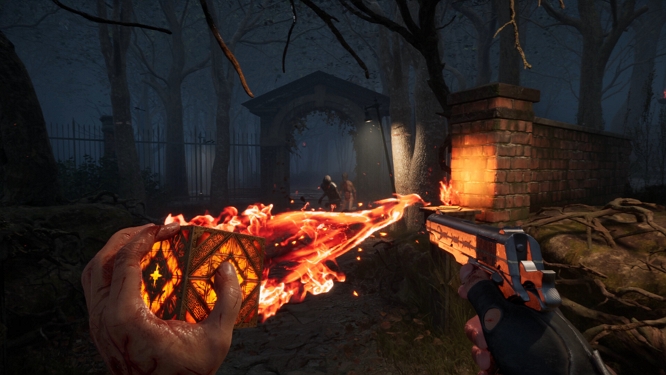
To offset this, you have an alternative offensive tool: the Genesis Configuration itself. As you deal and take damage, you build up a dedicated ‘Suffering Meter’. Once filled, you can channel the box to unleash supernatural abilities:
- Telekinesis: Allows you to rip objects off walls and hurl heavy metal saw blades or rusty nails into oncoming foes.
- Pyrokinesis: Absorbs surrounding fire sources to blast enemies into walking infernos.
- Hooks and Chains: At the cost of a maxed-out Suffering Meter, you can summon Pinhead’s iconic chains to tear souls apart.
While the Genesis Configuration is a hugely welcome addition to your arsenal, it ultimately feels surprisingly restrictive. You get those three abilities across the entire campaign, and that’s your lot. For an artifact depicted in the lore as an instrument of infinite, reality-warping power, having its gameplay function boiled down to three mapped magic attacks feels underwhelming, especially when the final ability isn’t even unlocked until near the very end of the game.
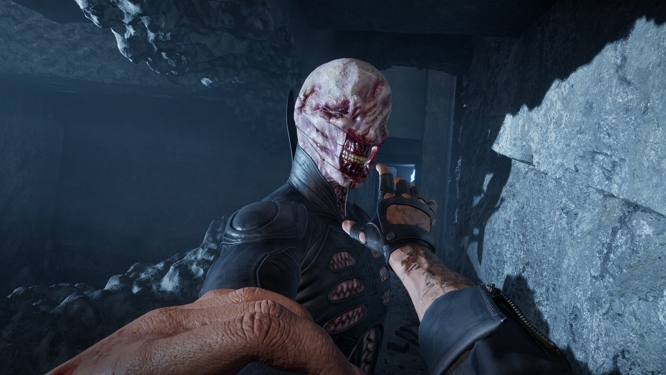
The campaign splits its time between two distinct environments:
- The Real World: Set in urban underbellies, filth-ridden apartments, and secretive kink dens. This is where the majority of combat takes place.
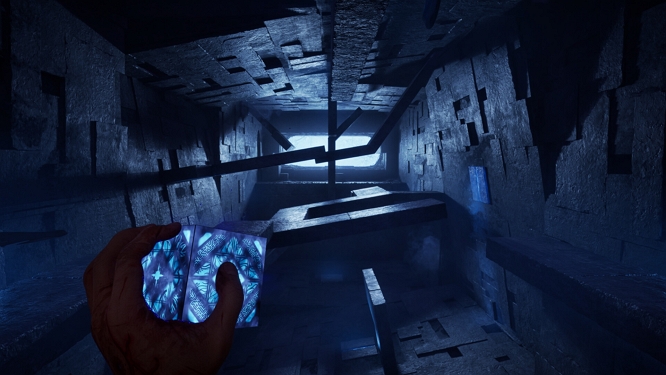
- The Labyrinth: The iconic, shifting hellscape from the films. Combat takes a back seat here in favour of environmental navigation and puzzles.
True to its name, the Labyrinth is wonderfully labyrinthine. It features mind-bending geometry, shifting halls, devilish traps, and pitch-black corridors that play tricks on your sanity. To keep the tension sky-high, Chatterer occasionally stalks these corridors, initiating frantic chase sequences where a single mistake results in a gruesome, bone-crunching and bloody death. For me, the time I spent in the Labyrinth was some of the best the game has to offer.
When Hellraiser: Revival clicks, it’s a rare beast: a licensed horror game that actually respects its source material, branching out to deliver a genuinely disturbing, adult narrative. If you’re a lifelong fan of the films, the aesthetic, blood, and sound design will hit you like a sledgehammer. This is, in many ways, THE Hellraiser game fans have spent decades begging for but never got. However, the game is far from flawless and the longer I played Revival, the more some of its mechanical frustrations began to grate on me.
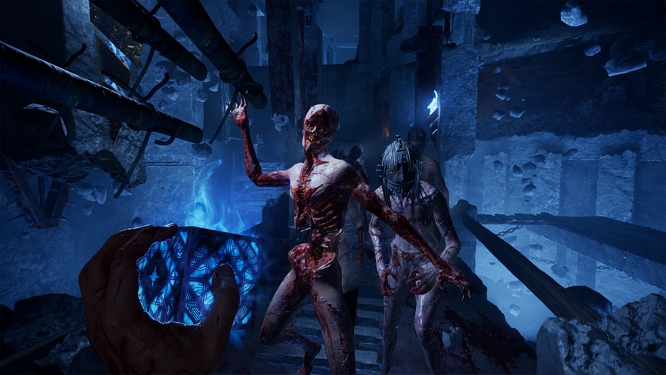
First up is the stealth. Put simply, the stealth mechanics are atrocious. You have a crouch toggle and an instakill melee takedown option from behind, but enemy AI vision cones are completely broken. Enemies can spot you from across a dimly lit hall if even a sliver of your elbow peeks out from behind cover. You can’t lean around corners or gently peek ahead to survey a room; the millisecond a fraction of your character model breaches line-of-sight, the entire room aggros instantly. Nine times out of ten, any attempt at a tactical, quiet approach devolves into an immediate, messy brawl.
Melee combat can be rough too. For some reason, the enemies have amazing reach. They can slap you around from several feet away. They seem to have a longer reach than Mr Tickle. But you? You have to get right up in their faces to land a blow. It doesn’t seem to matter what weapon you carry either. A short knife or a long baseball bat seem to have the same short range.
Then there’s the artificial difficulty driven by resource starvation. I fully respect survival horror design, I love conserving resources, but the distribution here is severely broken. Crafting materials and ammo are rarer to find than a genuinely good Hellraiser sequel. When cultists eat three shotgun shells to the chest and keep running at you, you run out of supplies constantly.
Full disclosure: I started my review playthrough on Normal difficulty, but I hit a brick wall halfway through because I simply had zero ammo, zero healing, and broken melee weapons. I had to drop the difficulty down to Easy and restart just to reach the credits. Even on Easy, the game is quite punishing. It doesn’t feel challenging by design; it feels unbalanced and unfair.
I also ran into a frustrating technical bug. Early on, I purchased a DLC melee weapon from the in-game shop using my deluxe edition content. It appeared in my inventory, and I assigned it to a quick-select slot… only for the game to refuse to let me draw it. I could see it sitting in the slot, but selecting it did nothing. Worse still, the game wouldn’t let me unequip or swap it out. Because I was early in the game and had already run out of pistol ammo, I was left walking around with an empty gun and a bugged weapon slot, completely unable to attack anything. Oh, and the weapon was gone from the shop too, so I couldn’t rebuy it.
There’s a personal niggle too. This game is grim, it’s dark, its twisted, it’s depraved. Yet, as you play, Aidan spouts really bad and unfunny one-liners. Example(s): there’s a bit in the game where you have to find parts for a broken statue, one has a head missing, Aidan sees it and says “Looks like you’ve lost your head.” Another was after I had battled a sub-boss, a slug thing with multiple arms. You have to take out all of its arms to kill it. When I did, Aidan said “I was never a big hugger.” No! He just saw his girlfriend literally torn apart, he had to make a deal with Pinhead, he’s literally been to Hell. This is not the type of game where the lead character should be making Arnold Schwarzenegger-like gags. It’s so tonally off it took me out of the game.
Clocking in at around 8 to 10 hours, Clive Barker’s Hellraiser: Revival (available now on PC, PlayStation, Xbox, and Switch 2) is a dark, brutal, and faithful adaptation that treats its IP with genuine respect. It brings back the blood, the sex, the filth, and the existential dread that made the original film a classic. Yet, for all its atmospheric triumphs, it desperately needs a patch or two to fix its broken stealth, rebalance its stingy economy, and iron out some bugs.
It’s also worth noting that replayability is practically non-existent. There are two endings, but they boil down to a simple A or B binary choice at the very end of the game. Nothing you do throughout the story impacts the outcome. If you want to see both endings, just reload your last save and pick the other option. Furthermore, unlike the Resident Evil games that reward you with bonus weapons, costumes, or game modes for beating the clock or mastering higher difficulties, Revival offers absolutely nothing. No unlockables, no New Game+, no extra modes. Once the credits roll, that’s all folks. It’s a compelling, deeply unsettling, one-and-done experience, just be prepared to endure a bit of unfair suffering along the way. Hellraiser: Revival is good, but it could’ve been truly exquisite. It’s certainly a damn sight better than the many awful film sequel films.


Please leave a reply/comment.