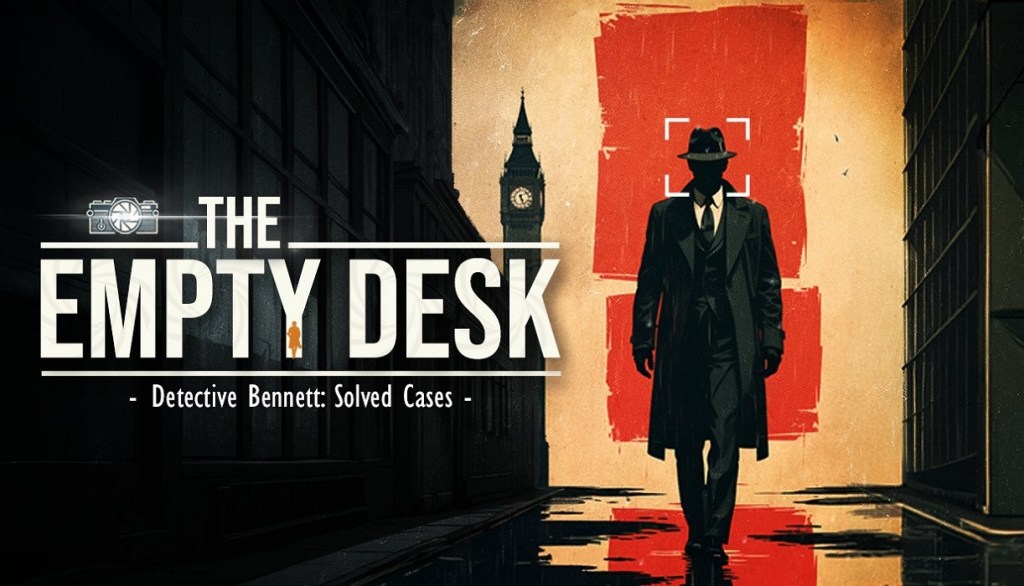
I did explain in a previous review that I was going to avoid covering first-person, indie horror games, because it’s becoming an oversaturated genre and they’re all getting very samey now. However, I also said that I would review some… if the concept is interesting. CheesecakeGames has The Empty Desk for me to review now, and it does have a really interesting concept.
“Immerse yourself in a psychological thriller with narrative adventure elements and unsettling details. Join Detective Bennett on his final case and uncover dark secrets in a world where reality bends and sanity wavers.”
The basic premise is straightforward: you play as Bennett, a detective in London called in for one final case, the disappearance of Emily Blackthorn, daughter of powerful businessman Arthur Blackthorn, who himself died under mysterious circumstances. The entire game unfolds inside the headquarters of Blackthorn & Co Insurance, a building riddled with secrets. On paper, it’s a setup ripe for tension, intrigue, and investigative depth. In practice, The Empty Desk delivers none of that.
I love a good detective game, the slow burn of deduction, the satisfaction of piecing together disparate clues, which is precisely why The Empty Desk feels so profoundly disappointing. You may play a detective, but you never do any detective work. The game reduces investigation to a mechanical loop: walk around, photograph predetermined objects, move on. There’s no deduction, no cross-referencing, no reasoning, no intellectual engagement whatsoever. It’s detective work in name only.
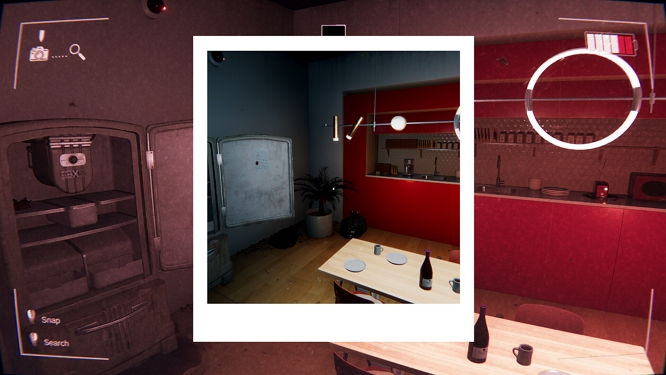
Each area contains a fixed number of “clues” you must photograph. Miss one, and you’re looped back to the start of the zone to try again. The only mercy is that the game does at least track the clues you’ve already captured, sparing you from redoing everything in a single run. But beyond that small concession, there’s very little to praise. The experience is, frankly, hollow. A game titled The Empty Desk feels appropriately empty itself.
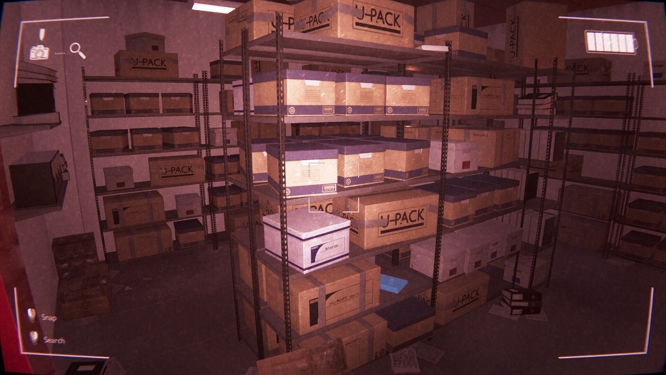
To illustrate just how far the marketing oversells the product, I’m going to do something a little different, I’m going to take the developer’s own key features used in the marketing and compare them to reality.
“Deep narrative: Follow Detective Bennett’s final mission as he confronts a homicide case that devolves into something far more unsettling and emotionally devastating.”
There is no “deep narrative” here. The story is shallow, predictable, and devoid of emotional weight. It’s not unsettling, nor is it devastating. It’s simply another entry in the long line of interchangeable indie first-person horror titles that gesture at profundity without ever achieving it. There is a narrative, but it’s not a “deep narrative”.
“Psychological exploration: The game tackles themes of mental health, emotional burnout, and workplace alienation through Bennett’s experiences and the dark mysteries of Blackthorn.”
Technically, yes, these themes do exist in the game. But only in the most superficial sense. They’re not really explored, interrogated, or meaningfully woven into the narrative. They function as set dressing, nothing more.
“Tense atmosphere: Blackthorn & Co’s offices are a changing, disorienting environment where reality distorts, and every step reveals new threats and secrets.”
Nope, not really. There is one moment at the end of the game where “reality distorts”, but it’s not exactly all that distorting. It’s more annoying as it makes you search for really tiny keys that are almost impossible to find. The “changing, disorienting environment” is not all that factual either. There’s a bit in the first area where there are no boxes in a room, but when you come back… boxes are there. That’s about as changing and disorienting the environment gets. Much like the previous point of the themes, the ideas mentioned are not very well explored or that deep.
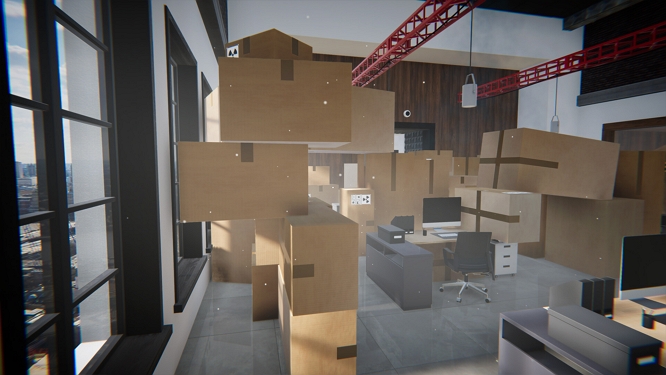
“Accessible and fluid investigation: Use your detective intuition to examine scenes, uncover clues, and reconstruct events without the fear of getting stuck. Puzzles are seamlessly integrated into the narrative to keep the story flowing and ensure an immersive, smooth experience.”
You don’t use any detective intuition, and you don’t examine scenes. You (kind of) uncover clues… that are not all that hidden, and you definitely do not reconstruct events. You find the clues, take photos of them, and the game does the rest. There’s zero use of the old grey matter; you don’t use any detective skills, you just take photos. You know what, there are no puzzles either, at least none that I can remember. The closest I can think of that the game comes to any kind of puzzle was when I had to find a code for a numerical lock, which was just written on a piece of paper as a year (1974). It wasn’t a puzzle; it was just looking for a number. There was a bit where I had to photograph four specific employee files. There’s a board with photos of their faces, and you just match the face on the board to the face in the file, then photograph it. Not really a puzzle, is it? Let me try a practical example…
GREEN BLUE
Match one of those coloured words to the following coloured word:
BLUE
It’s hardly MENSA, eh? This is the kind of “puzzle” my kids were doing at the age of two. There are no puzzles in the game. Nothing that you have to use any genuine lateral or logical thought for. It’s really just a “look for a specific thing and photograph it”. There’s a repeat of this very same file “puzzle” but with VHS tapes. You have a list of four names and have to find and photograph the VHS tapes with those names on them. It’s not a puzzle.
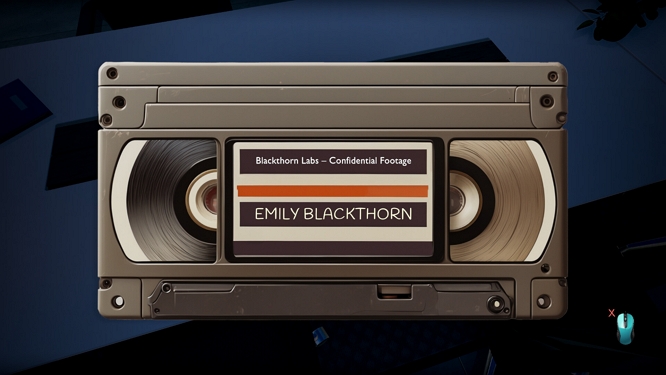
“A complete story you can finish: Between 2.5 and 3.5 hours of gameplay, designed to deliver the full experience from beginning to end. No filler, no distractions—just a narrative adventure made to be played and completed.”
It is a short game and yes, you can get to the end credits in 2-3 hours (because there’s really very little game here, and about an hour of that will be searching for those tiny annoying keys at the end). But that is not why I wanted to bring up this (dev-selected) key feature. I need to mention the next key feature to highlight my issue with this one…
“Start of a saga: The Empty Desk is the first chapter in the Detective Bennett: Solved Cases series, with more missions and mysteries to unravel in future installments.”
Wait… back up. The claim is that The Empty Desk is a “full experience from beginning to end” and that it is “just a narrative adventure made to be played and completed”. So… how can this be a full experience, to be played and completed, if it’s the start of a series and there will be more instalments? That’s a tad contradictory… no? If you read a chapter of a book, you haven’t read the complete book, it’s not the full experience. A prologue is not a full story.
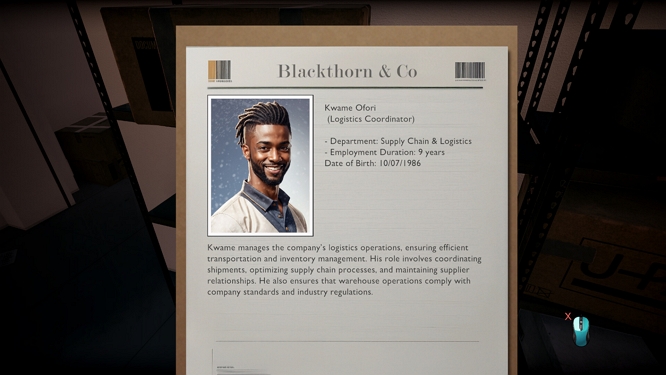
The developers openly admit to using AI for voiceovers, localisation, and “minor 2D elements” (translation, any and everything 2D). The results speak for themselves, and not kindly. The devs do brag that the rest of the game was made by humans, including the level design and 3D assets (which do look good). This makes no sense to me. Why use humans for the more difficult 3D work, but AI for the 2D stuff? The AI voice work is stilted and unnatural (thankfully, you can disable it). The localisation is atrocious, riddled with awkward phrasing and Americanisms that clash violently with the supposed London setting. And the AI-generated 2D art is distractingly plastic-looking, clashing with the 3D environment in ways that break immersion. The AI art is really jarring.
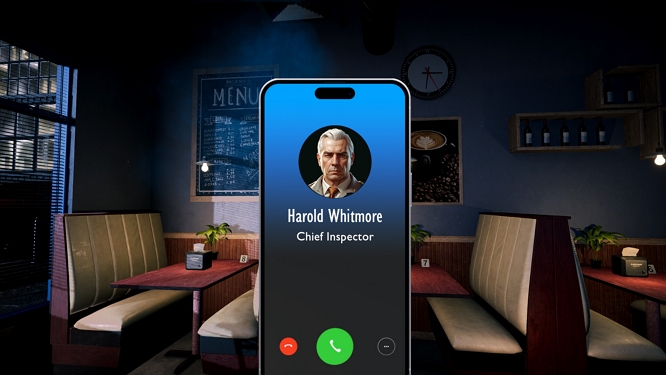
There’s a moment where hands grab you from behind, 2D, AI-generated hands in a 3D world. It looks absurd, cartoon-like. If the game were satirising bad AI usage, it might work. But it isn’t. Let me put it this way: try to imagine being trapped in a dark, foreboding building, on a mission to uncover secrets and unravel a story about ghosts in a scary game… and then this awful AI picture pops up…

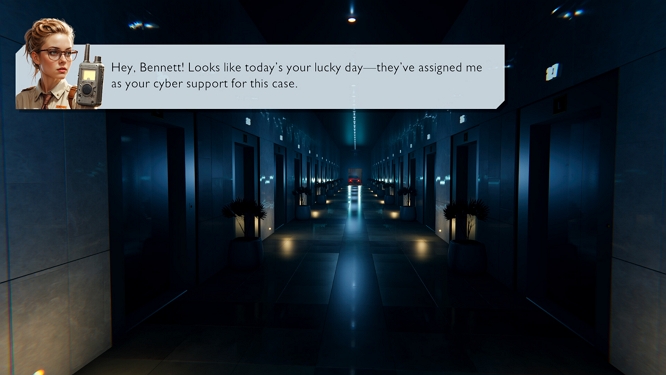
Another gripe is the setting. The game is supposed to take place in London, and you spend all of your time in the Blackthorn & Co Insurance building, but you do get glimpses of the outside world through windows and during cutscenes… and it looks nothing like London. New York, maybe. Even the AI character portraits look Americanised (see above). At the end of the game, you can see a police car at the entrance of the building, and it’s definitely not a London or even an English police car. Things like this just took me out of the game’s world. The dialogue between characters is nothing like that of Londoners; nothing about the game comes across as being in London. This is where the AI work fails massively, and I just could not get into the London setting at all… because it’s not London. They should’ve said that the game takes place somewhere vaguely in America, as it would’ve worked better… maybe?
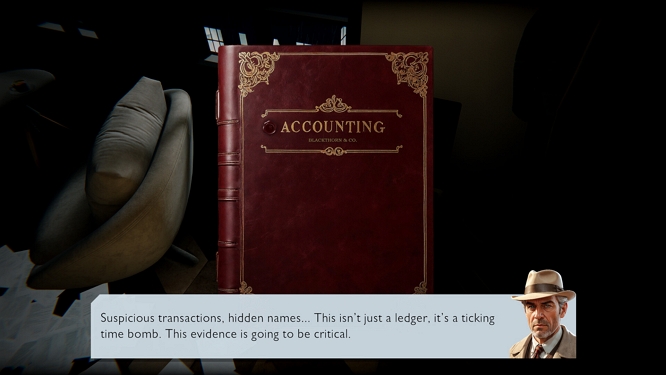
Beyond the poor AI implementation and the broken localisation, The Empty Desk simply isn’t engaging. The gameplay is almost non-existent. The puzzles aren’t puzzles. The detective work isn’t detective work. The narrative isn’t deep. The atmosphere isn’t tense. The jump scares, which you can and should disable, rely on the same cheap 2D AI art that undermines the rest of the game and makes you laugh more than scare you. It’s a shame, because the core idea had potential. But potential alone doesn’t make a compelling experience. Out now for PC, PlayStation, and Xbox. I can’t recommend this one. The only thing playing The Empty Desk has done is make me not want to experience any of the future instalments.


Please leave a reply/comment.